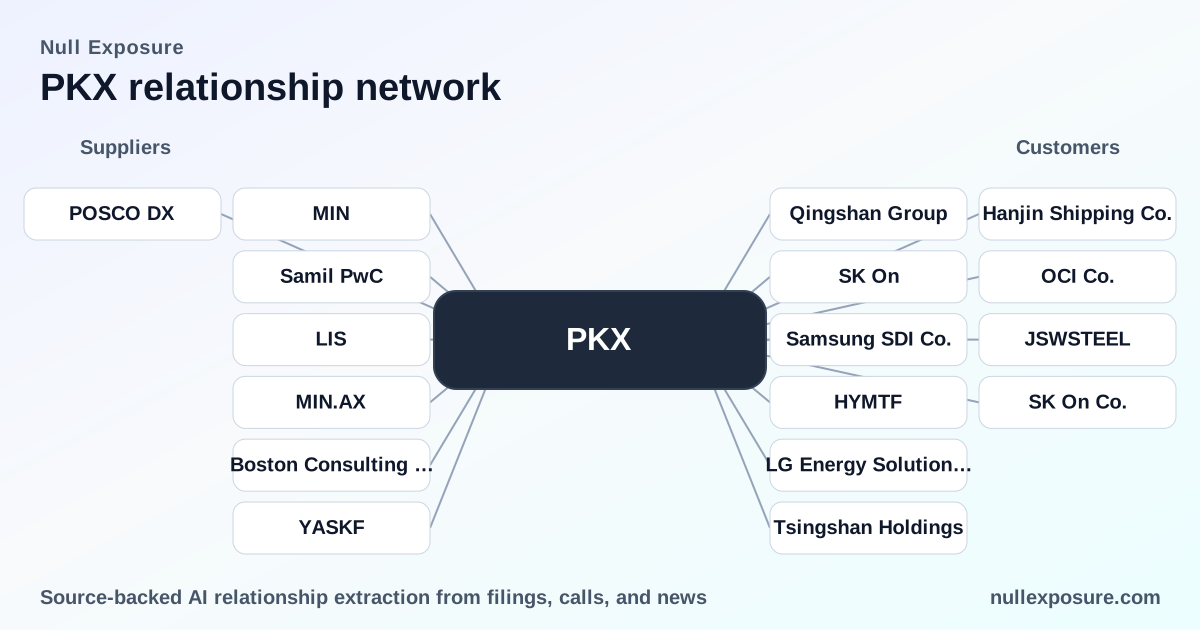
POSCO Holdings (PKX): Customer Map and Strategic Implications
POSCO Holdings operates as an integrated steel and materials conglomerate, monetizing through global sales of rolled and plate steel, downstream battery materials (anodes, cathodes, graphite), and raw-material extraction and processing (notably lithium). Revenue sits at the intersection of traditional steel markets and an accelerating battery-materials value chain, where long-term supply contracts and MOUs with automakers and battery makers shift margin mix away from commoditized steel into higher-value specialty products. For direct access to these relationship signals and ongoing monitoring, visit https://nullexposure.com/.
Where POSCO is placing its commercial bets
POSCO’s customer footprint shows a deliberate pivot: maintain core steel revenue while monetizing battery- and energy-materials capabilities. The public record contains a mix of binding supply contracts, transaction announcements, and memoranda of understanding (MOUs) that together signal a hybrid contracting posture—long-term commercial sales where possible, and strategic MOUs for market entry or regulatory navigation. This structure supports both near-term revenue stability from steel and multi-year upside from lithium and anode-material agreements.
Reported customer and partner relationships (one-by-one)
Below are the customer and partner mentions that surfaced in POSCO’s customer scope. Each entry is presented with a concise plain-English summary and the source referenced in the public record.
-
Qingshan Group — POSCO signed a preliminary deal to sell an 82.5% stake in the Zhangjiagang Pohang Stainless Steel (PZSS) mill to China’s Qingshan Group. This transaction represents strategic asset rationalization in stainless capacity. Source: Korea Times (July 2025).
-
SK On — POSCO agreed to supply SK On up to 25,000 tons of lithium concentrate per year from Hombre Muerto via POSCO Argentina, creating a multi-year feedstock pillar for battery manufacturing. Source: BatteriesNews (reported March 2026).
-
Hyundai Motor Group (HYMTF) — POSCO referenced an MOU with Hyundai Motor Group on the company’s Q1 2025 earnings call, signaling collaboration opportunities in materials and possibly vehicle supply chains. Source: PKX 2025 Q1 earnings call (transcript, March 2026).
-
Cleveland-Cliffs (CLF) — POSCO and Cleveland-Cliffs signed a September MOU intended to help POSCO’s products meet U.S. trade and origin requirements, positioning POSCO for expanded U.S. market access via domestic partner manufacturing. Source: Manufacturing Dive (May 2026) and Cleveland-Cliffs 2025 10‑K filing.
-
Samsung SDI Co. — POSCO lists Samsung SDI among its key battery customers, confirming exposure to major Korean battery manufacturers and ongoing demand for battery materials. Source: Yonhap News Agency (October 2025).
-
Ultium Cells LLC — POSCO Chemical secured a contract to supply synthetic graphite anode materials to Ultium Cells (GM/LG Energy Solutions JV) valued at roughly 939.3 billion won, representing a large, contract-backed supply relationship into North American EV battery production. Source: POSCO Newsroom (December 2025 / reported 2026).
-
OCI Co. — POSCO Future M plans to sell its stake in P&O Chemical to OCI, indicating portfolio reshaping among POSCO’s battery-materials affiliates and strategic partnering with specialty chemical firms. Source: KED Global (July 2025).
-
Tsingshan Holdings — KED Global reported that POSCO signed an agreement to sell its 82.53% stake in PZSS to Tsingshan Holdings, reflecting alternative media reporting on the same PZSS divestiture topic covered elsewhere. Source: KED Global (July 2025).
-
Hanjin Shipping Co. — Reporting indicates POSCO’s potential re-entry into the shipping sector via moves to take control of HMM, which would represent a strategic vertical play in logistics and maritime exposure. Source: KED Global (September 2025).
-
LG Energy Solution Ltd. — LG Energy Solution is identified among POSCO’s key battery customers, underlining concentration in South Korea’s major battery OEMs for anode/cathode supply. Source: Yonhap News Agency (October 2025).
-
JSW Group / JSWSTEEL — POSCO signed a comprehensive MOU with JSW Group in India to explore collaboration in steel, energy materials, and renewables, indicating market-entry strategy into India via local industrial partnership. Source: PKX 2025 Q1 earnings call (March 2026).
-
LEU — An earnings call for LEU referenced an MOU that included POSCO International, validating foreign direct investment as another channel POSCO is leveraging for low-cost capital and project development. Source: LEU 2025 Q4 earnings call (reported March 2026).
-
SK On Co. (duplicate listing) — Yonhap also lists SK On among POSCO’s major battery customers, consistent with multiple outlets documenting POSCO’s upstream supply role to SK On. Source: Yonhap News Agency (October 2025).
Operational constraints and what the public record (doesn't) show
There are no explicit contractual constraints disclosed in the customer-scope records provided. Company-level signal: the absence of recorded constraints suggests POSCO is not publicly committing to material adverse covenants or restrictive exclusivity terms in these customer relationships—POSCO’s commercial posture thus looks flexible and opportunistic, relying on a mix of market sales, long-term supply contracts, and MOUs.
- Contracting posture: hybrid—mix of binding contracts (lithium, anodes) and MOUs for strategic expansion.
- Concentration: meaningful exposure to a small group of large Korean battery OEMs and targeted partnerships in North America and India.
- Criticality: battery-materials deals (SK On, LGES, Ultium) are strategically critical for POSCO’s higher-margin growth.
- Maturity: relationship maturity varies — large executed contracts exist alongside early-stage MOUs and pending asset sales.
Investment takeaways and risk profile
- Upside levers: successful conversion of MOUs into signed long-term contracts, contract-backed anode and lithium sales into North America and Korea, and strategic partnerships enabling U.S. market access will materially improve revenue quality and EBITDA mix.
- Execution risks: conflicting media accounts over asset sales (PZSS to Qingshan vs. Tsingshan), the gap between MOUs and firm contracts, and geopolitical/trade considerations around origin rules introduce execution and timing risk.
- Concentration risk: reliance on large battery OEMs for growth increases commercial concentration; diversification into Indian and U.S. partnerships is mitigating but conditional on final agreements.
- Strategic posture: POSCO is transitioning from a commodity steel profile to an integrated materials supplier with higher-margin battery exposure, while managing legacy steel operations through selective divestitures.
For an investor-focused breakdown of customer relationships and ongoing monitoring capabilities, visit https://nullexposure.com/ for detailed signal feeds and relationship tracking.
POSCO’s customer signals map a company actively rebalancing its commercial mix toward battery materials and strategic international partnerships; the next 12–24 months of contract conversions and confirmed asset transactions will determine whether this strategy meaningfully boosts margin and reduces cyclicality in PKX’s earnings profile.