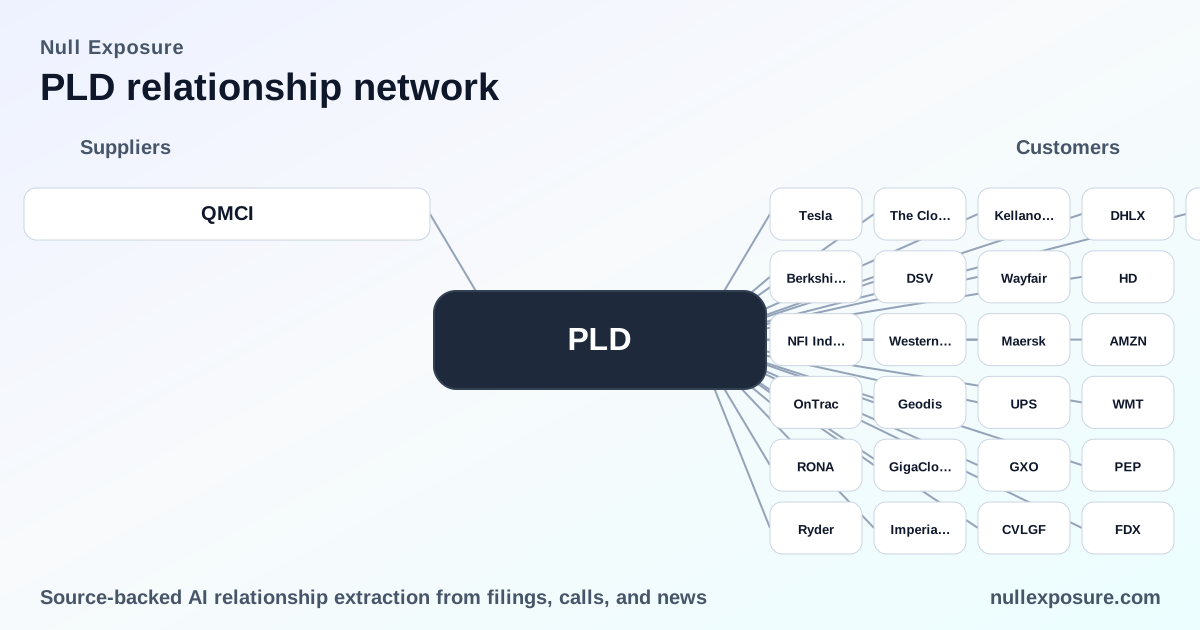
Prologis’ customer map: who occupies the logistics network and what that means for investors
Prologis is a global logistics REIT that monetizes a portfolio of high-quality distribution and light-industrial properties through long‑term operating leases, rental reimbursements and selective land/developer activity. The company’s revenue derives from leasing and managing real estate, retaining tenant cash flow while selectively unlocking value via dispositions and development; customer relationships are therefore a direct driver of cash flow stability and portfolio valuation. For a quick view of the platform and relationship data, visit https://nullexposure.com/.
How Prologis contracts and where the cashflow comes from
Prologis’ public disclosures make its operating model clear: leases are long-term, largely stable and concentrated on distribution use-cases. The 2025 Form 10‑K reports a weighted average lease term for leases commenced in 2024 of 64 months, with a portfolio‑level remaining weighted average lease term near 52 months, demonstrating a contracting posture biased toward multi-year occupancy and recurring rent collections. The company collects base rent plus reimbursements for property operating costs and bundles services (Prologis Essentials) for customers’ operations and energy needs, which increases revenue stickiness.
Geography is global in footprint but U.S.-centric in cash flows: Prologis operates in 20 countries across four continents, yet “substantially all” consolidated rental revenue and NOI originate in the U.S., creating a mix of diversification and domestic concentration. Customer retention is high — Prologis retains roughly 70% or more of customers by square feet year-over-year — which feeds predictability in leasing revenue and underpins valuation multiples in an industrial REIT. These are company-level signals drawn from the FY2025 Form 10‑K.
Key business-model constraints to consider: long-term lease contracting, U.S. cash-flow concentration despite global footprint, customer retention/renewal dynamics that support recurring revenue, and a primary focus on distribution and light manufacturing use cases. These factors define both the stability and the concentration risks inherent to Prologis’ model.
Customer relationships called out in filings and press — line‑by‑line review
Below I cover every named customer or counterparty extracted from Prologis’ FY2025 10‑K and the related press item; each entry is one or two sentences with the source called out.
-
Amazon (AMZN): Amazon is identified as Prologis’ largest customer in the FY2025 10‑K, listed with the highest weighting in the customer ranking for the year. According to Prologis’ FY2025 Form 10‑K, Amazon occupies the top position in the customer roster for FY2025.
-
Home Depot (HD): Home Depot is the second-ranked customer by the filing’s table and represents a material retail customer for distribution space. The FY2025 Form 10‑K lists Home Depot prominently among top customers.
-
FedEx (FDX): FedEx appears as a top carrier customer in the 10‑K, reflecting Prologis’ role in logistic networks that serve major last‑mile and parcel operators. See Prologis’ FY2025 Form 10‑K customer rankings.
-
UPS (UPS): UPS is listed among top customers and logistics partners in the FY2025 10‑K, underscoring carrier demand for Prologis facilities. Source: Prologis FY2025 Form 10‑K.
-
Walmart (WMT): Walmart appears in the top five customer list in FY2025, signaling large-format retail and e‑commerce distribution demand. Source: Prologis FY2025 Form 10‑K.
-
GXO (GXO): GXO is noted as a major third‑party logistics operator on Prologis property, reflecting the prominence of outsourced warehousing and fulfillment services. Prologis FY2025 Form 10‑K.
-
DSV: DSV, another global logistics provider, is listed in the top tier of customers in FY2025, consistent with Prologis’ exposure to contract logistics demand. Source: Prologis FY2025 Form 10‑K.
-
NFI Industries: NFI Industries shows up among the firms using Prologis space, reflecting demand from cold‑chain and large-scale distribution operators. Prologis FY2025 Form 10‑K.
-
Pepsi (PEP): Pepsi is listed in the customer rankings, illustrating Prologis’ exposure to large consumer-packaged‑goods occupiers. Source: Prologis FY2025 Form 10‑K.
-
GigaCloud: GigaCloud is named in the filing, representing cloud/logistics customers that utilize specialized distribution footprints. See Prologis FY2025 Form 10‑K.
-
Geodis: Geodis appears in the FY2025 customer list as a global logistics provider using Prologis facilities. Source: Prologis FY2025 Form 10‑K.
-
Maersk: Maersk is included among customers, showing Prologis’ integration with ocean-to‑warehouse supply‑chain participants. Prologis FY2025 Form 10‑K.
-
Wayfair: Wayfair is cited in the FY2025 10‑K as a tenant, reflecting e‑commerce retail demand for distribution space. Source: Prologis FY2025 Form 10‑K.
-
Kellanova: Kellanova (formerly Kraft/Nabisco spinoffs) is listed among customers, indicating consumer foods and packaged‑goods demand. Prologis FY2025 Form 10‑K.
-
The Clorox Company: Clorox is a named occupier in the filing, another example of CPG demand within Prologis’ portfolio. Source: Prologis FY2025 Form 10‑K.
-
Imperial Dade: Imperial Dade appears in the FY2025 rankings, representing industrial suppliers that lease distribution facilities. Prologis FY2025 Form 10‑K.
-
Ryder: Ryder shows up as a customer, consistent with third‑party fleet and logistics providers using Prologis space. Source: Prologis FY2025 Form 10‑K.
-
Tesla: Tesla is listed in the 10‑K customer table, reflecting manufacturing and distribution relationships within Prologis’ footprint. Prologis FY2025 Form 10‑K.
-
RONA: RONA is included in the ranking, indicating Prologis’ exposure to Canadian retail/distribution tenants (as shown in the FY2025 10‑K). Source: Prologis FY2025 Form 10‑K.
-
OnTrac: OnTrac appears among named logistics customers, reflecting last‑mile carrier demand in regional markets. Prologis FY2025 Form 10‑K.
-
Western Post: Western Post is listed, representing regional distribution occupiers in the filing. Source: Prologis FY2025 Form 10‑K.
-
Lululemon (LULU): Lululemon is named among retail/e‑commerce occupiers in the FY2025 10‑K. Prologis FY2025 Form 10‑K.
-
Nippon Express / CEVA Logistics (CVLGF): CEVA Logistics and Nippon Express are both cited; CEVA is called out explicitly in the FY2025 10‑K and mapped to ticker CVLGF in the extracted results. Source: Prologis FY2025 Form 10‑K.
-
DHL / DHLX: DHL is listed among logistics customers in the filing (DHLX mapping present in the extraction). Source: Prologis FY2025 Form 10‑K.
-
STAG (STAG): A MarketScreener report (March 2026) noted that STAG Industrial acquired a 215,334‑square‑foot warehouse in Sharonville from Prologis, L.P. for $22.2 million, indicating Prologis’ selective disposition activity in the period. Source: MarketScreener earnings flash (March 2026).
-
CVLGF (duplicate entry for CEVA Logistics): The extraction includes CEVA Logistics mapped to CVLGF; the FY2025 10‑K lists CEVA as a customer or logistics counterparty. Prologis FY2025 Form 10‑K.
-
HD / AMZN / PEP / FDX / WMT duplicates: The results include repeated entries mapping the same customers to their tickers (HD, AMZN, PEP, FDX, WMT); each corresponds to the same FY2025 10‑K listings described above. Source: Prologis FY2025 Form 10‑K.
(For full line‑item provenance, all of the above customer name references come from Prologis’ FY2025 Form 10‑K unless otherwise noted; the warehouse sale to STAG was reported in March 2026 MarketScreener coverage.)
For a consolidated view of Prologis’ customer topology and how it affects lease cash flows, explore the platform at https://nullexposure.com/.
What investors should take from the customer roster
The roster underlines three investment implications:
- Revenue predictability: Long-term operating leases, high retention (~70%+ by square feet) and a tenant mix dominated by large retailers, carriers and 3PLs produce durable cash flows that justify a premium to cyclical industrial landlords.
- Concentration tradeoffs: The prominence of a few very large occupiers (Amazon, Home Depot, major carriers) concentrates operational risk; however, Prologis offsets some concentration through geographic diversification and by servicing both retail/e‑commerce and contract logistics segments.
- Operational optionality and capital recycling: The STAG sale and other disposition activity show Prologis’ ability to recycle capital — developing, leasing, and selectively selling assets — which supports balance‑sheet management and return generation beyond base rent.
Bottom line
Prologis’ FY2025 disclosures present a high‑quality, long‑duration tenant base focused on distribution and logistics, anchored by world‑class occupiers that generate recurring rent and reimbursements. Investors should weigh the benefits of revenue durability and scale against concentration to several very large customers and the company’s U.S.-centric cash‑flow profile. For further relationship-level analytics and provenance, visit https://nullexposure.com/ — the data backing this review is drawn from Prologis’ FY2025 Form 10‑K and cited market coverage.