Palomar Holdings (PLMR): Customer Relationships and Where Risk Lives
Palomar Holdings is a specialty property & casualty insurer that monetizes through underwriting margins and net premiums written, selling primarily one‑year policies to individuals and businesses across the United States and supplementing organic growth with strategic partnerships and targeted equity arrangements. The company’s economics are driven by underwriting discipline, catastrophe exposure management, and distribution relationships that seed new product verticals—flood, builders risk, surety, and niche specialty lines. Investors should view partnership activity as an extension of Palomar’s product distribution strategy rather than a wholesale change in capital deployment. For deeper context on data sources and partner mapping, visit https://nullexposure.com/.
Executive takeaway: what these customer links tell investors
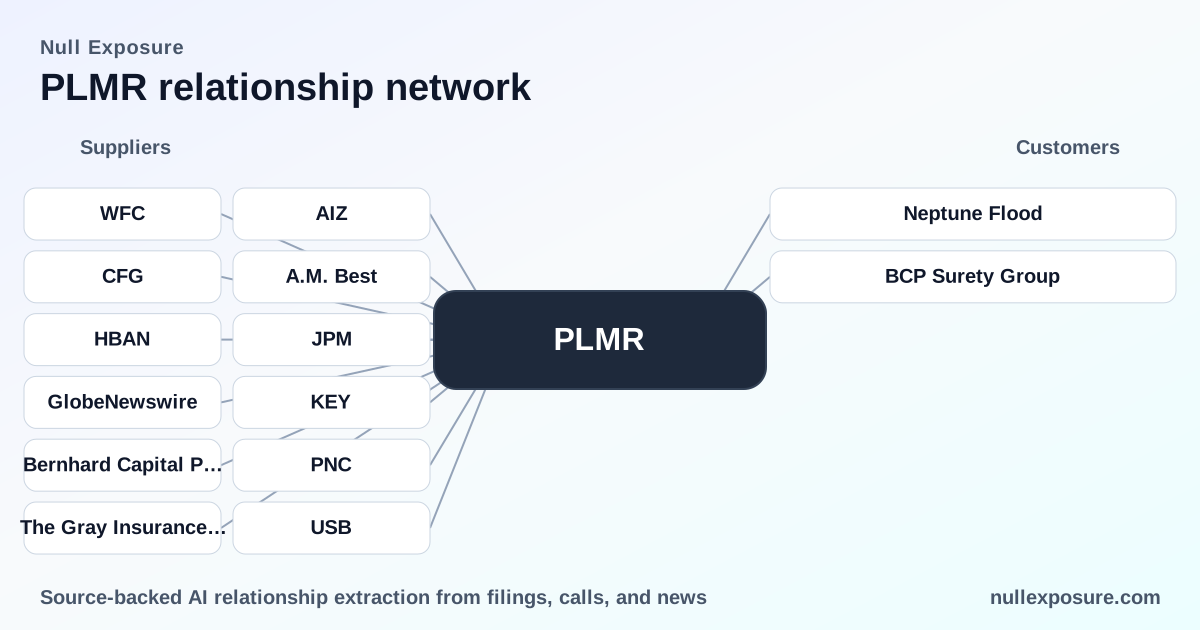
Palomar’s reported customer relationships from 2025–2026 show a mix of distribution partnerships (Neptune Flood), product co‑development for niche risk (cannabis with Conifer), and contractual adjustments tied to capital partners (BCP Surety Group). These relationships are additive: they broaden addressable markets, accelerate product scale in targeted verticals, and can shift risk concentration over time. Key implication: watch premium growth and loss ratios in the partnership channels; successful scale in flood or cannabis can be margin-accretive but also raises catastrophe and regulatory tail risks.
Visible partner ecosystem and what it contributes
Conifer Holdings — targeted cannabis coverage
Palomar has partnered with Conifer to offer insurance tailored to the cannabis industry, a vertical that requires bespoke underwriting and distribution expertise given regulatory complexity and evolving loss patterns. According to Reinsurance News and ProgramBusiness reporting on March 9, 2026, Conifer announced a partnership with Palomar to provide specialized cannabis insurance products. (Reinsurance News, Mar 2026; ProgramBusiness, Mar 2026)
Neptune Flood — flood channel growth and distribution lift
Palomar’s flood book delivered record production credited to an early partnership with Neptune Flood, which materially contributed to inland marine and other property growth in Q4. Management highlighted that Neptune Flood drove record flood production and helped lift inland marine growth 30% year over year in the fourth quarter. (Earnings call transcript reported by InsiderMonkey, Q4 2025 / FY2026)
BCP Surety Group — amendment to equity purchase agreement and capital linkage
Palomar signed an amendment to an equity purchase agreement with BCP Surety Group, reflecting a contractual capital or ownership adjustment that links Palomar to a specialist surety provider. TradingView summarized the development as one of several material agreements reported by the company in March 2026. (TradingView summary, Mar 2026)
Why these relationships matter for investors
- Distribution scale vs. underwriting control: Partnerships like Neptune Flood accelerate premium growth by tapping external channels, but they also require careful underwriting standards to avoid adverse selection. Palomar’s FY2025–FY2026 commentary links high flood production to the Neptune relationship, demonstrating the tradeoff between top-line growth and underwriting discipline.
- Adjacency expansion: The Conifer cannabis partnership signals Palomar’s move into specialty commercial niches where incumbents charge a premium for expertise; this can lift loss-adjusted margins if priced correctly.
- Capital and counterparty dynamics: The BCP Surety amendment is a reminder that partnership agreements can alter capital exposure or ownership structures, creating counterparty and covenant monitoring needs.
Operating model constraints and business-model signals
Palomar’s disclosures generate several company-level signals that shape how these relationships function operationally:
- Short‑term contracting posture: The company states that the vast majority of its insurance policies have one‑year terms with premiums earned pro rata. This creates continuous renewal and repricing opportunities, but also means revenue is inherently annual and exposed to pricing cycles and churn.
- Counterparty mix includes individuals and businesses: Palomar targets both individual homeowners/flood customers and commercial accounts (builders risk, surety), which implies diversified product risk but different distribution and claims management requirements.
- U.S.-centric footprint and concentration: Filings indicate heavy exposure to California and licensed operations across most U.S. states, signaling geographic concentration risk—especially for catastrophe lines and flood/hurricane exposure.
- Single operating segment focus: Management reports a single operating segment — property & casualty insurance — meaning partnerships are integrated into a concentrated insurance business rather than diversified corporate lines.
- Buyer and seller roles: Palomar acts as both seller (underwriter) and buyer of distribution or capital services depending on the arrangement, consistent with a specialty insurer that purchases distribution capability while selling risk-bearing capacity.
These constraints imply a business that is operationally mature in underwriting and distribution but sensitive to renewals, regional nat‑cat cycles, and partner performance.
Risks and monitoring checklist for investors
- Underwriting metrics in partner channels: Track combined ratio and loss trends specifically for flood, builders risk, and cannabis lines after partnership scale‑up. The Neptune Flood note shows production lift—now monitor profitability.
- Geographic concentration: Continued growth in California or other high-exposure states will increase catastrophe volatility; review state-level exposures in filings.
- Capital & counterparty exposure: The BCP Surety amendment could change capital commitments or covenants; investors should read the amended agreement for contingent obligations.
- Regulatory and product risk: Cannabis insurance faces evolving legal frameworks; underwriting standards and claims interpretation will determine profitability.
Bottom line and action
Palomar leverages targeted partnerships to expand niche product reach and accelerate premium growth while maintaining a single, focused P&C underwriting platform. For investors, the critical question is whether these partnerships translate to durable underwriting profits rather than transient top‑line gains. Monitor quarter‑to‑quarter loss ratios and the disclosures around partnership economics.
For a structured view of Palomar’s partner map and to track future relationship signals, visit NullExposure’s research hub at https://nullexposure.com/.
Bold takeaway: partnerships are expanding Palomar’s addressable market, but the company’s one‑year policy structure and U.S. concentration keep it exposed to renewal risk and regional catastrophe volatility.