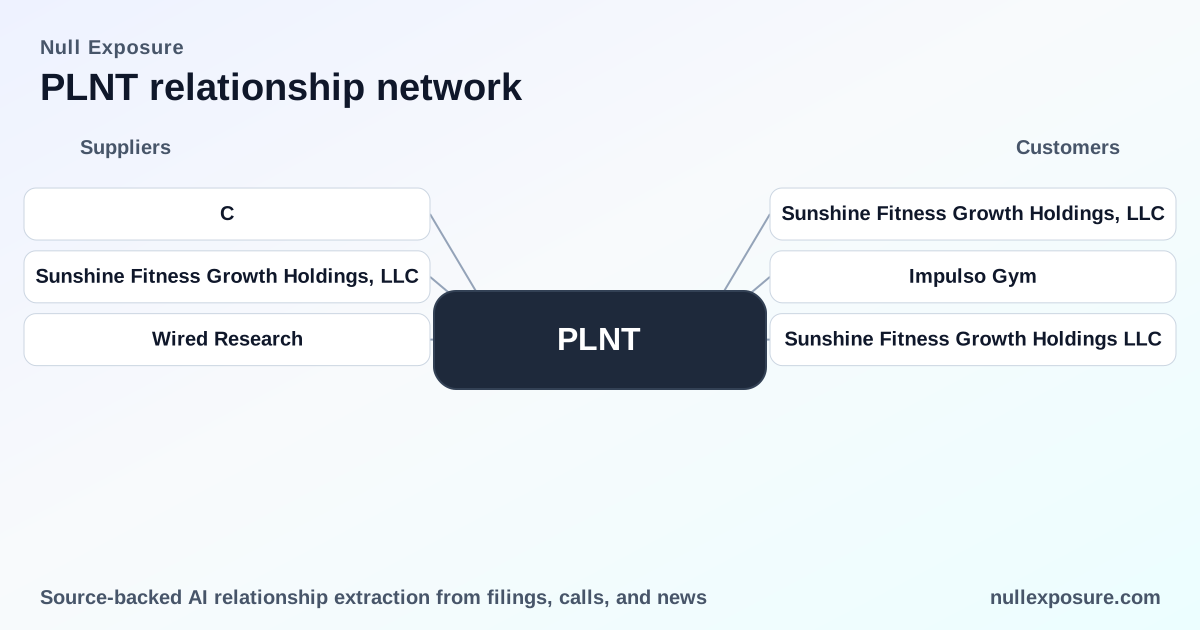
Planet Fitness (PLNT): Customer relationships signal active consolidation and targeted international franchising
Planet Fitness operates and monetizes through a two-pronged model: a large franchise network that generates recurring royalty streams plus corporate-owned clubs that produce membership and ancillary revenue. Revenue sensitivity to franchise transitions and selective M&A is a material operating lever — acquisitions that convert franchisees to corporate ownership change near-term royalty inflows but increase direct operating revenue and EBITDA contribution. For a concise view of relationship signals and implications, visit https://nullexposure.com/.
Why customer relationships matter for PLNT investors
Planet Fitness’s core value proposition is scale in low‑cost fitness, executed largely through franchising. Franchise agreements create steady, high-margin royalty revenue, while corporate clubs deliver higher top-line exposure and operating leverage. The company uses targeted acquisitions to control geography and accelerate market penetration, balancing short-term royalty volatility against longer-term cash flow from owned assets. These dynamics are important when forecasting growth, margins, and capital deployment.
What the recent relationship signals show
Below I catalog each relationship signal from the record set and give an investor‑oriented read on what each means for Planet Fitness.
Sunshine Fitness Growth Holdings, LLC — acquisition and refinancing
Planet Fitness completed the acquisition of Sunshine Fitness Growth Holdings, the franchise system’s first franchisee and a TSG Consumer Partners portfolio company, bringing those locations under corporate ownership as announced in March 2026. PR Newswire and CityBiz covered the transaction, noting Sunshine’s status as an early and significant franchise partner. (PR Newswire, March 10, 2026; CityBiz, March 10, 2026)
A separate industry notice highlighted the accounting impact: stores acquired from Sunshine shifted from the franchise segment to corporate in Q1 2022, which reduced royalty revenue by roughly $3.1 million while increasing corporate-owned revenue and related operating profit contribution. (American Spa, coverage of Q2 2022 results)
Impulso Gym — new franchise agreement to expand in Mexico
Planet Fitness signed a franchise agreement with Impulso Gym to expand its footprint in Mexico, underscoring an active international franchising push. The arrangement indicates continued reliance on local operators to scale beyond the U.S., supporting unit growth without the immediate capital intensity of rapid corporate expansion. (SahmCapital, February 18, 2026)
How these relationships influence the operating model
- Contracting posture: Planet Fitness pursues a hybrid posture — franchising for broad, capital-light growth and selective acquisitions when ownership provides strategic control. The Sunshine deal is an example of strategic conversion of a large franchisee into corporate ownership to strengthen presence and capture operating margin.
- Concentration and criticality: Franchise partners are a critical channel for unit growth and royalty revenue; major franchisees like Sunshine historically had outsized influence on royalties and local market penetration, so actions affecting large partners are material to revenue composition.
- Maturity and evolution: The mix of franchise versus corporate clubs is actively managed; converting franchises to corporate is a tool to accelerate market control and EBITDA growth, while signed franchising deals such as Impulso demonstrate continued reliance on local operators in non‑U.S. markets.
No explicit contractual constraints were provided in the sourced records for these relationships, so the signals are drawn from announced transactions and reporting rather than disclosed restriction language.
Investor implications and risk profile
Planet Fitness’s relationships with large franchisees and international franchising partners create a predictable but actively managed revenue base. Key implications:
- Near‑term royalty volatility vs. long‑term margin improvement: Acquisitions that convert franchised clubs to corporate ownership depress royalty revenue but increase consolidated revenue and EBITDA, which will affect near‑term segment composition and margin forecasts.
- Capital allocation tradeoffs: The company demonstrates willingness to deploy capital to acquire strategic franchise networks; investors should watch capital returns, integration costs, and organic growth vs. M&A mix.
- International expansion levered to partners: Using franchise partners like Impulso to enter Mexico keeps capital intensity low and accelerates footprint growth, but execution depends on partner quality and brand consistency.
- Data signal limitations: The sourced records consist of press coverage and company announcements; investors should triangulate with quarterly disclosures for precise recurring revenue and segment impact.
For an actionable list of relationship signals and deeper screening tools, see https://nullexposure.com/.
Short checklist for model adjustments
- Revisit royalty vs. corporate revenue assumptions after announced acquisitions (Sunshine conversion decreased royalties by ~$3.1m historically). (American Spa, Q2 2022 coverage)
- Factor in targeted international franchising when modeling unit growth outside the U.S.; new deals such as Impulso accelerate expansion without proportional capital spend. (SahmCapital, Feb 18, 2026)
- Monitor integration and refinancing outcomes for acquired franchise portfolios to assess cadence of operating-margin improvement. (PR Newswire / CityBiz, March 10, 2026)
Bottom line
Planet Fitness is executing a deliberate mix of franchising and selective consolidation. The Sunshine acquisition exemplifies a strategy that sacrifices some royalty predictability to gain direct operating leverage and market control, while franchising deals like Impulso support low‑capex international expansion. Investors should value PLNT with attention to how management balances franchise royalties, corporate club growth, and the capital required for acquisitions — these levers determine both revenue composition and margin trajectory.
Key takeaways:
- Acquisitions convert recurring royalty streams into direct operating revenue and EBITDA.
- International growth is franchise‑driven; domestic consolidation is selectively corporate.
- Monitor segment disclosures for the precise financial impact of franchise conversions.
For ongoing signals on customer relationships and deal flow that drive PLNT’s business model, explore the relationship feed at https://nullexposure.com/.