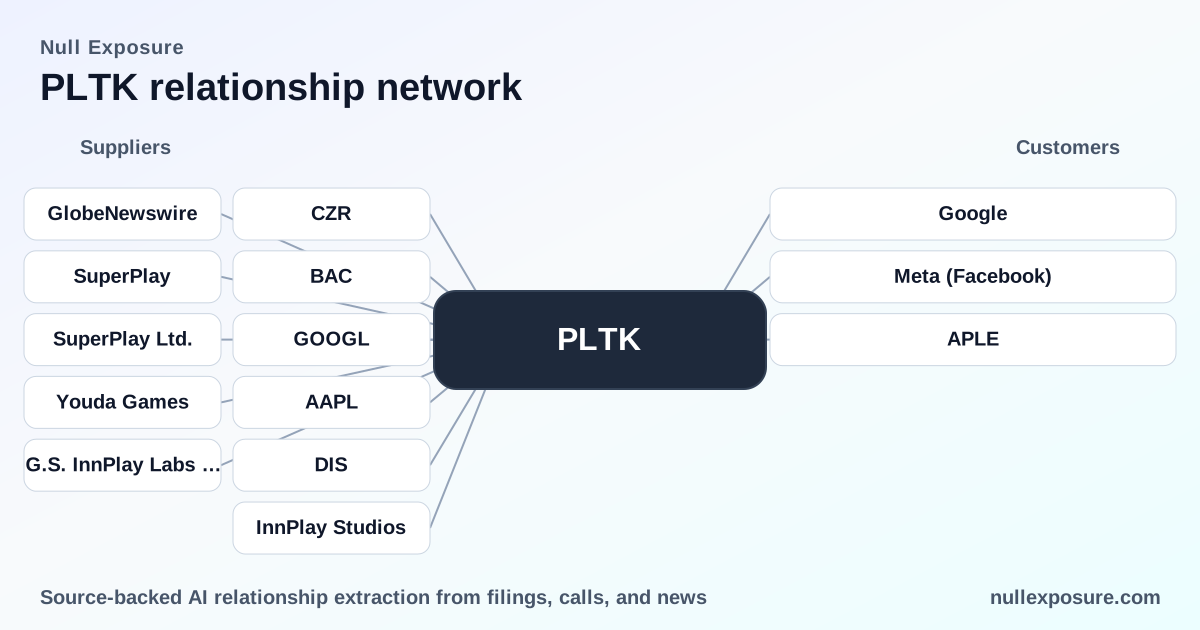
Playtika (PLTK): Platform dependencies define revenue quality and concentration
Playtika operates and monetizes as a mobile games operator that sells virtual items within free-to-play titles, collecting spot, non-refundable payments from individual players and distributing those titles through major platform gatekeepers; the company records gross revenue as the principal on those in-app sales and supplements income with advertising. For investors, the core thesis is straightforward: Playtika’s revenue engine is high-margin, consumer-driven in-game purchases routed through a small set of platform partners, which creates both durable cash flow and clear platform-concentration risk. For a deeper operational read visit https://nullexposure.com/.
How Playtika makes money and how that shapes risk
Playtika’s economic model is pure consumer monetization: users download free-to-play games and purchase virtual currency or items on a spot, non-refundable basis, which Playtika controls, prices and delivers. This contracting posture — immediate, non-cancellable payments for virtual goods — means revenue recognition is straightforward and the company acts as the principal in transactions, preserving price and margin control.
That operating model has four practical implications:
- Concentration of counterparty exposure: the direct paying customers are individual consumers rather than long-term enterprise contracts, so revenue is elastic to consumer sentiment and in-game monetization efficacy.
- Platform gatekeeper dependence: distribution and payment flows are routed through major app stores and social platforms; changes by those providers can materially affect access and economics.
- Geographic concentration: the business is skewed to North America, increasing sensitivity to that market’s regulation and consumer spending cycles.
- Revenue mix and maturity: core revenues derive from software and virtual item sales, with advertising as a complementary stream and Playtika reporting meaningful EBITDA on a multibillion-revenue base.
If you want a consolidated view of these commercial relationships for diligence, NullExposure’s coverage provides structured evidence and interpretation at https://nullexposure.com/.
Platform and partner relationships — what matters to investors
Below I list every customer-related relationship the public record tied to Playtika in available filings and press coverage, with a concise take and source reference.
Playtika’s filing notes Google took actions that blocked specific titles (Slotomania and Caesars Slots in Dec 2023; World Series of Poker in Jan 2024) in certain countries, underscoring the direct operational impact of platform enforcement on distribution. According to Playtika’s 2024 Form 10‑K (FY2024), these removals are cited as concrete examples of platform risk.
Meta (Facebook)
Playtika relies on third-party platforms including Facebook to distribute games and to collect revenues tied to those platforms, which makes social-platform policy and ad-monetization changes a direct revenue risk. This reliance is described in Playtika’s 2024 Form 10‑K (FY2024).
Google Play Store
Playtika’s titles are distributed through the Google Play Store as a primary channel for Android users, which remains a core conduit for downloads and in-app purchasing flows. A market report from Yahoo/UK Finance referencing coverage on May 3, 2026, noted that Playtika’s games are available on the Google Play Store (FY2026 context).
iOS App Store
Apple’s iOS App Store is a parallel primary distribution channel for Playtika’s iOS user base, hosting the company’s titles and payment rails for in-app purchases. A news piece on May 3, 2026 (UK Finance / Yahoo) reiterated availability on the iOS App Store (FY2026 context).
APLE
Playtika’s 10‑K includes a reference to platform-provider risks under the label “APLE” in the relationship dataset, highlighting that platform providers can change terms unilaterally and that such changes — for example to how free-to-play games are labeled or how payments are processed — would harm the business. This caution comes directly from Playtika’s 2024 Form 10‑K (FY2024).
Apple
Separately captured as “Apple,” the company’s disclosure repeats the existential dependency on app-store rules and the unilateral ability of platform providers to alter labeling, payment collection and other mechanics, which Playtika identifies as material operating risk in its 2024 Form 10‑K (FY2024).
Operational constraints and what they imply for diligence
The filings and evidence produce a clear set of company-level constraints that shape the business:
- Contracting posture: spot, non-refundable consumer payments. Playtika records purchases at time of sale for virtual goods; this reduces receivable risk but increases sensitivity to immediate consumer propensity to buy.
- Counterparty profile: individual consumers. Most revenue comes from Daily Paying Users — individuals whose microtransactions are the revenue base; retention and monetization metrics are critical.
- Geographic concentration: North America is dominant. For FY2024 Playtika disclosed 66.7% of revenue from the U.S. and 94.5% from U.S., Canada, Europe and Australia combined, creating concentrated macro/regulatory exposure.
- Role and revenue recognition: principal seller of virtual items. Playtika sets prices and controls content, recording gross revenue and preserving margin capture.
- Supplementary monetization: advertising service providers. The company also runs advertising within games that generates incremental revenue by impressions and clickthroughs, though the dominant cash flow is in-game purchases.
- Maturity signal: software-first, product-led monetization. Playtika self-identifies as a leading mobile game operator whose core product economics are software and virtual item sales.
These constraints argue for a diligence focus on consumer KPIs (paying users, ARPDAU evolution), platform negotiation exposure, and geographic concentration mitigation strategies.
Investment implications and risk checklist
- Positive: High gross margins from virtual sales, principal revenue recognition and substantial EBITDA at scale support cash-generation potential.
- Negative: Platform concentration and unilateral policy risk from Apple/Google/Facebook can cause abrupt distribution or payment headwinds; the U.S.-heavy revenue footprint magnifies regulatory and consumer-cycle sensitivity.
- What to monitor: user monetization trends, platform policy developments, any diversification away from concentrated markets, and management commentary on regulatory or platform negotiations.
For a structured, evidence-based view of these partner dynamics and how they impact credit and operational risk, see our coverage at https://nullexposure.com/.
Bottom line
Playtika’s business model is clear and repeatable: sell virtual items to individual players through major app stores and social platforms and record revenues as the principal. That clarity translates into durable, high-margin revenue but also concentrated platform and geography risk that investors must price explicitly into valuations and scenario analyses.