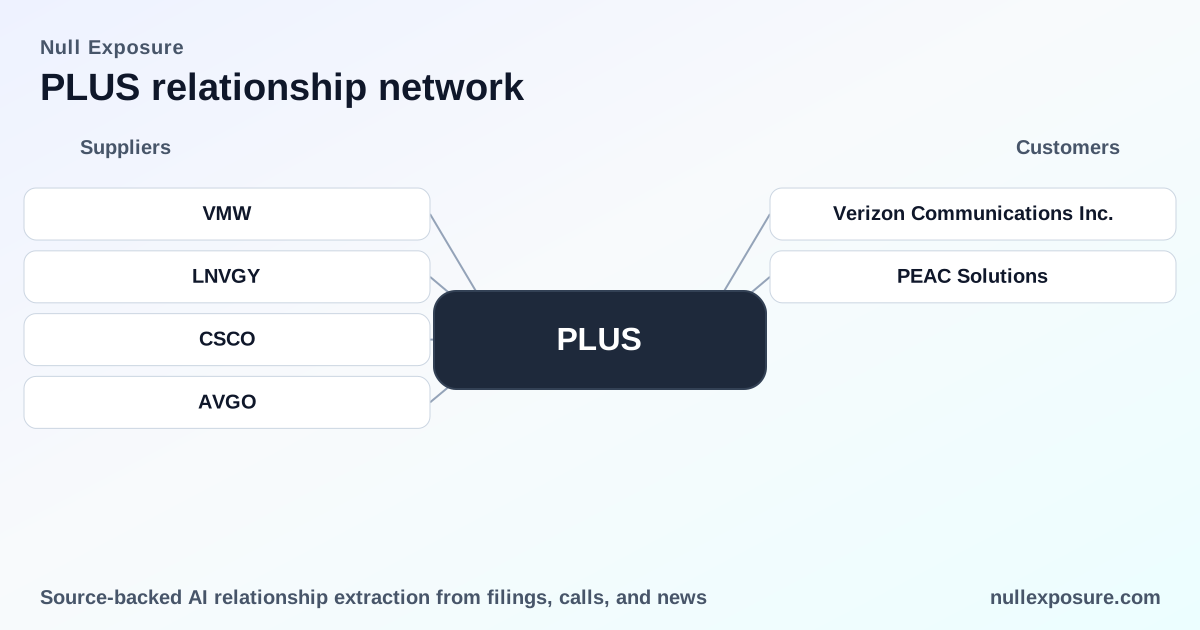
PLUS customer relationships: concentration, the financing carve‑out, and what investors should price
ePlus Inc. operates as an IT solutions integrator that monetizes through high‑volume product sales (hardware and third‑party software), professional and managed services, and historically through an in‑house equipment financing business. The company’s technology segments generate the vast majority of revenue—driven by transactional product sales that are complemented by recurring services—while customer concentration and a recent sale of the U.S. financing operation materially change the company’s commercial footprint and credit exposure. For investors evaluating customer risk and revenue durability, these two developments are the primary levers to watch.
For additional context, see NullExposure’s research hub: https://nullexposure.com/
The headline relationships every investor must know
ePlus’s customer map is straightforward: a broad base of roughly 4,600 customers anchored by a handful of very large enterprise and public‑sector accounts, alongside a financing business that financed customer purchases. Two relationships in public disclosure currently drive the investment story.
Verizon Communications — a material enterprise buyer and AR concentration
According to ePlus’s Form 10‑K for the fiscal year ended March 31, 2025, sales to Verizon represented 16% of net sales in FY2025, and the company’s accounts receivable included approximately 17% concentration of invoices due from Verizon as of March 31, 2025. This level of exposure makes Verizon a clear top‑tier counterparty for revenue and working capital. (Source: ePlus Form 10‑K for the year ended March 31, 2025.)
PEAC Solutions — sale of the U.S. financing business
A news report on March 10, 2026, noted that PEAC Solutions signed a definitive agreement to acquire the domestic subsidiaries of ePlus that comprise the company’s U.S. financing business, signalling an exit of the captive financing operation in the U.S. This transaction reduces ePlus’s direct exposure to financed receivables and repositions the company toward core product and services revenue. (Source: IndustryAnalysts report, March 10, 2026.)
Why these relationships change the investment calculus
The Verizon exposure and the PEAC deal move different risk levers. Verizon is revenue‑critical and creates collections concentration—a top customer that can swing near‑term cash flow and working capital. The PEAC transaction is strategic: it reduces credit concentration and the financing‑related asset base, while simplifying the business model to product and services economics.
Investors should treat these as complementary effects: Verizon raises counterparty risk; the sale of the financing business lowers credit and capital intensity. Together, they alter cash conversion dynamics and the volatility profile of reported revenues and receivables.
Company‑level operating signals investors should incorporate
The public disclosures and excerpts provide a coherent operating portrait. Presenting these as company‑level signals helps translate text into investment considerations:
- Customer mix and contracting posture: ePlus serves primarily mid‑market to large enterprises and state and local government (SLED) customers across the U.S. and select international markets, which implies a mix of transactional product contracts and longer professional/managed services engagements. This mix translates to lumpy product revenue plus a smaller, but meaningful, recurring services base.
- Revenue concentration and critical accounts: The company reports 4,600 customers but also relies on a small number of large accounts for material revenue, evidenced by Verizon representing double‑digit percentages of net sales and concentrated AR. This creates single‑counterparty sensitivity that investors must model into downside scenarios.
- Geographic profile: The business is U.S.‑centric—the filings show the U.S. accounted for the bulk of net sales (roughly $1.983 billion of reported net sales in the latest geographic breakdown versus $85 million of non‑U.S. sales), with EMEA and APAC as smaller, selective markets—meaning macro shocks in the U.S. market disproportionately affect top‑line performance.
- Segment mix and margin implications: Technology segments account for 97% of net sales, with the product segment at 78%, professional services at 11%, and managed services at 8%. That composition explains ePlus’s gross profit and operating margin profile—higher top‑line volatility from products, offset partially by more stable but smaller services revenue.
- Role set: ePlus is both a seller of third‑party products and a service provider, offering consulting, professional and managed services and lifecycle management. This hybrid role supports cross‑sell opportunities but also means the company competes on both price (product) and differentiation (services).
These signals together indicate a company that is established and diversified across solution types, but still suffers meaningful concentration risk on a handful of large counterparties and historically carried financing assets that increased balance‑sheet complexity.
What the PEAC transaction implies for capital allocation and credit exposure
The sale of the U.S. financing subsidiaries to PEAC Solutions is consequential for how investors should model ePlus going forward. Removing the captive financing operation will:
- Lower the company’s receivables and financing‑related capital needs, improving balance sheet simplicity.
- Reduce earnings volatility tied to credit performance and losses in the financed portfolio.
- Shift the earnings mix further toward product margins and services revenue, increasing reliance on distribution and services execution.
These effects are neutral to positive for free‑cash‑flow stability if ePlus redeploys capital into higher‑return, lower‑capital activities (services, managed offerings, or bolt‑on software services), but they also remove a differentiated financing capability that historically supported product sales—a trade‑off management must manage.
(News source: IndustryAnalysts, March 10, 2026.)
For a concise market view and related analysis, visit NullExposure’s home page: https://nullexposure.com/
Investment implications and risk checklist
- Concentration risk: Verizon as a double‑digit revenue contributor and ~17% AR concentration is the single largest customer risk; model scenarios where large account spend reverts meaningfully. (Source: ePlus Form 10‑K for FY2025.)
- Revenue durability: The product‑heavy mix (78% of technology sales) implies higher volatility; professional and managed services add durability but are smaller. Expect a slower migration to recurring revenue absent a strategic pivot.
- Balance sheet simplification: The PEAC sale removes financing assets and related credit exposure, improving capital intensity metrics but reducing a potential competitive lever for closing large product deals.
- Geographic concentration: U.S. exposure dominates; macro or federal/state budget pressures in the U.S. should be a primary macro risk monitor.
Bottom line
ePlus is a profitable, established IT solutions provider with a business model built on high product volumes and complementary services, but investors must price in customer concentration and the ongoing re‑mix of revenue and capital after the sale of the U.S. financing business. The Verizon relationship is the most immediate commercial risk, while the PEAC transaction changes the capital and credit profile of the company. Those two forces together define the next phase of execution risk and upside potential for PLUS.
If you want a tailored briefing on how these customer relationships feed into valuation scenarios or covenant stress tests, NullExposure can prepare a focused model for your portfolio: https://nullexposure.com/