Pennant Group (PNTG): Acquisitive home-health operator monetizing scale through fee-for-service care and managed-care contracts
Pennant Group operates a portfolio of independent operating subsidiaries that deliver home health, hospice and senior living services and monetizes primarily through fee-for-service reimbursement from Medicare, Medicaid, managed care and private-pay patients. The company grows both organically and by acquisition—integrating bought platforms to capture operating leverage—and recognizes revenue when services are delivered, creating a usage-driven cash flow profile that is sensitive to payer mix and reimbursement rates. For investors evaluating customer and counterparty relationships, the company’s model is best read as a services seller with concentrated government exposure and an acquisitive, regionally expanding posture. Visit https://nullexposure.com/ for the underlying relationship data and sourcing.
How Pennant makes money and what that implies for partner relationships
Pennant’s core economics come from delivering clinical services in patients’ homes and senior living facilities and billing third‑party payors for those clinical encounters. Revenues are recognized when care is provided and adjusted for variable consideration, so the company’s top line tracks utilization and payer reimbursement timing rather than fixed recurring fees. This creates three investor-relevant characteristics:
- Contracting posture: usage-based operational contracts and fee-for-service billing — revenue scales with patient visits and clinician utilization.
- Counterparty concentration: material reliance on government payors — Medicare accounted for a large share of revenue, making public reimbursement policy a key performance lever.
- Growth and integration risk: acquisitive strategy that requires quick operational assimilation of acquired locations — recent deals expand geographic reach but demand execution to realize margin improvement.
These firm-level signals come from Pennant’s public disclosures and recent commentary and should inform underwriting and partner diligence.
The customer and partner roster that matters
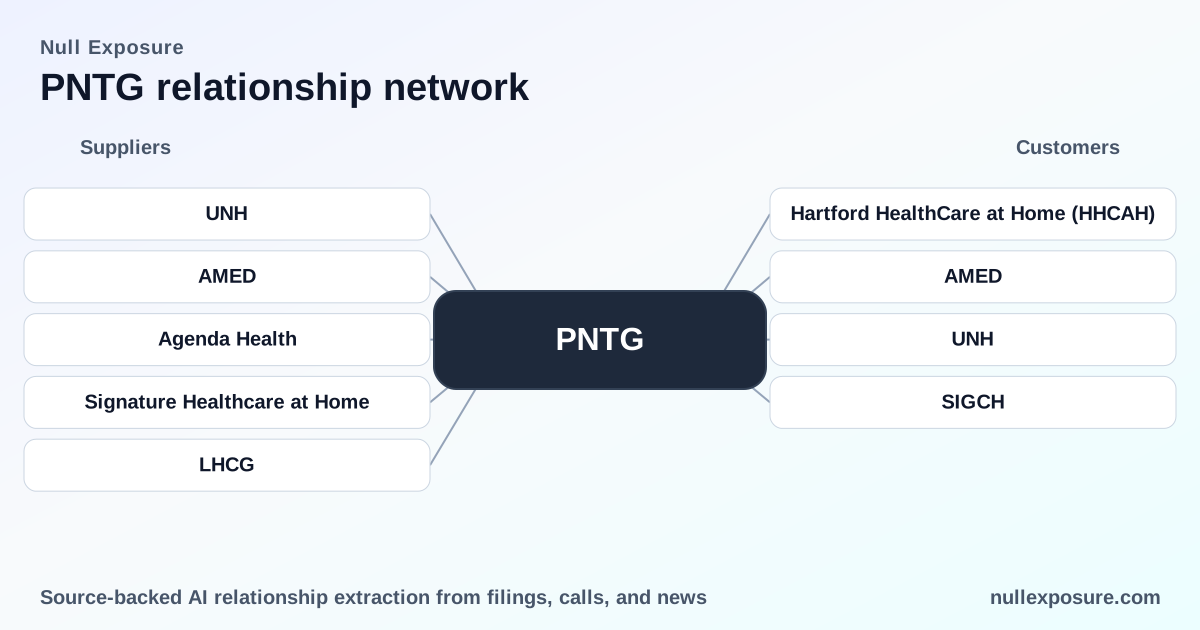
Below I cover every relationship recorded in the available results and summarize what each contributes to Pennant’s commercial and strategic position.
Hartford HealthCare at Home (HHCAH)
Pennant signed a management and consulting services agreement with Hartford HealthCare at Home, which gives Pennant an entry into the New England market and establishes a platform for service expansion outside its traditional western footprint. According to a July 2024 profile in Hospice News, the HHCAH deal provided Pennant its first foothold in New England and signals a move toward management/consulting arrangements as a route to market. Source: Hospice News, “Inside the Pennant Group’s hospice growth strategy,” July 2024.
Amedisys (AMED)
Pennant disclosed that it purchased over 50 locations from Amedisys in a bundled transaction that materially expanded its Southeast footprint; the deal was described as part of the company’s largest acquisition to date and added meaningful reach in that region. Management referenced the transaction on the company’s 2025 Q4 earnings call as a key element of eastward expansion. Source: Pennant Group 2025 Q4 earnings call.
UnitedHealth / UNH
Pennant acquired a portfolio of locations from UnitedHealth (via UnitedHealth/UNH) as part of the same multi-location purchase that included assets from Amedisys; management characterized the purchase as the largest in company history and a strategic expansion into the Southeast. The 2025 Q4 earnings call frames UnitedHealth as a counterparty whose divestitures created an acquisition opportunity for Pennant. Source: Pennant Group 2025 Q4 earnings call.
UnitedHealth (named separately in commentary)
Management repeatedly referenced UnitedHealth as the divesting partner for the over-50-location acquisition, underscoring that Pennant’s growth strategy leverages large payor or national operator restructurings to acquire scale quickly. This echoes the same disclosure on the 2025 Q4 earnings call and highlights Pennant’s opportunistic M&A posture towards nationally owned site portfolios. Source: Pennant Group 2025 Q4 earnings call.
SIGCH / Signature Healthcare at Home
On January 1, Pennant completed the acquisition of Signature Healthcare at Home in the Pacific Northwest and reported rapid integration that materially improved performance during the year, illustrating the company’s operational playbook of purchasing underperforming platforms and applying its operating model to capture upside. Management summarized the SIGCH integration on the 2025 Q4 earnings call. Source: Pennant Group 2025 Q4 earnings call.
What the relationships imply for credit and operational risk
- Concentration and counterparty risk are meaningful. Pennant derived a large portion of revenue from Medicare (48.3% in the year ended Dec 31, 2024), creating sensitivity to public reimbursement and policy shifts. This is a company-level signal driven by revenue mix disclosures rather than any single partner.
- Revenue is usage-driven and therefore variable. Pennant recognizes revenue when services are performed and adjusts for variable consideration, so utilization drops or documentation/payment timing changes affect near-term cash flows.
- Acquisition-led growth reduces geographic concentration but raises integration execution risk. The company’s purchases from UnitedHealth and Amedisys and the Signature Healthcare at Home acquisition broaden footprint and payer relationships, but realization of margin uplift depends on rapid operational improvement.
- Customer-criticality is moderate to high. As a service provider, Pennant’s revenue relies on steady patient volume and payer acceptance; losing managed-care contracts or facing reimbursement headwinds would create immediate top-line pressure.
Constraints and operating-model signals investors should price in
Below are high-level, company-level constraints that summarize Pennant’s operating model using management disclosures and public filings:
- Contract type: usage-based — revenues recognized when services are provided and adjusted for variable consideration, aligning revenue to utilization.
- Counterparty types: government and individual — a substantial share of revenue comes from Medicare and Medicaid programs, complemented by private-pay and managed-care business.
- Geography: North America (U.S.) — operations span a multi-state footprint across the western U.S., now expanding east and into New England via recent deals.
- Materiality: government payors are material — nearly half of revenue derives from Medicare, a dominant cash source for hospice and home-health segments.
- Relationship role: seller and service provider — Pennant sells clinical services and operates care delivery networks.
- Relationship stage: active — the company operates 123 home health, hospice and home care agencies and 57 senior living communities (as of Dec 31, 2024), indicating ongoing operations rather than nascent pilots.
- Segment: services — Pennant’s business is care delivery across the post‑acute continuum.
These constraints should be treated as structural characteristics for underwriting forecasts and counterparty stress testing.
Bottom line: growth is real, but payer exposure and integration execution drive the risk-return
Pennant’s acquisitive expansion into the Southeast and New England via purchases from UnitedHealth and Amedisys and the Signature Healthcare at Home integration supports a thesis of accelerating scale and margin improvement when integration succeeds. At the same time, high Medicare exposure and a usage-based revenue model create sensitivity to reimbursement changes and utilization volatility. Investors and operators should prioritize diligence on payer contract continuity, documentation and revenue-capture practices, and track integration milestones on recently acquired portfolios.
For a deeper look at the customer evidence and source-level documents that underpin this summary, visit https://nullexposure.com/.