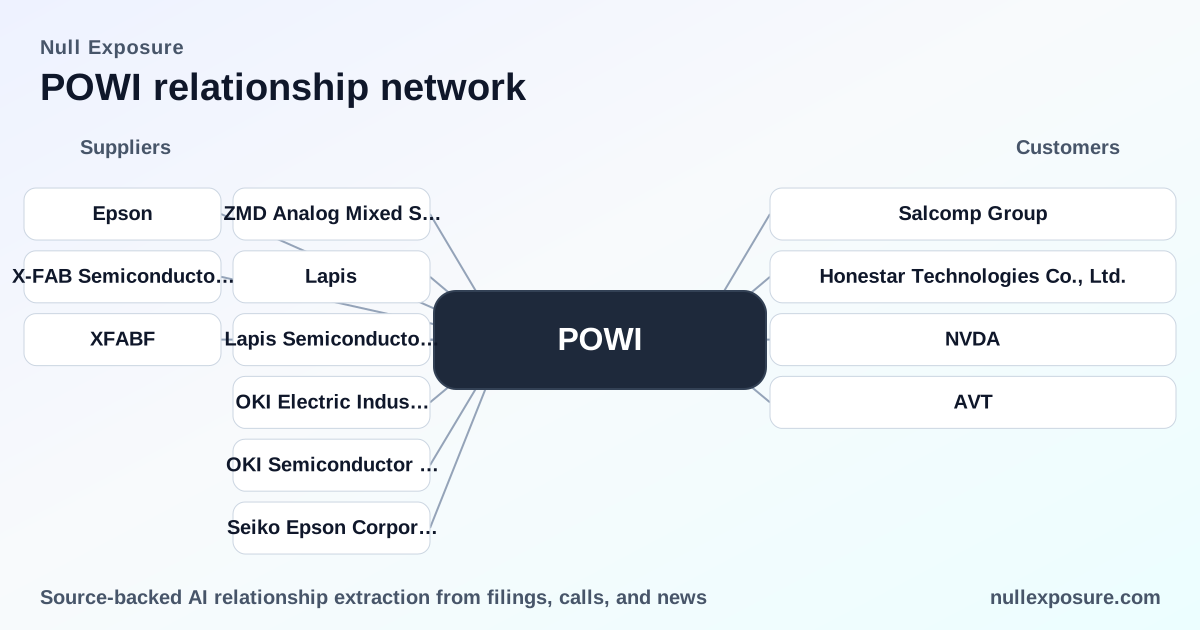
Power Integrations (POWI): customer concentration, distributor leverage, and the data‑center hinge
Power Integrations designs and sells high‑voltage mixed‑signal and analog integrated circuits used in power conversion; it monetizes by shipping components into OEMs and through a global distributor network that resells to merchant power suppliers and electronics manufacturers. Revenue is highly distributor‑driven and regionally concentrated in Asia, with a handful of channel partners and distributors accounting for the majority of sales, making customer relationships a primary lens for credit and equity risk. Learn how those relationships map to revenue and strategic exposure at https://nullexposure.com/.
What the company disclosure tells investors about how it sells and where the risk sits
Power Integrations operates on a short‑term order model with no long‑term purchase contracts, sells through both direct OEM channels and a network of independent distributors/resellers, and derives the large majority of revenue from Asia. These structural characteristics create four investment‑relevant signals:
- Contracting posture: short‑term. The 2025 Form 10‑K states the company does not have long‑term contracts with customers and that cancellations or order changes can materially affect operating results; this makes revenue more volatile and sensitive to end‑market order flow.
- Concentration by geography: APAC exposure. Power reports that approximately 84% of net revenue was generated in Asia in 2024–2025, reflecting manufacturing and supply‑chain geography that amplifies regional cycles and currency or policy risk.
- Channel dependence: distributors/resellers dominate. The company explicitly sells through distributors and resellers; its top ten customers (including distributors) represented roughly 81% of revenue in 2025, concentrating counterparty risk among a few channel partners.
- Maturity and criticality: entrenched component supplier with emerging strategic wins. While the business is established and profitable, the company’s design‑win model for high‑voltage GaN solutions creates pockets of strategic importance (for example in data‑center power architectures), but those wins still flow through short orders and distributors.
Taken together, these characteristics point to a business that is operationally mature but commercially concentrated, where distributor health and end‑market order cadence are principal drivers of near‑term volatility and medium‑term growth visibility.
Customer by customer: what the filings and earnings calls disclose
Below are the relationships named in the company’s disclosures and commentary, each covered individually.
Salcomp Group
Power Integrations disclosed Salcomp Group as a top customer that accounted for 11% of net revenue in 2025 (10% in 2024). According to the company’s 2025 Form 10‑K, Salcomp is one of two distributors that exceeded the 10% revenue threshold in 2025, underscoring significant revenue concentration in a small group of resellers (Power Integrations 2025 10‑K).
Honestar Technologies Co., Ltd.
Honestar Technologies is also named among the customers with meaningful purchases; the 2025 Form 10‑K specifically cites Honestar as a purchaser of Power Integrations’ products and one of the large distributors referenced in the customer concentration discussion (Power Integrations 2025 10‑K).
Avnet
Avnet is a prominent channel partner: the 2025 Form 10‑K reports Avnet accounted for 32% of net revenue in 2025, up from 30% in 2024 and 27% in 2023, signaling a single distributor that alone represents nearly one‑third of sales (Power Integrations 2025 10‑K).
AVT
The filing also lists AVT (the ticker symbol for Avnet) in the same customer table and disclosure language, echoing the same concentration figures—Avnet/AVT together represent a dominant distribution relationship that materially concentrates counterparty and receivables exposure (Power Integrations 2025 10‑K).
NVDA
Power Integrations referenced engagements with NVIDIA in earnings commentary related to data‑center power architectures; the company highlighted auxiliary power work for NVIDIA’s next‑generation 800‑volt DC architecture and the commercial relevance of its 1,700‑volt GaN devices as an alternative to silicon carbide (insidermonkey.com earnings transcript, Q4 2025 / FY2026 commentary).
NVIDIA
Separately indexed in the media capture, NVIDIA appears again in the same earnings‑call excerpt noting Power Integrations’ role in auxiliary power for next‑generation server designs; this public commentary demonstrates the company’s strategic positioning in data‑center electrification and high‑voltage GaN opportunities (insidermonkey.com earnings transcript, Q4 2025 / FY2026 commentary).
What these relationships imply for investors
- Revenue concentration risk is high. With Avnet alone representing roughly one‑third of revenue and the top ten customers—many distributors—accounting for about 81% of net revenue, any disruption with a distributor, or swings in end‑market order flow, will transmit quickly to reported results.
- Order visibility is limited by short‑term contracts. The company’s lack of long‑term contractual commitments to customers means confirmed design wins can still translate into lumpy shipments; this increases earnings volatility even when the underlying technology adoption is constructive.
- Geographic and supply‑chain cyclicality is material. With roughly 84% of revenue tied to Asia, regional inventory management, OEM seasonality, and manufacturing cycles will dominate quarter‑to‑quarter outcomes.
- Strategic upside is concentrated but meaningful. Public statements tying Power Integrations to NVIDIA’s 800‑volt DC architecture highlight high‑value design wins in data centers and validate the company’s GaN roadmap; that opportunity lifts the growth narrative but does not eliminate near‑term concentration risks because GaN wins still route through distributors and order schedules.
Investment action and where to look next
For investors focused on customer‑risk and credit exposure, the priority is to monitor distributor order trends (Avnet, Salcomp, Honestar), APAC demand indicators, and any change in contracting posture or move toward longer‑term supply agreements. For strategic growth monitoring, track design‑win announcements and customer confirmations around high‑voltage GaN in data‑center applications; the NVIDIA engagement is a useful leading signal of demand transformation. For more structured coverage and to map customer concentration across other semiconductor suppliers, visit https://nullexposure.com/.
Bold takeaways: POWI’s topline is materially dependent on a very small set of distributors, with Avnet the single largest counterparty; the business is exposed to APAC manufacturing cycles and operates on short‑term order rhythms, even as selective, high‑margin design wins (for example with NVIDIA) create upside.