POWWP (Ammo, Inc. Preferred): Marketplace-first, asset-light monetization after ammunition asset sale
Ammo, Inc. operates primarily as a marketplace and e-commerce owner — most notably as the operator of GunBroker.com — and monetizes through marketplace fees, payment-processing take rates, compliance and shipping services, and ancillary advertising/e-commerce revenue. In FY2025 the company executed a strategic pivot by selling its ammunition manufacturing assets to Olin Winchester for $75 million, materially shifting the balance of its operating model from manufacturing to a services- and platform-centric business. For investors assessing POWWP, the credit and commercial profile today is concentrated on marketplace monetization, counterparty concentration among active buyers/sellers, and geographic reliance on the U.S. regulated firearm ecosystem. Learn more about monitoring customer-concentration signals at https://nullexposure.com/.
What happened: a decisive asset sale that reshaped revenue risk
Ammo’s completed sale of its ammunition manufacturing assets to Olin Winchester transfers manufacturing cash flows and operating complexity away from the corporate balance sheet. According to multiple contemporaneous reports and the company announcement in March 2026, the buyer was Olin Winchester (a subsidiary of Olin Corporation) with a headline purchase price of $75 million. This transaction generated a modest on-book gain for Ammo and leaves the company to concentrate on marketplace growth through GunBroker.com, where revenue is generated at the point of transaction and is sensitive to the retention and activity of top buyers and sellers. (QuiverQuant and SGB Online, March 2026; The Outdoor Wire, May 2026.)
How the business model changed — practical implications for investors
- Contracting posture shifted from vertically integrated manufacturer to platform provider. The sale reduces complexity and capex exposure but increases reliance on third-party sellers and large buyers for revenue continuity.
- Concentration is higher at the user-level. Company disclosures explicitly tie revenue to activity among the most active buyers and sellers, increasing single-counterparty economic risk within the marketplace ecosystem.
- Criticality of compliance and payments increases. GunBroker’s role as a regulated intermediary for firearm transactions keeps compliance and payment-processing revenue central to monetization and operational risk.
- Maturity and scaling characteristics tilt toward SaaS/marketplace dynamics. Gross margins and cash generation will depend on volume growth and fee mix rather than manufacturing throughput.
These operating signals should be read as company-level characteristics derived from public commentary and the asset-sale disclosures.
All reported customer relationships and what they mean for POWWP
Below I cover every reported relationship instance in the public results dataset, with a concise, plain-English takeaway and the original source.
-
Olin Corporation — Theoutdoorwire report (first seen May 3, 2026): Olin Corporation’s Winchester subsidiary paid $75 million for Ammo’s ammunition business, effectively acquiring the manufacturing operations previously run by Ammo and crystallizing Ammo’s strategic shift to marketplace operations. (The Outdoor Wire, May 3, 2026: https://theoutdoorwire.com/features/01ebe08a-3fd8-4328-9e0c-dae1260d150f)
-
Olin Winchester — SGB Online report (first seen March 10, 2026): Outdoor Holding (parent of Ammo) sold its ammunition manufacturing assets on April 18 to Olin Winchester for $75 million, a transaction SGB Online highlighted in its review of company results and litigation disclosures. (SGB Online, March 10, 2026: https://sgbonline.com/gunbroker-com-parent-posts-steep-annual-loss-on-litigation-charges/)
-
OLN (Olin Corporation ticker) — SGB Online (same March 10, 2026 coverage): The SGB Online piece references OLN as the acquirer through its Winchester subsidiary, emphasizing the corporate buyer’s public identity and the $75 million headline price. (SGB Online, March 10, 2026: https://sgbonline.com/gunbroker-com-parent-posts-steep-annual-loss-on-litigation-charges/)
-
Olin Winchester, LLC — QuiverQuant press republish (March 10, 2026): AMMO’s press release, republished by QuiverQuant, confirms completion of the sale of ammunition assets to Olin Winchester, LLC and frames the divestiture as part of AMMO’s shift to focus on e-commerce growth through GunBroker.com. (QuiverQuant, March 10, 2026: https://www.quiverquant.com/news/AMMO%2C+Inc.+Completes+Sale+of+Ammunition+Assets+to+Focus+on+E-commerce+Growth+Through+GunBroker.com)
-
OLN (QuiverQuant republish) — QuiverQuant (March 10, 2026): The QuiverQuant republished announcement again links the buyer to OLN, underscoring market recognition that the Winchester purchase was executed by an Olin subsidiary. (QuiverQuant, March 10, 2026: https://www.quiverquant.com/news/AMMO%2C+Inc.+Completes+Sale+of+Ammunition+Assets+to+Focus+on+E-commerce+Growth+Through+GunBroker.com)
-
Olin-Winchester — SGB Online results recap (March 10, 2026): In a separate SGB Online summary of lower fiscal quarter results, the company notes the closed ammunition division sale to “Olin-Winchester,” reiterating the disposal across multiple corporate filings and press pieces. (SGB Online, March 10, 2026: https://sgbonline.com/gunbroker-com-parent-posts-lower-fiscal-q1-loss-revenues-slightly-down/)
-
OLN (SGB Online recap) — SGB Online (March 10, 2026): The recap uses OLN shorthand consistent with broader market reporting and links the transaction to the buyer’s corporate identity. This repetition across outlets confirms the transfer of manufacturing operations to Olin’s Winchester arm. (SGB Online, March 10, 2026: https://sgbonline.com/gunbroker-com-parent-posts-lower-fiscal-q1-loss-revenues-slightly-down/)
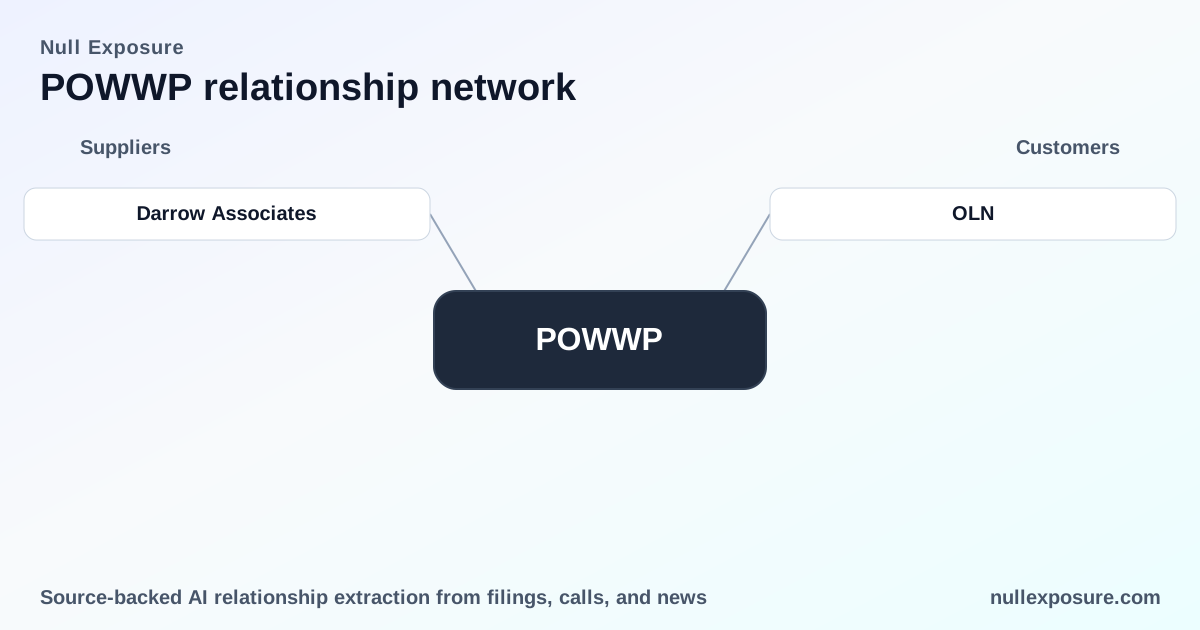
Key takeaway on relationships: All reported items point to a single counterparty—Olin/Winchester—executing a $75 million acquisition of Ammo’s manufacturing assets; the deal converts manufacturing exposure into liquidity and focuses Ammo on the GunBroker marketplace revenue stream.
Risk factors and what to watch next
- Concentration risk among active marketplace participants. Company commentary identifies revenue concentration in the most active buyers and sellers; investors should monitor buyer-seller churn and top-seller revenue share.
- Dependence on U.S. regulatory environment. Geographic concentration in North America (U.S.) and the regulated firearms clearance model make policy shifts and compliance events material to earnings.
- Execution of marketplace strategy. Post-sale value creation depends on growing transaction volume, improving fee mix, and maintaining trust/compliance infrastructure for regulated transactions.
Practical signals for portfolio due diligence
- Track quarterly active-buyer and active-seller metrics and top-customer revenue share in investor reports.
- Monitor payment-processing revenue and compliance-fee trends as proxies for marketplace monetization health.
- Watch Olin Winchester integration announcements only to the extent they affect any ongoing supply or transitional services agreements; primary transactional exposure now sits with platform economics.
For investors and analysts focused on counterparty exposures and marketplace dynamics, the Ammo pivot is a textbook transition from capex-heavy manufacturing to recurring, volume-driven service economics. For deeper monitoring and alerts on customer-concentration shifts, visit https://nullexposure.com/.
Bold final point: the $75 million sale to Olin/Winchester materially reduces manufacturing risk for Ammo and concentrates investor focus on the retention and monetization of GunBroker’s active buyer-seller base.