PPG Industries: Customer relationships that underpin a global coatings franchise
PPG Industries manufactures and sells paints, coatings and specialty materials to industrial, automotive, commercial and consumer end-markets, monetizing through product sales, selective service contracts and a broad distribution network across more than 70 countries. Its business model combines high-volume manufacturing scale with targeted, high-value partnerships (exclusive ingredient supply, OEM program trials, and channel agreements) that support margin durability and incremental market share. For focused customer intelligence and relationship mapping, visit https://nullexposure.com/.
Why customer relationships matter for PPG’s valuation
PPG’s revenue mix reflects a classic industrial materials profile: manufacturing and selling commoditized products at scale, supplemented by selective services and technical support that deepen customer ties. Company disclosures indicate services are a small proportion of revenue (under 5%); most revenue is recognized at the point control transfers to customers, consistent with a predominantly spot-sale contracting posture. Global sales are meaningful—about 68% of net sales outside the U.S.—which mitigates single-market cyclicality but increases exposure to regional demand swings.
Key operating-model signals investors should weigh:
- Contracting posture: Predominantly spot product sales with transactional recognition on shipment terms, which drives near-term revenue sensitivity to end-market volumes.
- Counterparty mix: A wide set that includes governments, commercial infrastructure customers, independent contractors and individual consumers; this diversity reduces counterparty concentration risk but raises complexity in service delivery.
- Role and criticality: PPG functions as manufacturer, seller, distributor and service provider; some relationships are critical (exclusive ingredient manufacturing), while most are standard supply arrangements.
- Geographic exposure: True global reach—significant EMEA, APAC, LATAM and NA footprints—requiring nimble supply chain management.
- Scale events: The company completed a major portfolio divestiture in late 2024, demonstrating the portfolio is actively managed and that large, single transactions ($100m+ proceeds cited) materially affect operating metrics.
Customer dossier: each reported relationship and the takeaways
Universal Display / OLED materials partner
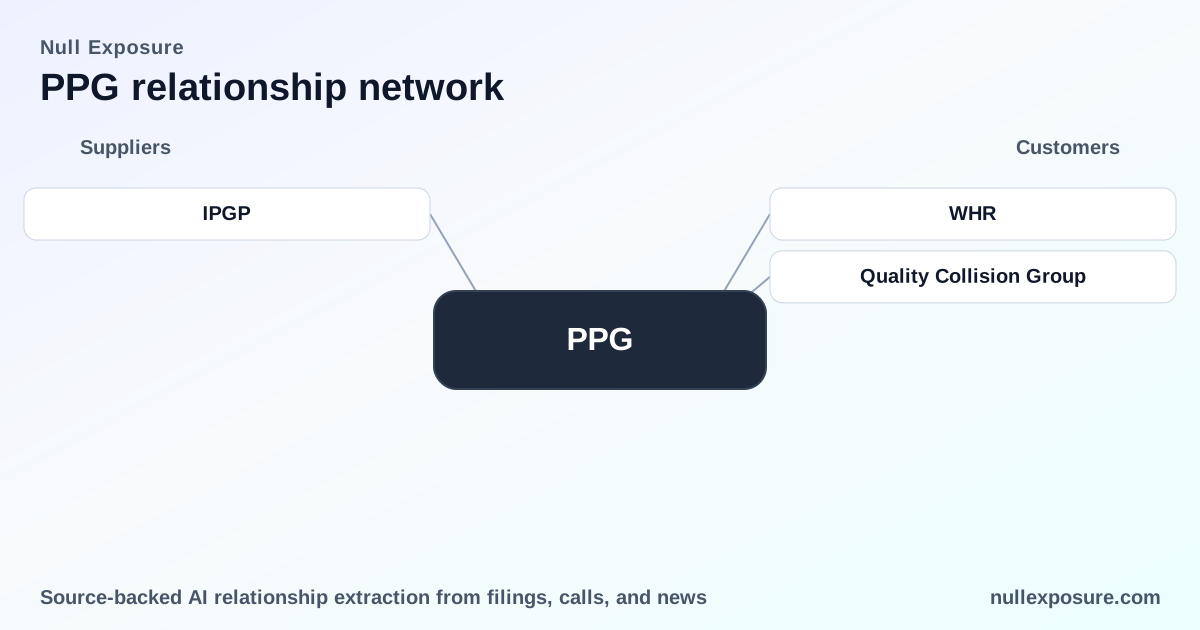
PPG has been the exclusive manufacturer of phosphorescent OLED emitter materials for Universal Display (UDC) since 2000, a multi-decade manufacturing relationship that underpins UDC’s capacity to scale OLED materials production. According to optics.org reporting and UDC’s investor materials (referenced in 2026 commentary), this long-term exclusivity has been central to industry growth and demonstrates PPG’s capabilities in specialty organic materials manufacturing.
Source: optics.org coverage of OLED materials partnership (2026) and Universal Display’s Q3 2025 remarks reported by AlphaStreet (2026).
Whirlpool Corporation (pilot trials for laser-curing)
PPG is participating in pilot trials with Whirlpool on powder formulations cured with laser systems, testing advanced PhotoniCURE laser curing across appliance components; the pilots seek to reduce curing energy and speed production while validating downstream serviceability. TradingView/Zacks and optics.org reports in 2026 describe these trials and frame them as early-stage collaboration with potential manufacturing efficiencies and new OEM adoption pathways.
Source: optics.org and TradingView/Zacks reporting on pilot trials with Whirlpool (March–May 2026).
Quality Collision Group (sole coatings supplier)
PPG was named the sole supplier of coatings for Quality Collision Group body shops, positioning PPG as the preferred aftermarket/refinish partner across a branded collision-repair network and supporting recurring consumable demand tied to vehicle repair volumes. Market reporting in 2026 highlights this channel agreement as a targeted distribution win in the automotive refinish segment.
Source: Market coverage published on FinancialContent/Markets (2026) noting Quality Collision Group supply designation.
How these relationships translate into commercial value
- Long-term manufacturing exclusivity (UDC) is a high-value, high-margin engagement that increases switching costs for the customer and raises the strategic importance of PPG’s specialty chemistry capability. This type of relationship supports above-average margins within specialty coatings and materials segments.
- Pilot programs with OEMs (Whirlpool) are signaling investments in R&D-led revenue expansion; successful pilots convert to product qualification cycles and incremental annual purchasing that can scale materially, but they carry a timeline before revenue becomes material.
- Channel exclusivity (Quality Collision Group) secures a steady stream of aftermarket sales, smoothing cyclicality tied to original equipment production and providing a predictable consumables franchise.
Risk checklist for investors
- Revenue cyclicality tied to spot sales: With much of sales recorded when control transfers, PPG’s top line will track end-market volumes closely; a sharp industrial slowdown will show quickly.
- Customer concentration vs. diversification: The mix of many transactional customers and a few strategic partners (exclusive manufacturer deals) means isolate risk: losing a large OEM or exclusive partner would have outsized effects, but geographic and end-market diversification reduces single-point failure risk.
- Execution on pilot conversions: Pilot trials (like Whirlpool) are binary value drivers — success leads to recurring OEM purchases; failure yields sunk engineering and opportunity costs.
- Supply and regulatory exposure: Global manufacturing and specialty chemistry inputs expose PPG to raw material price moves, trade policy and environmental compliance costs across regions (EMEA, APAC, LATAM, NA).
Bottom line and what to watch next
PPG’s customer relationships combine durable, high-value manufacturing partnerships with broad transactional revenue streams. Exclusive manufacturing agreements—like the decades-long OLED materials arrangement—are particularly valuable because they embed PPG in customers’ supply chains and support superior profitability in specialty lines. OEM pilot work and channel exclusivity wins are important growth engines but require monitoring for conversion into recurring revenue.
For investors and operators tracking customer-driven upside, monitor: (1) conversion timelines from pilot to production at OEMs, (2) renewal/expansion terms for exclusive manufacturing contracts, (3) geographic sales trends given PPG’s 68% of sales outside the U.S., and (4) the company’s execution against portfolio changes following the 2024 architectural coatings divestiture.
For a deeper view of customer relationships and how they map to commercial risk and opportunity, visit https://nullexposure.com/.