Pioneer Power Solutions (PPSI): Customer Concentration, e‑Mobility Momentum, and What It Means for Investors
Pioneer Power Solutions manufactures, sells and services specialized electrical transmission, distribution and mobile power equipment, and monetizes through equipment sales, one‑to‑five year service agreements, and recurring maintenance and support fees. The company’s recent growth is driven by its e‑Boost mobile EV charging product line and strategic purchase plans with charging partners, while legacy utility and commercial contracts continue to underpin revenue and receivables. For investors, the thesis is straightforward: revenue visibility comes from large, concentrated customers and multiyear service contracts, while upside is tied to e‑mobility partnerships and backlog growth—but concentration creates near‑term cash and credit sensitivity.
Learn more at https://nullexposure.com/.
Why customer relationships determine the risk/reward profile
Pioneer’s go‑to‑market is a hybrid of product sales and service economics. The company sells equipment and also provides scheduled preventative maintenance and 24/7 repair services under contracts that range from one to five years, creating recurring revenue streams. At the same time, standard commercial payment terms—customer payments generally due in 30 days—mean short cash conversion on individual invoices.
Two structural characteristics define the operating model:
- Concentration and criticality: Pioneer reports that its 20 largest customers accounted for roughly 74% of consolidated revenue, and one unnamed customer represented approximately 72% of accounts receivable as of December 31, 2024. That level of concentration materially amplifies counterparty and liquidity risk at the company level.
- Ramping product cycle: The company explicitly cites a surge in orders for its mobile EV charging e‑Boost product during 2024, which drove an increase in backlog. This creates a growth runway tied to commercial partnerships and fleet electrification adoption rather than purely to replacement or maintenance cycles.
Geographically, Pioneer is North America‑centric (87% U.S., 13% Canada in 2024) but is actively pursuing international opportunities in the Middle East through partner channels. The company sells to a mix of utility, industrial, commercial and government counterparty types, supporting both capital equipment sales and contracted services.
Customer relationships — line‑by‑line
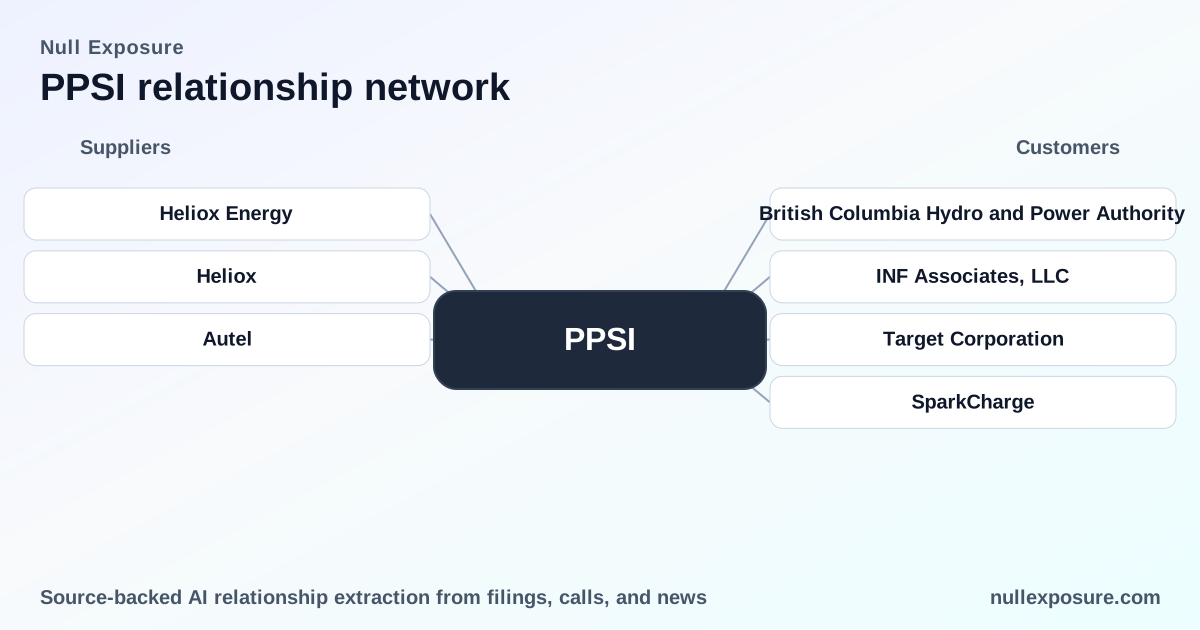
British Columbia Hydro and Power Authority
Approximately 13% of Pioneer’s sales in the year ended December 31, 2024 were made to British Columbia Hydro and Power Authority, reflecting a meaningful utility customer relationship during FY2024. According to Pioneer’s Form 10‑K for the year ended December 31, 2024, this single public utility accounted for a material share of sales in that period.
INF Associates, LLC
INF Associates accounted for approximately 22% of sales during the year ended December 31, 2024, making it the largest named customer by reported sales share in the 2024 fiscal year. The 10‑K discloses this concentration directly, underscoring the reliance on a small set of large commercial customers.
Target Corporation
Approximately 14% of sales during the year ended December 31, 2023 were made to Target Corporation, per Pioneer’s disclosures, indicating a prior retail / commercial relationship that materially contributed to revenue in FY2023 and is highlighted in the 10‑K narrative.
SparkCharge
Pioneer’s strategic partner SparkCharge placed an additional order for four e‑Boost 275‑kilowatt units valued at $1.6 million shortly after quarter‑end, as part of a multiyear purchase plan to support rideshare and autonomous vehicle electrification. This was disclosed in a Q3 2025 earnings transcript published on InsiderMonkey in March 2026 and demonstrates repeat commercial demand for e‑Boost from mobility operators.
Savvy Charging Technologies
Pioneer announced a strategic partnership with Savvy Charging Technologies to deploy mobile EV charging solutions in the United Arab Emirates and adapt the e‑Boost product line for the Middle Eastern market. A May 2026 news report on Investing.com covered the collaboration and framed it as aligning Pioneer’s mobile charging tech with UAE fleet electrification targets through a regional partner channel.
(Each relationship above is drawn from Pioneer’s 2024 Form 10‑K and recent company disclosures and press coverage; the 10‑K supplies the revenue concentration figures while the news reports document strategic e‑mobility orders and international partnerships.)
How those relationships shape commercial constraints and exposure
Pioneer’s relationship mix produces a set of company‑level constraints that define operational and credit risk:
- Contracting posture: The firm runs a hybrid model—one‑to‑five year service contracts provide recurring revenue, while many transactions still settle on 30‑day payment terms, creating a combination of revenue visibility and working capital sensitivity.
- Concentration risk: With top 20 customers representing ~74% of revenue and one account representing ~72% of receivables, credit or payment disruption from a single counterparty would have outsized impact on cash flow and margins.
- Counterparty diversity: The customer base spans utilities, commercial fleets, government entities and EV infrastructure developers, which moderates sector cyclical risk but leaves Pioneer exposed to large single‑customer effects.
- Maturity and stage: The company’s core service business is active and recurring, while the e‑Boost product line is in a ramping growth phase, supported by multiyear purchase plans and partner orders that expand addressable market.
- Geography: Predominantly North American sales today provide near‑term predictability, with international partnerships signaling expansion opportunities.
These constraints are company signals and should inform any valuation or risk assessment rather than be attributed to any single named customer unless the filing specifies otherwise.
Investment implications — upside, downside, and what to watch
The upside case is clear: e‑Boost order cadence and multiyear partner purchase plans can materially expand revenue and improve gross margins if Pioneer scales production and service delivery around those partnerships. Strategic deals with SparkCharge and Savvy Charging Technologies validate product market fit for fleet and mobile charging applications.
The downside is equally stark: extreme customer concentration and negative profitability metrics (Pioneer reported negative EBITDA and net income metrics in recent trailing periods) make the company sensitive to payment delays, contract renewals and working capital shocks. A single large receivable turning problematic would stress liquidity and possibly require financing or operational tightening.
Key items for investors to monitor:
- Quarterly updates on accounts receivable composition and whether the ~72% AR concentration is diversified.
- Backlog and e‑Boost order flow from strategic partners, both domestic and international.
- Changes in payment terms or service contract renewals among the largest customers.
- Margin progression as production scales and service revenue mixes shift.
For a more systematic review of these customer‑driven dynamics, visit https://nullexposure.com/.
Bottom line
Pioneer Power Solutions operates at the intersection of legacy power equipment and fast‑growing mobile EV charging. Its value hinges on successful conversion of e‑Boost demand into repeatable revenue streams while managing acute customer concentration and working capital risk. Investors should treat near‑term upside as contingent on order conversion and receivables performance, and manage position sizing accordingly.