Perpetua Resources (PPTA): Customer relationships that shape a mining developer’s pathway to cash flow
Perpetua Resources develops the Stibnite project in Idaho and will monetize through the mining and sale of gold, antimony and by‑products, supplemented by structured capital raises and royalty encumbrances. The company’s commercial footprint today is a combination of direct commodity demand signals (notable defense interest in antimony), investor-led financing arrangements, and long‑dated royalty agreements that will materially affect future revenue capture. This note reviews the customer and investor relationships surfaced in public reporting and explains the operational and contractual constraints that define Perpetua’s route to production.
If you want a concise feed of relationship signals for mining issuers, see more at https://nullexposure.com/.
Why these relationships matter for investors
Perpetua is not a commodity producer today; its valuation and near‑term funding picture are driven by project development milestones and strategic counterparties. Customers or off‑takers that commit demand early — or financiers that inject capital — materially reduce execution risk and change valuation milestones. Conversely, long‑term royalties and NSRs dilute the free cash flow available to equity and alter project economics. The items below are the actionable relationship signals investors need to factor into models and diligence.
Relationship-by-relationship: what public reporting shows
U.S. Army — demand signal for antimony from Stibnite
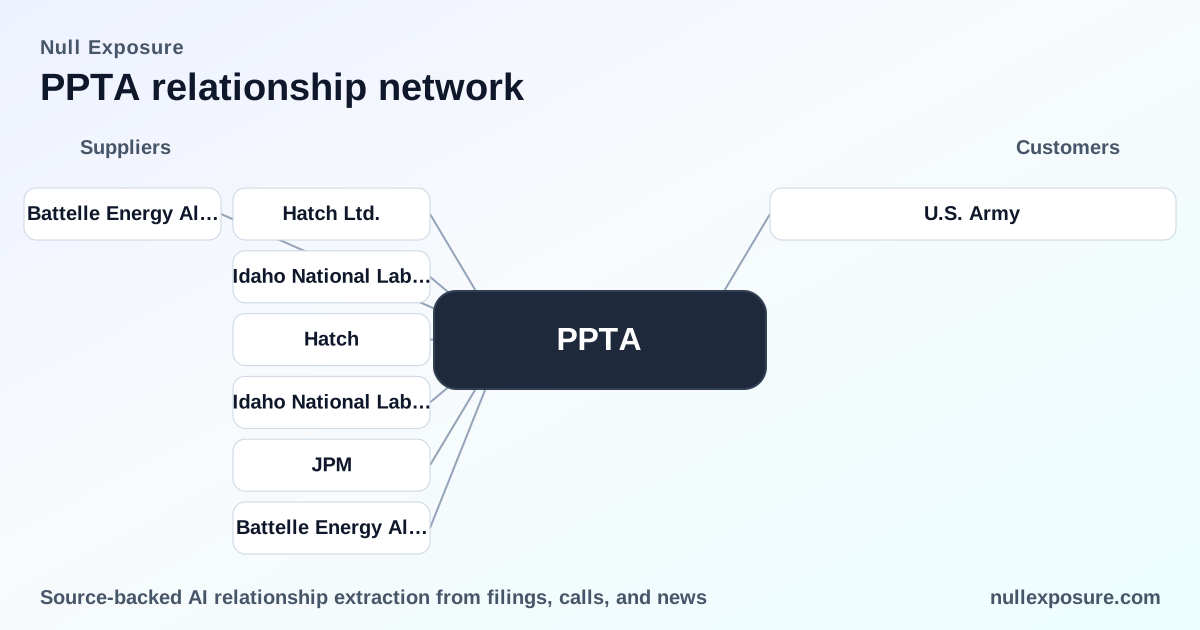
The U.S. Army has been publicly linked to efforts to secure domestic antimony supply, specifically citing ore from Perpetua’s USD 1.3 billion Stibnite project in Idaho as a feedstock for compact refineries targeted at defense needs. This is a strategic demand signal: defense procurement interest increases the potential pricing and offtake priority for antimony production. (Source: Mugglehead article reporting on U.S. Army interest, March 10, 2026.)
Agnico Eagle Mines Limited — strategic investor in a private placement
Agnico Eagle signaled commitment by planning to participate in a concurrent private placement that could add about USD 7 million via a purchase of 288,200 shares, reflecting strategic investor appetite to support Perpetua’s financing round. Institutional participation from a major gold producer is an endorsement of project geology and management, and reduces near‑term capital risk. (Source: Investing.com insider‑trading and financing coverage, May 3, 2026.)
JPMorgan Chase — placement participant and financing intermediary
JPMorgan Chase appears among the named participants in a USD 255 million private placement announced by Perpetua, indicating the involvement of global banking capital in the company’s recapitalization. Bank participation brings distribution capacity and validation for the raise, and signals fewer execution gaps on financing. (Source: Investing.com reporting on the $255 million private placement, May 3, 2026.)
What the constraints tell us about Perpetua’s operating model
Public constraint excerpts provide direct signals about Perpetua’s commercial architecture. Translate these into investor‑centric characteristics:
-
Long‑term contractual posture (company‑level signal and explicit royalty counterpart): Perpetua has granted material Net Smelter Return (NSR) royalties to Franco‑Nevada, including a 100% NSR on future payable silver production (March 21, 2024) and a 1.7% NSR on future gold production (effective May 9, 2013) adjusted by permitted capacity. These are durable encumbrances that allocate a fixed share of future metal value away from operating cash flow and investors should model them as permanent revenue share obligations rather than transient fees. (Evidence: company disclosure excerpts re: Franco‑Nevada NSRs.)
-
Seller role and core product focus (company‑level signal): Perpetua’s stated revenue plan centers on mining and selling gold, antimony, and by‑products, establishing the company as the primary seller of mined output rather than a pure developer or services contractor. That position ties equity value directly to metal prices, production timing and the netbacks after royalties and capital recovery.
-
Contract maturity and predictability: The existence of long‑dated NSRs and the company’s need for sizeable private placement funding indicate a development‑stage enterprise with predictable contractual claims but uncertain production timing; investors must balance the certainty of royalty encumbrances against the timing risk of converting resource to revenue.
Investment implications: what to model and monitor
- Revenue capture is structurally reduced by royalties. Model Franco‑Nevada NSRs as first‑order reductions to project free cash flow; royalty structures are long term and not easily renegotiated.
- Defense demand can be a premium driver for antimony. The U.S. Army’s explicit interest in domestic antimony supply creates potential pricing power or priority offtake during initial production ramp, which should be stress‑tested in commodity scenarios.
- Financing credibility is improving through strategic and banking participation. Agnico Eagle’s and JPMorgan Chase’s participation in the private placement is a de‑risking event for near‑term capital needs; track final placement pricing and investor composition for dilution effects and covenant terms.
- Concentration and timing risk remain central. Perpetua’s business model depends on Stibnite reaching permitted production; any permitting, technical or cost overruns have outsized impacts because the commercial relationships are tied to a single flagship asset.
Key takeaways for portfolio managers
- Perpetua monetizes through future metal sales and is contractually committed to royalty payments that will permanently reduce free cash flow.
- Strategic buyer interest (U.S. Army) and institutional investor support (Agnico, JPMorgan) lower execution risk, but do not eliminate timing and permitting exposure.
- Modeling should prioritize royalty deductions, realistic production timing, and optionality in antimony pricing to capture defense‑led demand dynamics.
For an investor‑grade feed of corporate relationship signals and to track counterparty developments, visit https://nullexposure.com/.
Closing recommendation
Perpetua’s commercial picture is a classic development‑stage commodity play: high leverage to successful project delivery, tempered by concrete long‑term encumbrances and recently strengthened by credible financing partners and strategic demand indications. Monitor final private placement terms, any formal offtake or procurement contracts with defense agencies, and the company’s execution against permitting milestones to update valuation and risk allocations.