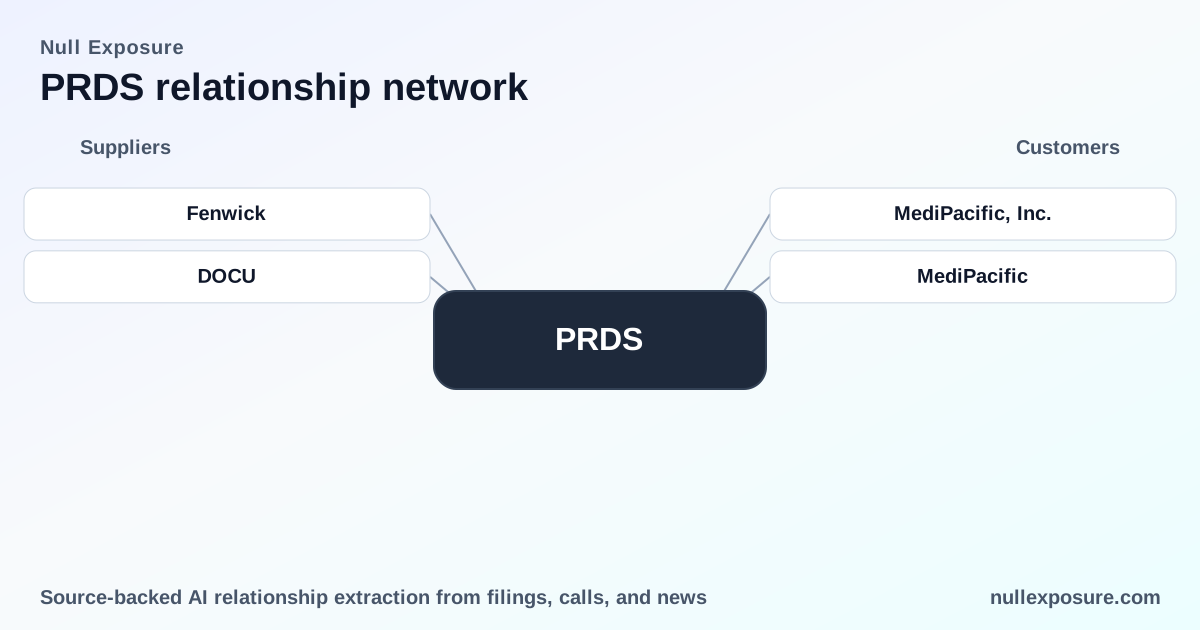
Pardes Biosciences (PRDS): Acquisition by MediPacific and what it means for stakeholders
Pardes Biosciences operates as a clinical-stage biopharmaceutical company that monetizes through the development and disposition of intellectual property and drug programs—most notably a COVID‑19 antiviral portfolio—and through corporate transactions. The company’s cash realization strategy is transaction-driven: near-term value crystallization occurs via an all-cash acquisition agreement supplemented by a non‑tradeable contingent value right (CVR) that funnels future proceeds from asset monetization back to shareholders. Investors should treat PRDS as a monetization-first story rather than a revenue-generating operating company.
For a concise, investor-focused product and relationship briefing on PRDS, visit https://nullexposure.com/.
The acquisition structure that defines the relationship with MediPacific
Pardes agreed to be acquired by MediPacific for a base cash consideration of not less than $2.02 per share with additional cash consideration of up to $0.17 per share plus a CVR tied to future monetization of its COVID‑19 antiviral assets. The purchase price range commonly reported is $2.02 to $2.19 per share, representing a modest premium to recent trading. The CVR conveys a contractual right to receive a significant share of proceeds from any license or disposition of the relevant programs—an arrangement built to preserve upside for existing equity holders while delivering immediate liquidity.
According to press releases and filings published in July and August 2023 and consolidated in market coverage, the CVR provides 80% of net proceeds from any license or disposition of the identified portfolio occurring within five years of closing. (Source: GlobeNewswire, July 30, 2023; BizWire filings, July–August 2023.)
Why the CVR matters
The CVR is material because it converts uncertain future licensing outcomes into a contractually allocated stream of proceeds for shareholders while being non‑tradeable, which concentrates post‑close liquidity management with the acquirer and the company’s remaining stakeholders. This structure signals a transaction focused on immediate balance sheet exits paired with deferred upside capture.
Relationship snapshots — source‑by‑source (one short note per record)
- A BizWire investor alert dated July 21, 2023 described the proposed transaction terms: MediPacific would acquire Pardes with the cash floor of $2.02 per share and a non‑tradeable CVR tied to the COVID‑19 antiviral IP. (Source: BizWire report carried by FinancialContent, July 21, 2023.)
- A follow‑up BizWire item on August 7, 2023 reiterated the same cash floor and CVR structure, emphasizing that the final per‑share price would adjust based on the company’s net cash at closing. (Source: BizWire via FinancialContent, August 7, 2023.)
- GlobeNewswire published a July 30, 2023 release noting the CVR would represent the right to receive 80% of net proceeds from licenses or dispositions of Pardes’ programs effected within five years of closing. (Source: GlobeNewswire, July 30, 2023.)
- A shareholder litigation alert from The Schall Law Firm in July 2023 announced an investigation into potential breaches of fiduciary duty connected to the MediPacific transaction, flagging governance and process review as a parallel risk. (Source: The Schall Law Firm press release reported July 19, 2023.)
- Coverage on SPAC and deal tracking outlets summarized the transaction as a premium sale following Pardes’ SPAC combination, citing a per‑share range of $2.02–$2.19 and noting the sale represented an 8%–17% premium to recent close. (Source: SPACInsider deal coverage, July 2023.)
Constraints and operating‑model signals investors need to know
No explicit constraints were provided in the relationship data as captured here; treating that absence as an observation, the company‑level operating signals are as follows:
- Contracting posture: The company’s primary contracting posture is exit‑oriented. The agreed acquisition plus CVR indicates management prioritized immediate liquidity while retaining upside through contingent instruments rather than ongoing commercialization commitments.
- Customer concentration: This transaction concentrates the company’s single most important counterparty exposure to a single acquirer—high concentration in buyer relationship terms—because the acquirer will control near‑term realization of key assets and any subsequent monetization.
- Criticality of assets: The COVID‑19 antiviral portfolio is the critical value driver for shareholders post‑closing; the CVR explicitly ties shareholder economic outcomes to the successful future monetization of that asset class.
- Maturity and commercialization profile: The assets underlying the CVR are early or pre‑commercial, which implies that near‑term cash realization depends on transactional outcomes (licensing, sale) rather than product revenues; the CVR is a mechanism to transfer commercialization risk into contingent shareholder upside.
These characteristics combine into a business model that is transactional, concentrated, and dependent on third‑party execution for upside.
Investment implications and risks
- Immediate liquidity but capped near‑term upside. The cash floor delivers immediate value recognition to shareholders, while the small incremental cash component and non‑tradeable CVR leave most upside contingent on future deals.
- Governance and litigation risk. Multiple shareholder‑investigation notices were filed in the wake of the transaction announcement, which introduces execution risk around closing and potential remediations that could alter deal economics. (Source: The Schall Law Firm investor alert, July 2023.)
- Execution transfer to acquirer. Because the CVR ties future proceeds to licensing or disposition events, value realization depends on the acquirer’s strategy and competence in monetizing the antiviral IP.
- Concentration of counterparty risk. A single acquirer structure means any operational or strategic missteps by MediPacific directly reduce the probability or scale of the CVR payoff.
Key takeaway: For investors and partners evaluating PRDS relationships, the company’s value is now concentrated in a single commercial lever—the CVR tied to its antiviral portfolio—and in the acquirer’s ability and willingness to monetize that portfolio within a defined five‑year window.
For a focused intelligence product and timely updates on PRDS counterparties and deal outcomes, see https://nullexposure.com/.
Bottom line
Pardes’ relationship with MediPacific converts speculative development upside into a hybrid of immediate cash and contingent proceeds. The commercial reality for equity holders is clear: liquidity today, contingent upside tomorrow, and concentrated counterparty risk throughout. Investors should underwrite the acquirer’s monetization plan, monitor legal and governance developments, and treat the CVR as the primary vector through which residual value will be realized.