Phillips 66 (PSX): Customer Relationships that Drive Cash Flow—and Where Counterparty Risk Shows Up
Thesis: Phillips 66 operates as an integrated energy company that monetizes through refining, midstream logistics, marketing/retail channels, chemicals joint ventures, and renewable fuels, capturing margin at multiple points from feedstock procurement to finished-product sales and branded retail. Investors should value Phillips 66 not solely as a refinery operator but as a portfolio of customer and counterparty relationships—ranging from long-term feedstock contracts to large, structured sustainable aviation fuel (SAF) commitments—that drive predictable revenue but also concentrate counterparty exposures. For a concise, relationship-focused view of PSX’s customer footprint, see https://nullexposure.com/.
Why relationships matter: Phillips 66's earnings and capital allocation hinge on a mix of stable, contract-backed cash flows (marketing incentives and minimum volume commitments) and variable, spot-driven sales across North America and global renewable markets. That mix produces both resilience in cash flows and episodic commercial risk when counterparties shift strategy or terminate agreements.
A quick tour of how Phillips 66 makes money
Phillips 66 refines crude and converts feedstocks into gasoline, distillates, jet fuel and lubricants, markets branded retail sites, operates midstream infrastructure for transportation and storage, and participates in petrochemicals through a 50% CPChem JV. Revenue drivers are product sales (point-in-time recognition when title passes), contracted transportation/terminal fees, and long-term marketing incentive programs that are amortized over contract terms. The Renewable Fuels business also sources global feedstocks, manages regulatory credits and markets renewable products worldwide, creating a growing but contract-sensitive revenue stream.
Customer relationships — concise, investor-ready summaries
Below are the relationships surfaced in recent filings and press coverage. Each relationship is summarized in plain English with source context.
-
SAFX / XCF (New Rise subsidiary): Phillips 66 terminated a long-standing supply and offtake agreement with XCF’s New Rise effective May 1, 2026 and suspended performance obligations, prompting XCF to negotiate an orderly wind-down and feedstock recovery. This signals a material commercial change for that renewable fuels counterparty. According to a Globe and Mail report on May 3, 2026, Phillips 66 gave notice of termination and suspended performance obligations. A separate investor note noted the original 2017 feedstock supply arrangement for a Reno, Nevada plant. (Globe and Mail, May 2026; investor coverage, April 2026)
-
PRT (Boaz Energy reference): Phillips 66 accounted for a very large share—about 30.59%—of Boaz Energy’s oil and natural gas revenues in FY2024, indicating concentration of offtake or sales into Phillips 66 for that upstream supplier. This comes from the PRT FY2024 filing. (PRT FY2024 10‑K/annual filing)
-
CLMT (Karns City and Dickinson facilities): CLMT states it holds long-term feedstock supply agreements with Phillips 66, with some agreements that can roll to month-to-month—reflecting both durability and potential near-term flexibility in commercial terms for key plants. (CLMT FY2024 10‑K/annual filing)
-
United Airlines (UAL): Phillips 66 contracted to supply up to 41.6 million liters (11 million gallons) of SAF, with United set to physically use the fuel under the arrangement, providing an offtake channel into commercial aviation for Phillips 66’s renewable fuels output. Public release coverage described the expected lifecycle GHG reductions associated with the volume. (Company press releases and ESG Today / Rigzone coverage, Apr 2026)
-
DSV: DSV is a participant in the SAF collaboration using a book-and-claim approach, enabling verified emissions reductions to be allocated without physical consumption, and is identified as a major contracted counterparty in Phillips 66’s corporate SAF program. DSV characterized the arrangement as the largest contracted SAF supply with a single customer in the company’s Eco‑Skies Alliance program. (Company press releases and Rigzone/ESG Today coverage, Apr 2026)
-
Microsoft (MSFT): Microsoft joins the SAF initiative via book-and-claim participation, effectively purchasing verified emissions reductions tied to Phillips 66 SAF production rather than consuming physical fuel. This underlines corporate demand for decarbonization credits tied to Phillips 66 output. (ESG Today / company disclosures, Apr 2026)
-
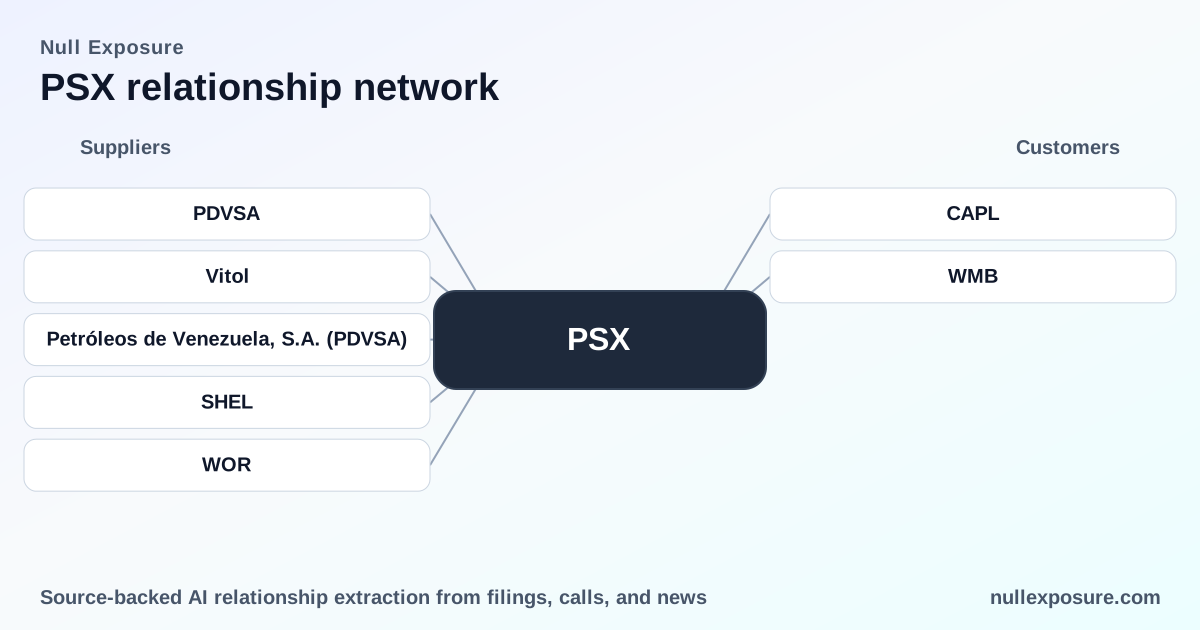
Williams Companies (WMB): Williams acquired Phillips 66’s 40% stake in the Discovery pipeline in the Gulf of Mexico, increasing Williams’ ownership to 100% and reflecting Phillips 66’s disposition of midstream assets as part of portfolio optimization. TradingView coverage noted the transaction in the context of asset reshuffling. (TradingView reporting, Mar 2026)
-
NVX: NVX referenced purchasing certain raw materials from Phillips 66 in a Q1 2025 earnings call, indicating a supplier-buyer relationship for feedstocks or intermediate materials. (NVX Q1 2025 earnings call transcript)
-
CrossAmerica Partners LP (CAPL): CrossAmerica’s announcement highlights established retail and brand relationships with major oil brands including Phillips 66 across a 34‑state footprint, confirming Phillips 66’s role as a branded marketer and supplier to dealer-operated and company-owned outlets. (CrossAmerica press release, Mar 2026)
What the constraints tell investors about PSX’s operating model
The company-level constraints extracted from filings and disclosures describe a commercial posture that blends contract types, geographic reach, and concentration characteristics:
-
Contracting posture mixes long-term and short-term arrangements. Phillips 66 operates incentive programs amortized over 5–15 years for marketing customers while also conducting many spot or variable-consideration contracts with expected durations under one year. That duality delivers both predictable revenue streams and exposure to commodity-price and counterparty volatility.
-
Geographic footprint is global but North America‑centric. The company shows material scale in North America (7,450 branded outlets, multiple U.S. refineries), meaningful operations in EMEA (refining and marketing), and selective presence in LATAM (brand licensing in Mexico), while renewable fuels and chemicals reflect truly global procurement and sales activities.
-
Roles across the value chain are multiple and complementary. Phillips 66 acts as manufacturer (refining), buyer (procurement of feedstocks), and reseller/marketer (branded outlets and wholesale). This vertical integration supports margin capture but creates complex counterparty linkages.
-
Business segments span core product sales, infrastructure, and services. Revenue stems from refined product sales (each unit is a distinct performance obligation), midstream transport and terminal fees, and services such as NGL fractionation and export logistics.
-
Concentration and meaningful committed spend exist. Remaining performance obligations on minimum volume commitments were reported at $566 million at December 31, 2024, expected to be recognized through 2031, indicating large, contract-backed cash flows that are material to future revenue recognition.
Together these signals imply an operator that balances stable, contractually backed cash flows with variable commodity exposure and evolving counterparty arrangements—particularly in the transition to renewable fuels.
Investment implications: where returns and risks intersect
-
Positive: diversified monetization across refining, midstream, and marketing provides multiple margin sources and cash generation, supported by meaningful contracted cash flows. Analysts’ consensus and Phillips 66’s forward P/E point to value in that mix.
-
Risk: counterparty shifts and terminations in renewable feedstock/offtake contracts (e.g., the XCF/New Rise termination) can produce near-term operational disruption and renegotiation costs. Large SAF commitments to corporates like United, DSV and Microsoft diversify offtake but create new counterparties with different contractual constructs (book-and-claim models).
-
Balance-sheet and strategic flexibility matter. Asset dispositions such as the Discovery pipeline stake sale to Williams demonstrate active portfolio management, which reduces midstream complexity but also reshapes recurring revenue.
For deeper relationship analytics and scenario work, visit https://nullexposure.com/ to explore linked commercial signals and counterparty histories.
Bottom line
Phillips 66’s customer relationships are the practical engine of its integrated margin capture: long-term marketing incentives and minimum volume commitments provide a backbone of predictable revenue, while spot sales and renewable fuel contracts create growth and exposure. Recent contract terminations and large SAF deals highlight both the commercial frictions and strategic opportunities inherent in the energy transition. Investors should monitor counterparty concentration metrics, remaining performance obligations, and the cadence of renewable offtake agreements to assess near-term cash flow durability and long‑run upside.