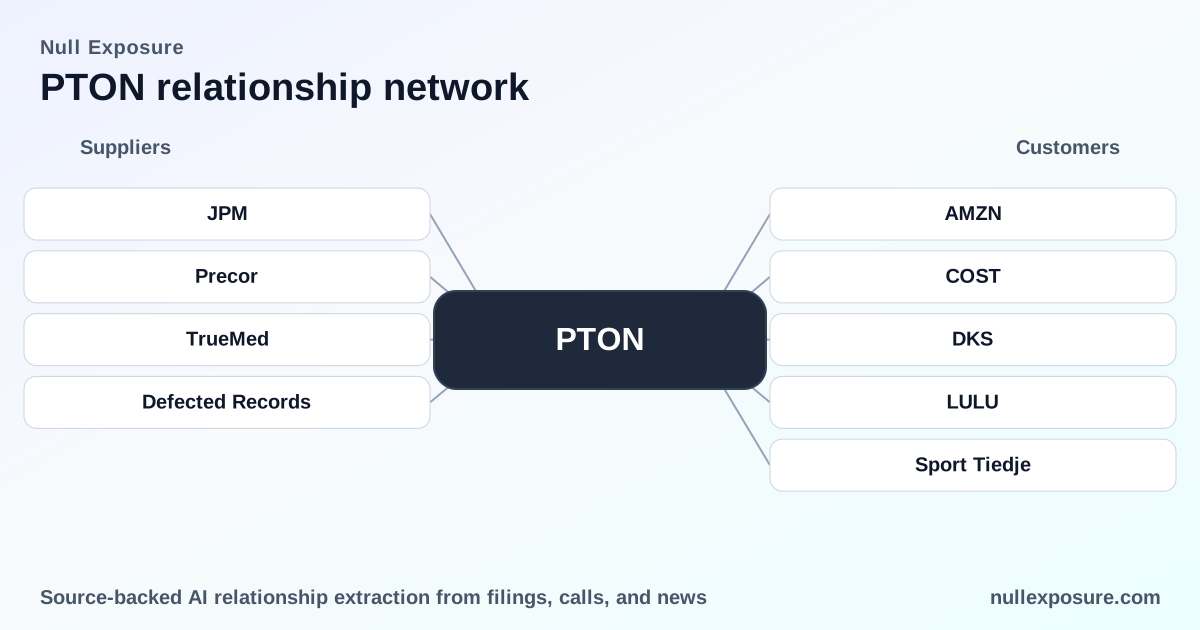
Peloton (PTON): Customer relationships that define revenue durability and distribution reach
Peloton monetizes a hybrid hardware-plus-subscription model: it sells connected fitness equipment and generates recurring membership revenue from monthly or annual app and connected-device subscriptions. Revenue depends on a high-margin subscription base backed by hardware distribution partners and third-party integrations that extend Peloton content beyond its owned devices. For investors, the key questions are customer concentration, contract tenor, and how strategic partnerships translate into incremental subscribers and engagement. For a concise tracker of Peloton relationships and signal flow, visit https://nullexposure.com/.
What to know up front: the operating blueprint
Peloton’s operating posture is subscription-first with hardware as a distribution and retention tool. Company filings through June 30, 2025 show subscriptions are offered month-to-month or prepaid, while the hardware portfolio remains an important acquisition channel. The firm sells direct and through partners, supports short-term rental offers, and maintains a global member base concentrated in North America. These characteristics produce a business that is simultaneously recurring and distribution-dependent — a mix that amplifies both upside from engagement growth and downside from retail or partner distribution disruption.
Strategic constraints that shape risk and runway
- Contracting posture — short-term, recurring: Peloton’s revenue mix is dominated by subscriptions billed monthly or annually, which makes cashflows recurring but easily churnable if engagement falls (company disclosures, FY2025).
- Counterparty profile — individual consumers: The “Member” definition is individual-focused, underscoring consumer marketing and retention economics as primary levers (company disclosures, FY2025).
- Geographic concentration — North America first, global footprint second: The United States accounted for roughly 88–89% of revenue in recent fiscal years, even as Peloton reports about six million Members globally (company filings through June 30, 2025). High U.S. revenue concentration is a material concentration risk.
- Role mix — seller and service provider: Peloton sells hardware through multiple channels while delivering content and a software platform that is critical to member experience (company disclosures, FY2025).
- Product maturity signals: The company discontinued the Peloton Guide in July 2025 while continuing support for existing features, signaling product portfolio pruning and allocation of R&D/resources (company disclosures, 2025).
These constraints point to a business where engagement and distribution partnerships drive subscriber growth, but where short contractual tenors and U.S. concentration create exposure to churn and retail distribution cycles.
For ongoing monitoring of Peloton’s partner set and relationship changes, see https://nullexposure.com/.
Relationship roll-call: every customer and partner in the recent coverage
Below are the customer and partner relationships surfaced in recent coverage, with a plain-English summary and the source for verification.
Spotify (SPOT)
Peloton struck a global content distribution partnership that will surface Peloton’s premium subscriber classes to Spotify Premium users, positioning Peloton content inside Spotify’s consumer-facing hub as an ad-free, high-engagement offering for music subscribers; Peloton described this as a distribution play (Spotify earnings call coverage, FY2026). Source: Benzinga transcript of Spotify Q1 2026 earnings and related press coverage (May 2026).
Dick’s Sporting Goods (DKS)
Dick’s Sporting Goods is an active retail partner that sells Peloton equipment, giving Peloton brick-and-mortar retail exposure and demand spikes tied to in-store promotions and seasonal campaigns (reported in Peloton executive commentary, FY2025). Source: SGB Online coverage of Peloton CEO remarks (March 2026).
Twin Health
Twin Health integrated Peloton’s instructor-led content into its AI-driven metabolic health programs, providing Twin members with access to Peloton App One memberships as part of a clinical-wellness workflow — a move that extends Peloton content into healthcare-adjacent outcomes programs (press reports, FY2025). Source: Benzinga reporting on the Twin Health collaboration (May 2026).
Hyatt (H)
Hyatt is incorporating Peloton equipment and content into select hotels, offering Peloton workouts to guests and embedding the brand into hospitality wellness programs; this expands Peloton’s distribution footprint into commercial hospitality spaces (program announcement, FY2024). Source: Athletech News coverage of World of Hyatt integration (March 2026).
Amazon (AMZN)
Peloton participates in Amazon seasonal sales events and reported year-over-year growth on Amazon’s U.S. platform during Amazon’s Big Spring Sale, using Amazon as a high-volume digital retail channel for equipment sales (company remarks, FY2025). Source: SGB Online coverage of executive commentary (March 2026).
Costco (COST)
Costco sold Peloton items during the 2024 holiday selling period, demonstrating Peloton’s selective use of membership warehouse channels to drive volume during promotional windows (executive commentary, FY2025). Source: SGB Online reporting (March 2026).
lululemon (LULU)
Peloton began airing lululemon commercials before classes, indicating commercial partnerships and co-marketing opportunities that monetize Peloton’s class viewership and may generate advertising revenue or cross-promotional subscriber benefits (industry coverage, FY2025). Source: ConnectTheWatts Peloton guide (March 2026).
Sport Tiedje
Peloton’s partnership with Sport Tiedje, a major UK home fitness retailer, is expanding and increases Peloton’s European retail distribution footprint through a specialized retail partner (industry guide, FY2025). Source: ConnectTheWatts Peloton guide (March 2026).
How these relationships translate to investor signals
- Distribution diversification: Partnerships with Spotify, Amazon, Costco, and major retailers such as Dick’s and Sport Tiedje increase channels for customer acquisition beyond Peloton’s owned stores and direct e-commerce. The Spotify deal is materially different — it shifts Peloton content into a large existing subscriber base and is a distribution-for-engagement strategy rather than pure device sales.
- Commercializing content: Advertising or sponsorship placements (for example with lululemon) and integrations into third-party wellness platforms (Twin Health, Hyatt) indicate Peloton is leaning into content licensing and B2B2C distribution to monetize its library beyond device attachments.
- Channel concentration risk tempered by scale: Heavy U.S. revenue concentration remains a company-level risk; international retail partnerships help, but do not yet offset the North American revenue share (company filings, FY2025).
Bottom line for investors
Peloton’s revenue model is dual — hardware drives acquisition, subscriptions drive recurring revenue — and recent partner moves show a deliberate push to make content broadly distributable and commercially monetizable. Key risks are subscription churn and U.S.-centric revenue concentration; key opportunities are scale via platform partnerships (Spotify) and non-hardware monetization (healthcare integrations, hospitality). Track partner traction and member engagement metrics as the clearest leading indicators of long-term revenue durability.
For ongoing coverage and relationship signal tracking, visit https://nullexposure.com/.