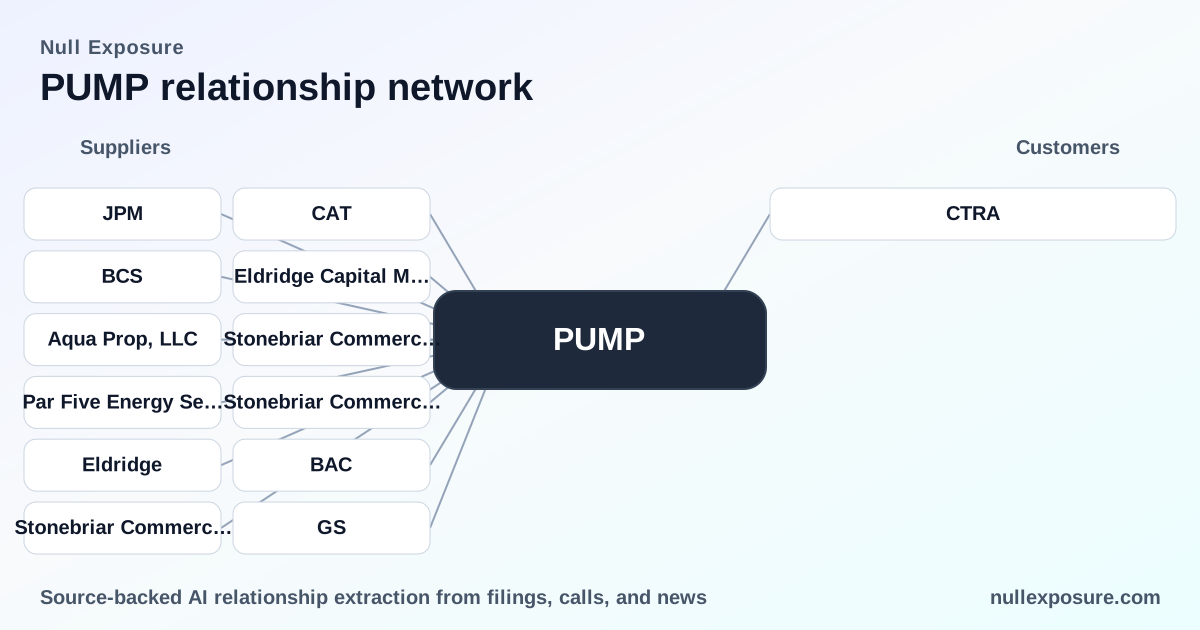
ProPetro (PUMP): Customer Relationships Drive a High‑stakes, Concentrated Service Business
ProPetro monetizes by selling hydraulic fracturing, wireline and complementary power services primarily to large upstream oil & gas producers in the Permian Basin. The company’s revenue model is fleet-driven: committed electric-powered fracturing fleets under multiyear service agreements generate recurring service revenue and significant advance payments, while optional fleet add‑ons and hour-based pricing create upside when activity accelerates. For investors, the core thesis is simple: PUMP is a service provider whose cash flow and valuation are tightly coupled to a small set of large E&P customers and the utilization of its specialized fleets. Learn more at https://nullexposure.com/.
How ProPetro’s operating model converts contracts into cash
ProPetro sells time- and equipment-based services rather than commodity products. Hydraulic fracturing represents roughly three quarters of consolidated revenue, underpinning margin leverage when utilization rises. The company structures revenue around long‑duration fleet commitments with embedded options — for example, committed FORCE® electric fleets with the option to add a third fleet — which creates predictable revenue blocks and capital planning visibility for both ProPetro and its customers. According to ProPetro disclosures, total consolidated service revenue was reported at roughly $1.44 billion, with revenue TTM at $1.180 billion and EBITDA of $158.47 million (latest quarter to 2026-03-31). Those numbers frame the economics behind the fleet investments and contract negotiations.
A concentrated, enterprise‑grade customer book
ProPetro operates with high customer concentration. The top five customers accounted for approximately 58.8% of revenue in 2024 and even higher shares in prior years, which creates both high revenue visibility when those relationships are stable and material downside if one large account reduces activity. The business is skewed toward well‑capitalized E&P firms and large enterprises; ProPetro states it has cultivated longstanding relationships with leading upstream companies in North America, primarily in the Permian Basin. The company also reports receiving advance payments — $11.8 million outstanding at December 31, 2024 — which de‑risks short‑term cash flow but signals meaningful contracted spend per counterparty.
Contracting posture, criticality and financial profile
- Long‑term commitments are baked into the operating model. ProPetro disclosed a three‑year sub‑agreement with XTO (ExxonMobil subsidiary) that commits two electric fleets with an option for a third, subject to termination rights; that structure is representative of the firm’s fleet contract style (ProPetro filing, April 22, 2024).
- Customer type and geography are predictable. The company focuses on large enterprise E&P customers in North America, concentrating operations in the Permian Basin (company filing).
- Critical service exposure. Hydraulic fracturing is essential to ProPetro’s revenue mix and therefore to customers’ production plans; ProPetro stated fracturing accounted for ~75.6% of total revenues, making the service profile operationally critical (company filing).
- Spend scale and cash mechanics. Contracted relationships produce advance payments and multi‑million dollar spend bands; ProPetro reported advance payment balances consistent with $10M–$100M customer spend bands (company filing).
- Active, service‑provider role. Contracts are generally active engagements with committed fleets and ongoing service delivery rather than one‑off transactions.
These characteristics point to an operating model that is capital‑intensive, highly levered to utilization, and dependent on a small group of large customers to sustain pricing and fleet economics.
Customer relationships in the public record
Below are the relationships surfaced in recent publicly available reports. Each entry is presented in plain English with its source.
Coterra Energy — new contract scheduled to commence (entry 1)
ProPetro announced a new contract with a subsidiary of Coterra Energy that is scheduled to begin operations within the current quarter; this represents an incremental committed engagement with a major Permian operator. Source: ad-hoc-news.de reporting on ProPetro’s strategic pivot and electrification initiatives (March 10, 2026).
Coterra Energy — duplicate mention confirming the same contract (entry 2)
The same ad‑hoc news item repeats that a subsidiary of Coterra Energy will commence operations under a new contract during the current quarter, reinforcing that the relationship is active and imminent. Source: ad-hoc-news.de (March 10, 2026).
Note: both results reference the same ProPetro–Coterra engagement reported March 2026; ProPetro’s public commentary indicates this is an active, scheduled commencement rather than a speculative negotiation.
What these relationships imply for investors
- Revenue visibility is high but concentrated. Contracted fleet commitments and advance payments provide short‑to‑medium term revenue visibility, but the company’s reliance on a few large customers amplifies single‑counterparty risk. ProPetro reported that its top five customers made up ~58.8% of revenue in 2024 (company filing).
- Contract structure reduces volume risk but retains operational risk. Long‑term agreements with committed fleets (and options to expand) lock in baseline economics, but performance, timing, and termination rights mean utilization remains the primary driver of margin. The April 22, 2024 sub‑agreement with XTO exemplifies this format (company filing, 2024).
- Geographic concentration limits diversification. Focus on the Permian Basin and North American E&P customers concentrates exposure to regional activity cycles and capital spending patterns.
- Balance sheet mechanics matter. Advance payments and multiyear fleet deployments imply meaningful working capital interactions; investors should track advance payment balances and fleet utilization trends as leading indicators of cash generation.
Bottom line: operational leverage with concentrated counterparty exposure
ProPetro’s business model is service‑intensive, contract‑driven and highly reliant on a handful of large E&P customers. That structure generates predictable contracted revenue when utilization is steady but produces asymmetric downside if top customers reduce activity. Investors should weigh the company’s improving fleet electrification and contractual commitments against the concentration and regional exposure when assessing risk/reward. For a concise view of ProPetro’s customer signals and contract posture, visit https://nullexposure.com/.