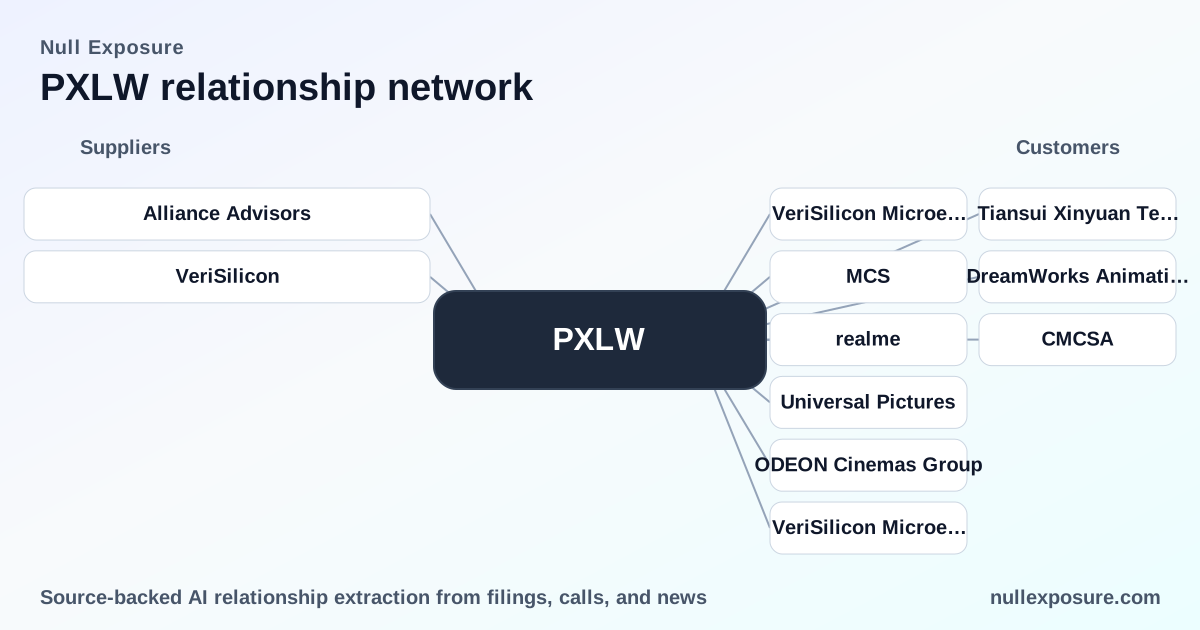
Pixelworks (PXLW) — Customer Relationships and Strategic Implications
Pixelworks monetizes by selling visual processing integrated circuits, software licenses and engineering services to display manufacturers and premium cinema partners, and by licensing cinematic motion-grading technology to studios and theatre chains. Revenue is concentrated in hardware IC sales overseas, complemented by software/platform licenses and growing content partnerships for TrueCut Motion, with the company recently monetizing its Shanghai semiconductor subsidiary to bolster cash reserves. For a broader view of Pixelworks’ relationship signals, visit https://nullexposure.com/.
Why customer links matter for the investment case
Pixelworks is a small, specialized vendor whose revenue profile is defined by high customer concentration, global distribution, and short-term commercial terms. That combination creates both leverage and vulnerability: strong, high-value endorsements from movie studios and theatre chains give Pixelworks strategic reach into premium exhibition channels, while the firm’s heavy reliance on a handful of end customers and distributors concentrates execution risk.
- Contract posture: Pixelworks sells largely on purchase orders and 30–60 day payment terms, indicating limited long-term contractual protection and revenue predictability.
- Geography: Sales are global, with over 98% of revenue generated outside the U.S., and a clear APAC commercial footprint through distributors in China, Japan and Taiwan.
- Concentration and criticality: The top five end customers accounted for roughly 88% of revenue in 2024, making these relationships commercially critical.
- Business mix: The company remains predominantly hardware-driven (IC sales) while software licensing and cinematic services provide higher-margin growth optionality.
These are company-level operating signals drawn from Pixelworks’ public disclosures and filings; they frame how individual customer relationships translate into near-term revenue volatility and strategic runway.
What recent deals tell us about strategy and liquidity
Pixelworks’ completed sale of its Shanghai semiconductor subsidiary materially changes the capital structure and strategic posture. The divestiture converts an asset tied to manufacturing into cash, reducing balance-sheet risk and narrowing operational scope toward IP, software and content partnerships. Financials still show constrained revenue (Revenue TTM: $693k) and negative operating margins, so the proceeds are strategically important for execution and product commercialization.
If you want granular relationship tracking for portfolio diligence, see https://nullexposure.com/ for the underlying signals and source coverage.
Relationship snapshots — what every customer or partner is doing now
VeriSilicon (VeriSilicon Microelectronics / VeriSilicon Microelectronics (Shanghai))
- Pixelworks completed the sale of its Shanghai semiconductor subsidiary to a special-purpose buyer led by VeriSilicon, converting a previously owned manufacturing asset into cash proceeds; PR Newswire reported the closing on March 10, 2026. Investing.com and other outlets subsequently reported the transaction yielded approximately $51 million in net cash proceeds after transaction costs and withholding taxes (May 3, 2026). (Sources: PR Newswire Mar 10, 2026; Investing.com May 3, 2026; EETAsia May 3, 2026)
Marcus Theatres (MCS)
- Marcus Theatres has partnered with Pixelworks to deploy the TrueCut Motion format across premium laser auditoriums, extending Pixelworks’ theatrical distribution footprint into a national U.S. circuit; the announcement was publicized in January 2026. (Sources: SahmCapital Jan 13, 2026; Finviz Mar 10, 2026)
Universal Pictures (and parent references to CMCSA)
- Pixelworks’ TrueCut Motion grading was used in Universal Pictures releases such as Nobody 2 and Wicked For Good, representing studio-level endorsements that accelerate content adoption in premium formats—discussed on Pixelworks’ Q4 2025 earnings call and summarized in coverage during FY2025–FY2026. (Sources: InsiderMonkey Q4-2025 earnings call transcript; Yahoo Finance Mar 10, 2026)
DreamWorks Animation
- DreamWorks Animation titles, including The Bad Guys 2, were credited with TrueCut Motion presentations in 2025, demonstrating Pixelworks’ traction with major animation distributors and large-format releases. (Source: InsiderMonkey / Quantisnow FY2025–FY2026 coverage)
ODEON / Odeon Cinemas Group
- Odeon endorsed Pixelworks’ TrueCut Motion for premium auditoriums in Europe, adding a major continental exhibitor to Pixelworks’ go-to-market in premium cinema channels. The endorsement was reported in FY2025–FY2026 coverage. (Sources: InsiderMonkey Q4-2025; Quantisnow FY2025)
realme
- Pixelworks supplies visual processing to consumer device OEMs; realme integrated Pixelworks’ X7 Gen 2 visual processor and distributed rendering features into new smartphones (realme GT8 series and P4 series), expanding the company’s addressable market in mobile visual processing. (Sources: Quantisnow FY2025; Yahoo Finance Mar 10, 2026)
Tiansui Xinyuan Technology
- Pixelworks’ board approved the sale of its Shanghai subsidiary to a buyer named in earlier filings as Tiansui Xinyuan Technology before the finalized SPV-led transaction completed under VeriSilicon leadership; this reflects the transactional path and multiple counterparties involved in the divestiture process. (Source: TradingView Dec 20, 2025)
CMCSA (as an inferred partner through Universal Pictures references)
- Coverage that references CMCSA (Comcast) signals Pixelworks’ content relationships reach major media ecosystems via Universal Pictures distribution channels, giving Pixelworks leverage when negotiating theatrical rollouts for TrueCut Motion releases. (Source: Quantisnow FY2025)
VeriSilicon (688521.SHH references)
- Multiple international news services and filings reference VeriSilicon by its Shanghai listing and symbol (688521.SHH) as the controlling partner of the purchasing SPV, reinforcing a cross-border strategic buyer profile and the commercial rationale for the Shanghai unit sale. (Sources: Investing.com May 3, 2026; Intellectia.ai May 3, 2026)
Investment implications — concentrated upside, execution-dependent
- Upside drivers: Studio and exhibitor endorsements (Universal, DreamWorks, Marcus, Odeon) validate TrueCut Motion as a content pathway and create licensing and services revenue optionality beyond IC sales. Realme and other OEM ties validate Pixelworks’ semiconductor IP in mobile and consumer segments.
- Key risks: Very high customer concentration, short-term PO contracting, and heavy geographic exposure to APAC distributors create revenue volatility. The move to sell the Shanghai manufacturing subsidiary reduces capital intensity but narrows direct manufacturing exposure.
- Balance sheet: The completed sale provides meaningful liquidity to execute on software and content commercialization while the core business transitions away from capital-intensive manufacturing.
For active investors and operators evaluating PXLW, this relationship map exposes a company shifting toward higher-margin IP and content partnerships, funded by a strategic divestiture and validated by marquee cinema and OEM contracts. For deeper relationship signal-by-signal collection and source access, visit https://nullexposure.com/.