PyroGenesis (PYR) customer relationships: who pays for the plasma and why it matters
PyroGenesis monetizes proprietary plasma and high‑temperature reactor systems by selling engineered equipment, licensing technology, and converting royalty/option rights into equity stakes in customer ventures; revenue comes from equipment contracts, long‑term supply commitments, and strategic joint‑ventures that capture upside in commercialization. The company operates as both an engineering supplier and an active project partner, which gives it higher margin upside on successful scale‑ups but concentrates execution risk around a small set of industrial customers. For a quick company overview and data feed, see https://nullexposure.com/.
How PyroGenesis captures value across metals, chemicals and specialty materials
PyroGenesis’s model blends three revenue streams: (1) one‑time engineering and system sales (plasma torches, dross recovery systems), (2) recurring equipment supply and spare parts, and (3) project economics through royalties, equity options and exclusive supplier arrangements tied to pilot‑to‑commercial rollouts. The firm’s customer engagements typically start as pilot or trial contracts with large industrial clients, then convert into multi‑phase implementations—a contracting posture that is project‑intensive, high‑touch, and often concentrated among a handful of strategic buyers.
Operating constraints and business model signals
- Contracting posture: PyroGenesis acts as both vendor and engineering partner, often the exclusive equipment supplier on projects; this increases bargaining leverage on pricing but also places execution and warranty risk squarely on PyroGenesis.
- Customer concentration: Relationships are concentrated in heavy industry (aluminum, silicon processing, specialty chemicals, defense), implying revenue volatility tied to a few large counterparties.
- Criticality: For large metal producers and specialty chemical customers, PyroGenesis technology is presented as operationally material (e.g., decarbonization and process efficiency), giving the company potential strategic importance to those customers.
- Maturity mix: The portfolio mixes mature, revenue‑generating installs (e.g., DROSRITE commercial systems) with early‑stage pilot projects and equity/royalty options (e.g., fumed silica reactor work), which creates asymmetric upside but uneven near‑term visibility.
For more on comparative relationship exposures and partner history, visit https://nullexposure.com/.
Relationship roll call — every mention captured in the source set
-
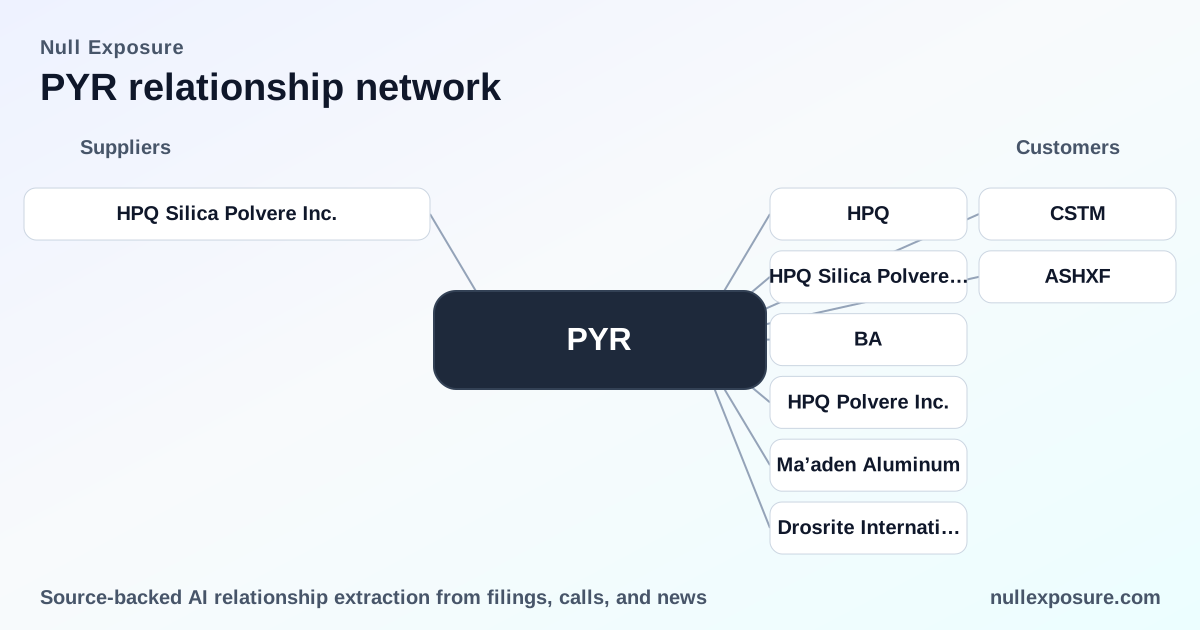
HPQ Silicon Inc. — PyroGenesis built and is developing the Fumed Silica Reactor (FSR) pilot for HPQ’s subsidiary, with HPQ announcing pre‑commissioning and PyroGenesis confirming independent verification of fumed silica meeting commercial grade (FY2026). (HPQ press releases and InvestingNews, Mar 2026: https://hpqsilicon.com/press-release/pre-commissioning-of-fumed-silica-reactor-pilot-plant-underway/; https://investingnews.com/pyrogenesis-confirms-additional-independent-verification-of-its-fumed-silica-meeting-commercial-grade-150/)
-
HPQ (ticker references) — Multiple HPQ filings and releases record PyroGenesis as technology provider for both PUREVAP QRR and the FSR programs and describe options to convert royalties into ownership of HPQ Silica Polvere. (HPQ press releases and SEC filing, FY2021–FY2023: https://hpqsilicon.com/press-release/hpq-silicon-and-pyrogenesis-sign-an-agreement-to-develop-a-new-environmentally-friendly-process-to-manufacture-fumed-silica/; https://www.sec.gov/Archives/edgar/data/1743344/000117184323006202/exh_991.htm)
-
HPQ Silica Polvere Inc. — PyroGenesis developed and built the 50 tpy FSR pilot plant for HPQ Silica Polvere; the company holds a 50% stake and an exclusive equipment supply arrangement tied to any commercialization. (InvestingNews and HPQ releases, FY2025–FY2026: https://investingnews.com/pyrogenesis-confirms-additional-independent-verification-of-its-fumed-silica-meeting-commercial-grade-150/; https://hpqsilicon.com/press-release/pre-commissioning-of-fumed-silica-reactor-pilot-plant-underway/)
-
HPQ Polvere Inc. — The records state PyroGenesis intended to exercise its right to convert a 10% gross sales royalty into a 50% ownership in HPQ Polvere, underlining PyroGenesis’s hybrid supplier‑and‑owner posture on the FSR project. (HPQ press release, FY2024: https://hpqsilicon.com/press-release/pyrogenesis-exercise-options-stake-hpq-silica-polvere/)
-
HPQ Silicon Resources Inc. — Historical program work on the GEN3 PUREVAP Quartz Reduction Reactor (QRR) pilot was performed by PyroGenesis, with commissioning timelines documented in HPQ releases (FY2021). (HPQ press release, Jun 2021: https://hpqsilicon.com/press-release/hpq-silicon-gen3-purevap-quartz-reduction-reactor-pilot-plant-to-be-commissioned-in-q4-2021/)
-
Rio Tinto — PyroGenesis reported a major live furnace trial with Rio Tinto (and Alcoa) that delivered across‑the‑board savings when using PyroGenesis torches, demonstrating commercial efficacy in large smelter environments (FY2026 earnings call transcript). (Earnings transcript, May 2026: https://au.investing.com/news/transcripts/earnings-call-transcript-pyrogenesis-canada-inc-q4-2025-sees-revenue-drop-stock-falls-93CH-4340435)
-
Alcoa — PyroGenesis cited a live furnace trial with Alcoa showing material cost savings when deploying plasma torches, reinforcing adoption by primary aluminum producers (FY2026). (Earnings transcript, May 2026: https://za.investing.com/news/transcripts/earnings-call-transcript-pyrogenesis-canada-inc-q4-2025-sees-revenue-drop-stock-falls-93CH-4191454)
-
Constellium (CSTM) — PyroGenesis completed a plasma torch system build for Constellium and signed expanded contracts to advance a decarbonization pilot, indicating Phase‑2 implementation activity. (Constellium announcement and Canadian Manufacturing, FY2025–FY2026: https://uk.finance.yahoo.com/news/constellium-pyrogenesis-partner-advance-plasma-110000703.html; https://www.canadianmanufacturing.com/manufacturing/pyrogenesis-inc-receives-contract-from-european-additive-manufacturing-company-311355/)
-
Norsk Hydro — PyroGenesis reported signing major contracts with Norsk Hydro, adding another large European aluminum producer to its client list (FY2026 earnings material). (Earnings transcript, May 2026: https://za.investing.com/news/transcripts/earnings-call-transcript-pyrogenesis-canada-inc-q4-2025-sees-revenue-drop-stock-falls-93CH-4191454)
-
Boeing (BA) — PyroGenesis was approved as a supplier for Boeing for titanium metal powder, positioning the company in aerospace supply chains where qualification is a barrier to entry (FY2025 reporting). (SustainableBiz and Canadian Manufacturing, FY2025: https://sustainablebiz.ca/pyrogenesis-well-positioned-for-2025-with-growth-contracts; https://www.canadianmanufacturing.com/manufacturing/pyrogenesis-inc-receives-contract-from-european-additive-manufacturing-company-311355/)
-
Ma’aden Aluminum — PyroGenesis confirmed successful commissioning of DROSRITE dross recovery systems at Ma’aden (a JV with Alcoa), validating their dross‑recovery offering at a large producer. (Proactive Investors, FY2022: https://www.proactiveinvestors.com/companies/news/980427/pyrogenesis-canada-confirms-successful-site-acceptance-testing-of-three-drosrite-systems-at-alcoa-jv-980427.html)
-
Drosrite International — Agreements transferred rights for Drosrite manufacturing and distribution across Saudi Arabia and parts of the Middle East; PyroGenesis later consolidated ownership of its aluminum waste recycling business. (ALCircle and Proactive Investors, FY2024: http://www.alcircle.com/news/pyrogenesis-canada-inc-secures-ownership-of-us-based-drosrite-international-111381; https://www.proactiveinvestors.com/companies/news/1051411/pyrogenesis-canada-acquires-full-control-of-aluminum-waste-recycling-business-1051411.html)
-
Newport News Shipbuilding (HII) — PyroGenesis received a purchase order for shipboard waste destruction systems from Newport News Shipbuilding, exposing the company to naval shipyard procurement (FY2024). (SustainableBiz, FY2024: https://sustainablebiz.ca/pyrogenesis-strikes-27m-deal-with-us-defence-contractor-for-plasma-torch)
-
Progressive Planet / ASHXF — PyroGenesis is in discussions to build a pilot for a low‑carbon cement additive on behalf of Progressive Planet, expanding into cement and carbon‑reduction materials (FY2025 reporting). (SustainableBiz, FY2025: https://sustainablebiz.ca/pyrogenesis-well-positioned-for-2025-with-growth-contracts)
-
Evonik Corporation — HPQ Silica Polvere signed an LOI with Evonik; HPQ/PyroGenesis activity on the FSR attracted interest from global specialty chemicals manufacturers (FY2024). (HPQ press release, FY2024: https://hpqsilicon.com/press-release/hpq-silica-polvere-signs-letter-of-intent-with-evonik-corporation/)
-
Leading global manufacturer request — HPQ Silica Polvere reported pre‑commercial interest and sample requests from a leading global manufacturer before PyroGenesis completed material optimizations, indicating early commercial interest in FSR output (FY2025). (HPQ press release, FY2025: https://hpqsilicon.com/press-release/leading-global-manufacturer-requests-fumed-silica/)
-
Additional HPQ historical entries — Multiple HPQ filings from FY2021–FY2023 document PyroGenesis’s earlier GEN3 PUREVAP commissioning work and ongoing discussions about multi‑reactor builds, reflecting a long‑running technical relationship predating the FSR work. (HPQ press releases and SEC filing, FY2021–FY2023: https://hpqsilicon.com/press-release/hpq-silicon-sources-raw-material-needed-for-purevap-operations/; https://www.sec.gov/Archives/edgar/data/1743344/000117184323006202/exh_991.htm)
Investment implications: concentrated upside, execution‑sensitive runway
- Upside drivers: Large industrial customers (aluminum majors, aerospace OEMs, specialty chemicals) create pathways to multi‑year equipment and retrofit programs, and PyroGenesis’s option‑to‑equity structures convert supplier revenue into project upside.
- Key risks: High execution risk and customer concentration—a failed pilot or delayed commissioning (not uncommon in heavy‑industry projects) compresses revenue and delays conversion of royalties into scalable cash flows.
- What to watch next: milestones on HPQ FSR commissioning, Constellium Phase‑2 deployment, and procurement conversion at Boeing and major aluminum customers; these control the timing of material revenue realization.
For an investor‑grade monitor of PyroGenesis customer milestones and to integrate these relationship signals into your model, visit https://nullexposure.com/ for the data and tracking.