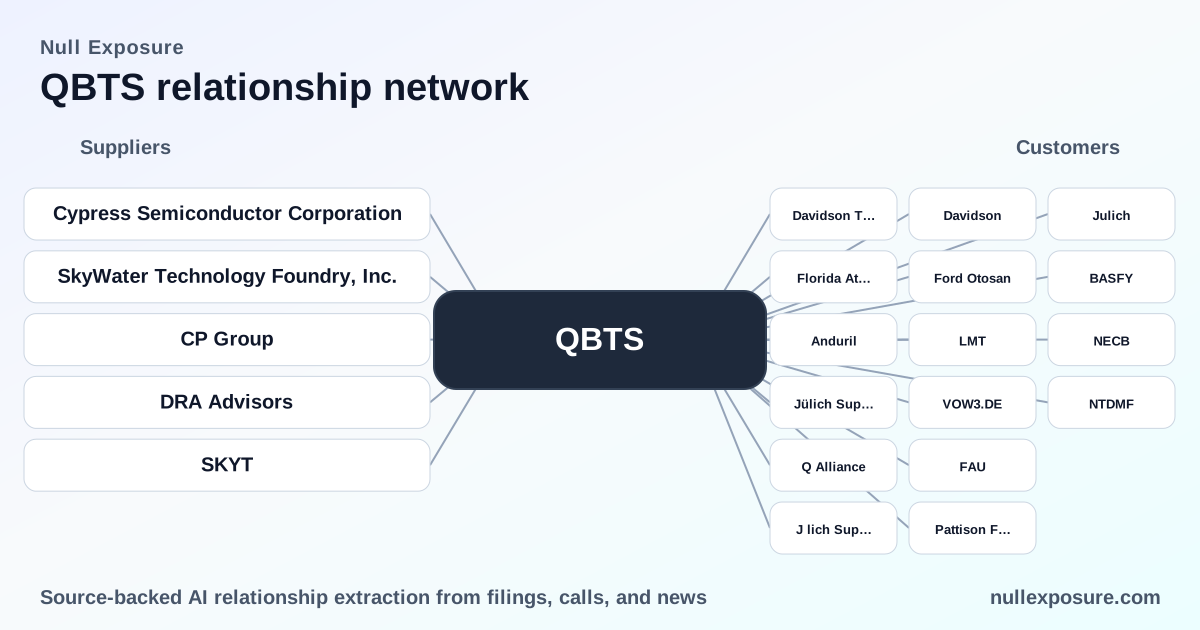
D‑Wave (QBTS) customer map: system sales, QCaaS subscriptions and defense partnerships driving early commercial traction
D‑Wave commercializes a dual revenue model: on‑premise system sales for research and national labs plus subscription QCaaS (quantum computing as a service) and professional services for enterprise and government customers. Revenue drivers are hardware point‑sales (one‑time, large ticket) and recurring cloud subscriptions and services that monetize algorithm development and production deployments.
For a deeper read on customer signals and procurement patterns visit Null Exposure.
What management is saying — revenue mix and contracting posture
Management framed the go‑to‑market as a balanced mix of large, long‑duration system deals and subscription QCaaS arrangements that together create both lumpy and recurring revenue. The company discloses two contract archetypes: large multiyear engagements and shorter multi‑month cloud contracts, and reports that QCaaS is delivered across a broad geography. These disclosures indicate a hybrid contracting posture: some relationships are strategic and material (point‑in‑time hardware sales), while others resemble traditional SaaS/subscription engagements in duration and recurring economics.
- Concentration and materiality: company filings show visible customer concentration at the top end of bookings, signaling that select system sales or enterprise deals can materially move bookings and revenue in a quarter.
- Criticality: sales into national supercomputing centers and defense primes imply high strategic value and potential certification/clearance pathways that raise switching costs.
- Maturity: commentary about production use cases shifting from PoC to live optimization workloads signals the business is transitioning from early trial stages to initial commercial production.
These operating characteristics shape how investors should value QBTS: valuation must reflect both lumpy capital sales and the growth runway for recurring QCaaS subscription revenue, with defense and national lab contracts adding a distinct premium for strategic optionality.
For ongoing analysis and customer discovery, check Null Exposure for updated signal aggregation.
Relationship roll‑call — every named counterparty and what they mean for QBTS
Davidson Technologies
D‑Wave has a multi‑year reseller and hosting relationship with Davidson Technologies and operates an Advantage2 system hosted at Davidson’s Huntsville site, which positions the company for government and classified‑use engagement. This collaboration was referenced on the Q4 2025 earnings call and in The Quantum Insider’s coverage of the reseller agreement (Aug 2023) and subsequent SQC membership mentions (Feb 2026).
Anduril
Anduril is cited as a defense partner in a missile‑defense simulation demonstrated jointly with Davidson, indicating D‑Wave’s technology is being trialed for operational defense use cases; management flagged this collaboration on the Q4 2025 earnings call and in subsequent press coverage (Sherwood News, Mar 2026).
Florida Atlantic University (FAU)
FAU signed a $20 million agreement to purchase and install an Advantage2 annealing quantum computer on its Boca Raton campus, representing a material point sale and a major academic deployment announced in early 2026 (FAU press release and multiple news summaries, Mar 2026).
Jülich Supercomputing Center (Julich)
D‑Wave closed its first Advantage system sale to the Jülich Supercomputing Center — a strategic academic/supercomputing integration that marks the first commercial annealing machine purchased for a national supercomputing facility, as described on the Q4 2025 earnings call and earnings‑call transcripts summarized by InsiderMonkey (Mar 2026).
Q Alliance (Italy)
Management cited active discussions with a “Q Alliance” group in Italy as part of European HPC engagements, indicating pipeline activity for additional Advantage2 deployments in EMEA (Q4 2025 earnings call, Mar 2026).
BASF (BASFY)
BASF is listed as an enterprise customer using D‑Wave’s annealing technology for manufacturing and fulfillment optimization, highlighting the industrial use case for NP‑hard optimization problems (SimplyWall.st narrative, May 2026).
Mastercard
Mastercard is referenced as a blue‑chip enterprise customer experimenting with D‑Wave solutions for optimization problems, reinforcing the payments/financial services use case for QCaaS (company customer list cited in investor coverage and SimplyWall.st narratives, 2026).
Ford Otosan
Ford Otosan appears on the client roster as an automotive use case example; management used Ford Otosan to illustrate outward‑facing commercial relationships and public customer deployments (Sherwood News coverage, Mar 2026).
NTT DOCOMO (NTDMF)
NTT DOCOMO is cited as a telecom customer that has publicized work with D‑Wave on cell‑tower resource optimization, pointing to communications network planning applications (Sherwood News, Mar 2026).
Pattison Food Group
Pattison Food Group is described as a retail/fulfillment customer that engaged D‑Wave for order fulfillment optimization work, demonstrating grocery/retail optimization adoption (Sherwood News, Mar 2026).
Lockheed Martin
Lockheed Martin is listed among long‑standing customers in corporate materials and third‑party investor write‑ups, signaling defense sector traction beyond initial demos (CantechLetter summary of investor coverage, 2026).
Volkswagen (VOW3.DE)
Volkswagen appears in the company’s referenced customer list for automotive optimization work; this underscores D‑Wave’s go‑to‑market in the automotive OEM segment (CantechLetter investor commentary, 2026).
NEC (NECB)
NEC is named as a corporate customer in investor and press narratives, consistent with the company’s push to sell both hardware and QCaaS to large technology partners (CantechLetter investor coverage, 2026).
What these relationships collectively tell investors
The customer set shows a deliberate go‑to‑market across three buckets: national research/supercomputing centers and universities (Jülich, FAU), defense/prime integrators and government channels (Davidson, Anduril, Lockheed), and blue‑chip enterprise pilots and early production (Mastercard, BASF, Volkswagen, NTT DOCOMO, Pattison, Ford Otosan, NEC). This mix produces both large, lumpy hardware bookings and recurring QCaaS contracts, consistent with management’s stated revenue model.
- Revenue profile: Expect quarters with oversized booking contributions from system sales (material single‑deal impact) alongside steadier subscription growth from QCaaS enterprise deployments.
- Risk and optionality: Defense and national lab wins carry strategic optionality and potential procurement barriers to entry; at the same time, customer concentration risk exists because individual system deals can materially influence short‑term results.
- Commercialization stage: The pipeline and customer list indicate a move from PoC to selective production use cases in optimization, supporting a narrative of early commercial traction rather than pure research experiments.
Investment implications and closing view
D‑Wave is executing a dual‑track commercialization strategy that marries flagship hardware sales with an expanding QCaaS subscription base. Key investment levers are continued enterprise QCaaS growth, repeatable large system sales into academia and national labs, and further defense certifications or prime partnerships that convert demonstrations into contracted revenue. Watch bookings composition and the cadence of large system deliveries, since those drive near‑term revenue volatility and are the chief determinant of materiality in QBTS’s financials.
For ongoing signal monitoring and syndicated customer intelligence on QBTS, see Null Exposure.