Q/C Technologies (QCLS): Customer relationships, constraints, and what investors should know
Q/C Technologies operates as a specialist provider of machine‑learning driven analytics and software platforms sold to enterprise customers; it monetizes through consulting engagements, software licensing and strategic partnerships that package its automation and decision‑support tools into fee‑for‑service arrangements. For investors, QCLS is a small‑cap technology vendor that generates value through transactional client work and IP licensing rather than recurring enterprise scale‑SaaS contracts, which shapes both its upside and its operational risk profile.
Explore the company context on the NullExposure platform: https://nullexposure.com/
One headline customer: why the Ocean Avenue consulting deal matters
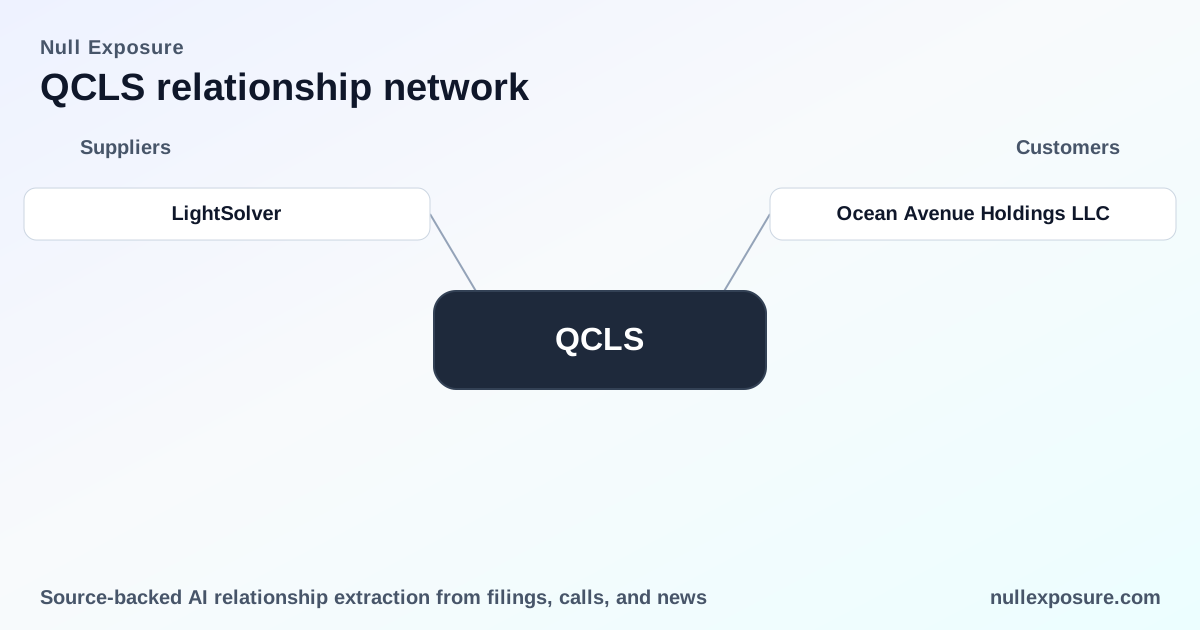
A single material customer relationship is reported in the public record for the customer scope: Q/C Technologies entered a consulting agreement with Ocean Avenue Holdings LLC that is connected to Martin Shkreli. According to a press release published on The Globe and Mail (reported March 10, 2026), the agreement was executed on December 8, 2025 and covers consulting services including technology evaluation and potential acquisition advisory. (Source: The Globe and Mail press release, March 10, 2026 — https://www.theglobeandmail.com/investing/markets/stocks/QCLS-Q/pressreleases/36552963/q-c-technologies-partners-with-ocean-avenue-holdings/)
The facts are concise and consequential: this is a consulting engagement rather than a long‑term, subscription contract, and the counterparty is an affiliated investment vehicle. That combination drives specific implications for revenue visibility, legal and reputational risk, and the operational burden of bespoke client work.
What the Ocean Avenue relationship implies for revenue and risk
- The engagement is service‑oriented and transactional, improving near‑term revenue potential but providing limited recurring cashflow predictability.
- The counterparty profile elevates reputational and diligence requirements for public‑company governance and investor communications.
- Because the disclosed relationship is consulting and advisory in nature, margin dynamics are likely driven by billable hours and specialist staff deployment rather than license amortization, which concentrates execution risk on project delivery.
Full list of customer relationships (complete)
Ocean Avenue Holdings LLC — On December 8, 2025 Q/C Technologies entered a consulting agreement to provide technology evaluation and acquisition advisory services to Ocean Avenue Holdings LLC, an entity affiliated with Martin Shkreli; the engagement was reported in a press release aggregated by The Globe and Mail (reported March 10, 2026). (Source: The Globe and Mail press release, March 10, 2026 — https://www.theglobeandmail.com/investing/markets/stocks/QCLS-Q/pressreleases/36552963/q-c-technologies-partners-with-ocean-avenue-holdings/)
Company‑level constraints and what they signal about operating posture
The relationship constraints extracted from company disclosures and related excerpts generate a set of company‑level signals that inform how QCLS structures deals and manages commercial risk:
-
Short‑term contract orientation. An excerpt about Series F redemption obligations indicates historical short‑term financial and contractual dynamics, which aligns with a posture of shorter customer commitments and milestone‑based funding. This implies higher revenue volatility and greater dependency on successful deal flow to sustain operations.
-
Mixed commercial roles: seller, licensee, buyer. Evidence excerpts indicate QCLS acts in multiple roles across transactions — selling services, holding or receiving licenses, and engaging as a buyer for inputs or IP. This multi‑role behavior underscores a hybrid business model: part consulting/systems integrator, part licensor/partner in technology transactions.
-
Active relationship stage. Evidence of recent private placements and financing activity is consistent with ongoing commercial engagements and capital needs; the company’s relationships are operationally active rather than dormant, increasing near‑term execution risk but providing avenues for revenue recognition.
Together these signals show a firm that wins discrete projects and negotiates IP arrangements rather than executing a broad library of long‑duration, enterprise SaaS contracts. Contracting concentration and short tenors are structural risk factors for revenue predictability.
Financial and market context that frames business risk
QCLS is a micro‑cap technology issuer: market capitalization about $29.8 million, negative trailing EPS (‑8.8) and limited institutional ownership (~5.34%). The stock has a high beta (2.13) and recent trading range between $2.50 and $22.10 over 52 weeks, reflecting high volatility and episodic investor interest. These metrics highlight two investor realities: the company is small and illiquid, and performance is sensitive to discrete news events (new contracts, financings, or regulatory items).
Given the company’s negative returns on assets and equity and the absence of reported recurring revenue in the TTM fields, investors should treat customer wins as binary events that materially affect short‑term cash flow rather than as evidence of scalable recurring demand.
Where the upside and downside come from
Upside catalysts:
- Successful conversion of consulting engagements into longer‑term licensing or maintenance arrangements would materially de‑risk revenue visibility.
- Strategic partnerships that broaden distribution could scale margins beyond project economics.
Downside risks:
- Revenue concentration and short‑term contracts create cash‑flow vulnerability if project pipelines slow or collections lag.
- Reputational risk from higher‑profile counterparties increases legal and governance scrutiny, which can affect access to capital and institutional interest.
- Small institutional float and low analyst coverage mean the stock is prone to speculative swings and low liquidity.
Actionable watchlist for investors and operators
- Track new contract terms: are deals moving from consulting/advisory models to multi‑year licensing or SaaS agreements?
- Monitor cash runway and financing notices: short‑term obligations in prior certificates suggest capital sensitivity.
- Review counterparty profiles: reputational and regulatory exposures are operational risks for client acquisition and partnerships.
- Assess margin evolution: whether billable‑hour margins improve with scale or remain project constrained.
For a closer look at relationship intelligence and disclosure signals across small‑cap technology issuers, visit NullExposure: https://nullexposure.com/
Bottom line
Q/C Technologies operates as a project‑driven analytics and software vendor that monetizes through consulting and licensing arrangements. The Ocean Avenue consulting agreement is a discrete service engagement that reinforces the company’s transactional revenue model. Investors should weight near‑term revenue flexibility and financing needs higher than expectations of steady recurring cashflow; the primary path to valuation upside is converting transactional client engagements into durable, higher‑margin licensing relationships.