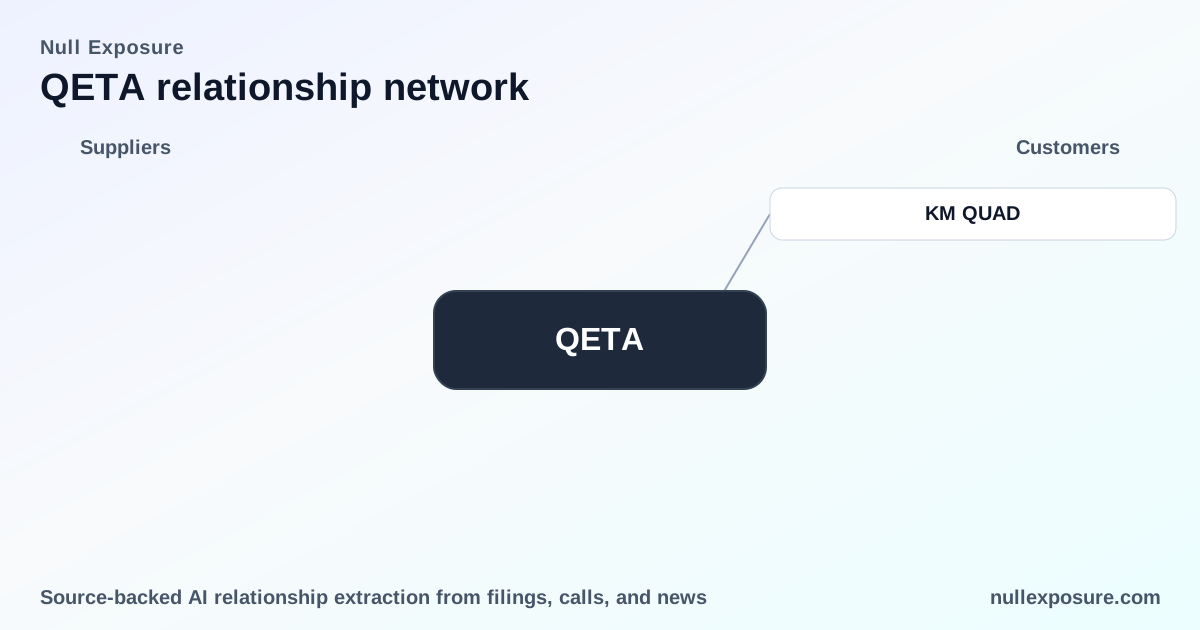
QETA: A concentrated SPAC bet — what the KM QUAD relationship tells investors
Quetta Acquisition Corporation (QETA) is a special purpose acquisition company that raises public capital to merge with a target operating company and create an operating enterprise worth more than the public shell. QETA’s economic path to value runs through completing a business combination: sponsor economics, post‑deal equity value creation and the re‑rating of a merged company drive returns rather than recurring operating revenue from the shell itself.
For investors evaluating customer and counterparty relationships, the immediate question is whether any disclosed contractual ties materially change the SPAC’s optionality to close a deal, introduce contingent cash obligations, or create concentration risk. Read more on the platform: https://nullexposure.com/
The KM QUAD extension: a single, explicit contractual relationship
According to QETA’s Form 10‑K for the fiscal year ended December 31, 2024, the company and the KM QUAD counterparty agreed a timetable and fee allocation for potential extensions of the contemplated business combination. The filing grants QETA the right to extend the closing date up to twenty‑one times for one month each (moving the deadline through October 10, 2026), and QUAD committed to cover extension fees for nine months totaling $540,000. (QETA 10‑K, FY2024).
This provision is the only customer/counterparty relationship disclosed in the customer sweep; it is operationally simple in headline terms but strategically important because it speaks directly to the deal’s cadence and the allocation of extension costs.
Why this single relationship matters more than it looks
- Concentration risk is structural. As a SPAC, QETA’s asset is the business combination opportunity itself; a disclosed contract tying extension economics to KM QUAD underscores that the company’s near‑term value is concentrated in one counterparty and one transaction.
- Contracting posture favors completion. The fee allocation (QUAD pays $540k for nine months of extensions) signals that the target is incentivized to push the timeline, which reduces immediate funding pressure on the shell but also creates conditional obligations tied to closing behavior.
- Contingent cash exposure is limited but real. The disclosed fee structure shifts short‑term extension costs to the target rather than the public shell, lowering QETA’s immediate cash burn while preserving the option to prolong pursuit of the deal.
Company‑level operating signals and constraints
QETA’s public disclosures contain no additional enumerated constraints beyond the KM QUAD extension language. The absence of other contractual constraints is itself a signal: limited disclosed counterparty constraints suggest operational flexibility but also limited transparency about other possible commitments.
From a business model perspective:
- Contracting posture — The 10‑K language demonstrates a standard SPAC posture: contractual mechanisms to extend closing deadlines and allocate extension fees, indicating the sponsor uses contractual levers to manage deal timing risk.
- Concentration — The business model is highly concentrated by design; QETA’s value realization depends on completing one or a small number of business combinations rather than diversified operating cash flows.
- Criticality — The KM QUAD arrangement is mission‑critical in the short term because it governs the timeline and economic incentives to reach closing.
- Maturity — QETA is in the SPAC lifecycle stage where the primary governance documents and extension rights determine optionality; there is no mature operating revenue base to amortize or offset transaction slippage.
These are company‑level signals drawn from the filing landscape rather than from additional contractual excerpts.
Relationship detail: KM QUAD (as disclosed)
KM QUAD: QETA’s 10‑K states the company can extend the scheduled closing date for the KM QUAD business combination up to 21 one‑month extensions (extending the deadline to October 10, 2026), and QUAD agreed to pay extension fees for nine months totaling $540,000. This shifts a defined portion of extension cost risk to the target for a limited period. (QETA Form 10‑K, FY2024).
What investors should take from this disclosure
QETA’s public filings and ownership metrics give a compact picture:
- Insider and institutional ownership are both high. Insiders hold 52.78% of shares and institutions hold 48.25%, which indicates a tight shareholder base that can accelerate decision‑making around extensions, redemptions and closing mechanics.
- Liquidity and scale are limited. Market capitalization is approximately $43.1 million and the SPAC reports no operating revenue; the company is a transactional vehicle rather than an operating enterprise.
- Deal economics are front and center. The disclosed extension fee allocation is a practical mechanism to manage time risk without requiring the shell to fund extension costs directly.
Investors evaluating QETA should treat the KM QUAD relationship as the principal disclosed operational lever for the next phase of value realization. The extension mechanics both reduce near‑term cash strain on QETA and evidence a negotiated path that favors completing the business combination.
Risk profile and upside dynamics
- Upside is binary and concentrated. If the KM QUAD transaction closes and post‑deal value creation occurs, returns will follow typical SPAC-to-operating-company pathways. If the transaction fails and the sponsor cannot find a replacement target before final deadlines, the shell’s public value will primarily track cash per share and redemption dynamics.
- Execution risk is the primary downside. The disclosed fee arrangement mitigates some timing pressure but does not eliminate execution risk—regulatory, financing, or due diligence issues can still derail a combination.
- Transparency is limited to filed disclosures. The 10‑K provides the one explicit counterparty arrangement; investors must base forecasts on that disclosure and on the SPAC’s standard lifecycle mechanics.
For deeper context on filings and to track future disclosures, visit the research hub: https://nullexposure.com/
Bottom line
QETA is a classic SPAC construct: concentrated, binary, and governed by contractual levers that manage timing and cost of completing a business combination. The KM QUAD extension clause is the only customer/counterparty relationship disclosed in the FY2024 filing and it materially influences the SPAC’s runway and incentives without imposing immediate large cash obligations on the shell. Investors should monitor subsequent filings for any changes to extension responsibilities, replacement targets, or sponsor commitments that would alter this concentrated risk profile.
For ongoing tracking of QETA disclosures and related transaction signals, see https://nullexposure.com/