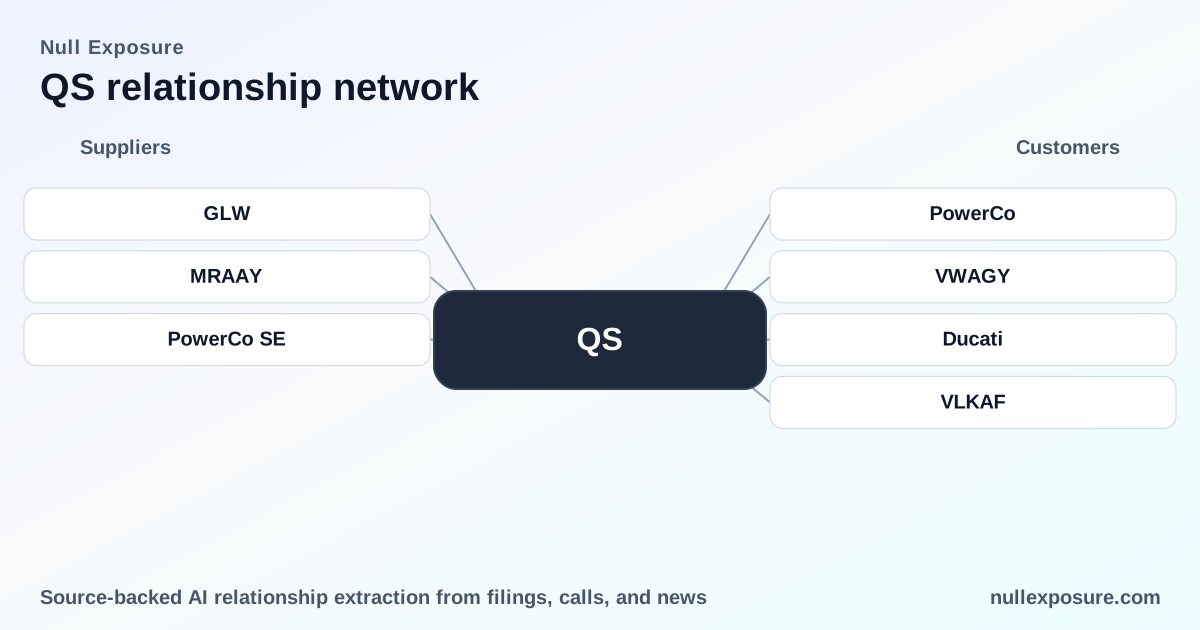
QuantumScape's customer book: Volkswagen, PowerCo, Ducati — what investors need
QuantumScape develops and commercializes solid‑state lithium metal batteries and monetizes through a mix of licensing, development agreements, and anticipated royalties tied to production and vehicle integration. The company advances technology in pilot-scale production, signs sampling and licensing deals with large automotive OEMs, and is now receiving upfront and staged payments from partners that convert R&D into near‑term revenue streams. For a concise briefing and ongoing coverage, visit https://nullexposure.com/.
Quick take: commercial posture in one sentence
QuantumScape operates as a technology licensor and cell supplier in pilot and early commercial stages, deriving revenue from licensing fees, partner payments (noted as up to $131 million in recent deal tranches), and future royalties contingent on cell performance and vehicle demand.
Why the customer list matters for valuation
Investors should treat QuantumScape not as a traditional auto‑supplier with recurring volume sales today but as a technology partner whose cash flows depend on a small number of large OEM relationships and milestone‑driven payments. That contracting posture concentrates counterparty counterparty risk but accelerates de‑risking of scale-up and creates high operating leverage if cells are adopted into serial production. QuantumScape’s commercial signals — active sampling, pilot deliveries, and licensing fees — are more important than headline production capacity until multigigawatt supply agreements with multiple OEMs are in place.
Line‑by‑line relationship registry (every result in the record)
- PowerCo — earnings call (2025 Q4): QuantumScape told investors it expanded its collaboration and licensing agreement with PowerCo, Volkswagen Group’s battery manufacturer, signaling an elevated commercial relationship. According to QuantumScape’s 2025 Q4 earnings call in March 2026, the companies upgraded their arrangement.
- VWAGY (Volkswagen) — Electrek (Feb 2021): Electrek reported that QuantumScape’s pilot production factory would provide early cells to VW and other automotive partners to de‑risk commercial scale‑up, indicating Volkswagen as an early sampling customer (Electrek, Feb 2021).
- Volkswagen — Electrek (Feb 2021): Electrek’s coverage repeats that Volkswagen was an intended recipient of early cells from QuantumScape’s California pilot line, supporting long‑standing collaboration (Electrek, Feb 2021).
- PowerCo — StockTwits/markets article (FY2025): Market reporting summarized a July 2025 expansion under which PowerCo agreed to provide up to $131 million in payments over two years as part of a licensing deal with QuantumScape.
- Volkswagen — Barchart (FY2025): Barchart’s analysis cited licensing agreements with automakers, including Volkswagen, as a driver of QuantumScape’s projected revenue (roughly $5 million in 2026 in that piece).
- Ducati — InsiderMonkey (FY2025): InsiderMonkey noted that QuantumScape and PowerCo supplied QSE‑5 cells produced via the QS Cobra process to the Ducati V21L, signaling product validation in a premium motorcycle application (InsiderMonkey, FY2025).
- PowerCo — Investing.com transcript (FY2025): An earnings/transcript summary described the upgraded deal under which PowerCo would contribute up to $131 million to support joint commercialization activities (Investing.com, FY2025).
- Volkswagen (VWAGY) — Barchart (FY2025): Barchart reiterated that licensing agreements with Volkswagen were expected to help early revenue generation for QS in 2026 (Barchart, FY2025).
- PowerCo — StockTwits article (FY2025, duplicate source link): Additional market commentary reiterated the $131 million payment structure tied to the expanded collaboration with PowerCo (StockTwits, FY2025).
- Volkswagen Group — earnings call (2025 Q4): QuantumScape stated in its 2025 Q4 earnings call that it expanded collaboration and licensing with PowerCo, the Volkswagen Group’s battery arm, underscoring the corporate‑level engagement (QS 2025 Q4 earnings call).
- VWAGY — earnings call (2025 Q4 duplicate): The company repeated the same expanded collaboration wording in the public call, aligning its messaging to equity and partner stakeholders (QS 2025 Q4 earnings call).
- PowerCo — Barchart analysis (FY2025): Barchart framed PowerCo as the counterparty in QuantumScape’s licensing arrangement with Volkswagen Group’s battery maker, reinforcing how the commercial model routes through PowerCo (Barchart, FY2025).
- VLKAF — 10‑K (FY2024): QuantumScape’s FY2024 10‑K notes that royalty amounts under a PowerCo IP License Agreement will depend on cell performance and vehicle demand, making future payments contingent on technical and market outcomes (QuantumScape 2024 10‑K).
- Volkswagen — 10‑K (FY2024 duplicate): The FY2024 10‑K similarly states that royalties tied to the PowerCo license depend on battery performance and the demand for Volkswagen vehicles designed to use those cells (QuantumScape 2024 10‑K).
- Volkswagen — QuantumScape company page (FY2022): QuantumScape’s corporate site chronicles the deal with Volkswagen and highlights the partnership as a strategic commercial relationship (QuantumScape company page, FY2022).
- VWAGY — QuantumScape company page (FY2022 duplicate): The corporate page lists Volkswagen (VWAGY) among marquee partners and references the solid‑state battery deal (QuantumScape company page, FY2022).
- PowerCo — QuantumScape company news (09/08/25): QuantumScape public news posted that QuantumScape and PowerCo debuted solid‑state batteries in a Ducati motorcycle at IAA Mobility, confirming a joint demo and product placement (QuantumScape news release, Sep 2025).
- Ducati — QuantumScape company news (09/08/25 duplicate): The same corporate announcement details the Ducati debut with PowerCo and QuantumScape cells, validating cross‑industry applications beyond passenger vehicles (QuantumScape news release, Sep 2025).
What the relationship mix signals about the business model
QuantumScape’s partner roster and disclosure set reveal several company‑level characteristics that drive investor analysis:
- Contracting posture: The firm leans on licensing and milestone payments rather than large immediate volume contracts; PowerCo’s staged payments (up to $131 million) are an example of partner‑funded commercialization.
- Concentration: Customer counterparty risk is concentrated among very large OEMs and their battery subsidiaries — Volkswagen/PowerCo are central. The company’s filings and disclosures reference sampling agreements with leading OEMs rather than broad, diversified commercial shipments.
- Criticality: Revenue upside includes royalties contingent on battery performance and vehicle demand, per the 2024 10‑K; this makes adoption outcomes and technical validation critical to long‑term monetization.
- Maturity and stage: Relationships are active but pilot‑oriented: sampling agreements, pilot production cells, and targeted commercial product QSE‑5 indicate early commercial traction rather than high‑volume manufacturing today.
- Geographic ambition: QuantumScape has stated targets consistent with global automotive markets (the company’s materials reference non‑China market share objectives), which implies international commercialization plans.
Investment implications: risk and upside
- Upside: If PowerCo/Volkswagen transitions licenses into production vehicles, the business model converts R&D into recurring royalty streams and larger licensing fees, rapidly improving revenue visibility. The Ducati debut demonstrates product validation across vehicle segments, supporting optionality.
- Risk: Revenue and royalties are contingent on cell performance and OEM vehicle adoption; a small number of large counterparties concentrates execution risk. Market expectations priced into the equity assume successful scale‑up and multi‑OEM adoption.
How investors should use this information
Focus on three near‑term readouts: (1) deliveries and performance data tied to PowerCo demonstrations, (2) timing and structure of license payments (filings and transcripts document the $131 million tranches), and (3) rollout plans for the QSE‑5 product beyond pilot placements like Ducati. For deeper regular updates and curated signal tracking, visit https://nullexposure.com/.
Bottom line: QuantumScape has converted technology progress into structured commercial relationships with a very large OEM group via PowerCo, creating clearer early revenue pathways but leaving ultimate valuation leverage tied to performance‑contingent royalties and adoption into serial production.