Q32 Bio (QTTB): Asset Sales, Focused Pipeline and the Customer Relationships That Matter
Q32 Bio operates as a clinical‑stage biotechnology company that develops antibody-based therapies and monetizes through a combination of program advancement, selective asset sales, and collaboration revenue. The company converts mid‑stage assets into near‑term cash via targeted divestitures while prioritizing its lead candidate bempikibart, creating a hybrid model that blends discovery upside with deal‑driven de‑risking.
If you want a concise dossier of customer and counterparty relationships tied to Q32’s monetization strategy, visit https://nullexposure.com/ for a centralized view of partner-level signals.
Why the Akebia deal rewrites Q32’s near-term economics
Q32 completed a material transaction in late 2025: the sale of its Phase 2 complement inhibitor ADX‑097 to Akebia Therapeutics. This transaction moved a mid‑stage biologic off Q32’s balance sheet, delivered immediate cash and introduced material contingent upside through milestones and potential royalties. The market reaction was decisive — shares rerated on the news, reflecting the value of converting clinical risk into contracted consideration.
- Key commercial effect: upfront and guaranteed near‑term payments provide liquidity and reduce near‑term funding pressure.
- Strategic effect: frees management to concentrate resources on bempikibart and core autoimmune programs.
Customer and counterparty relationships (complete coverage)
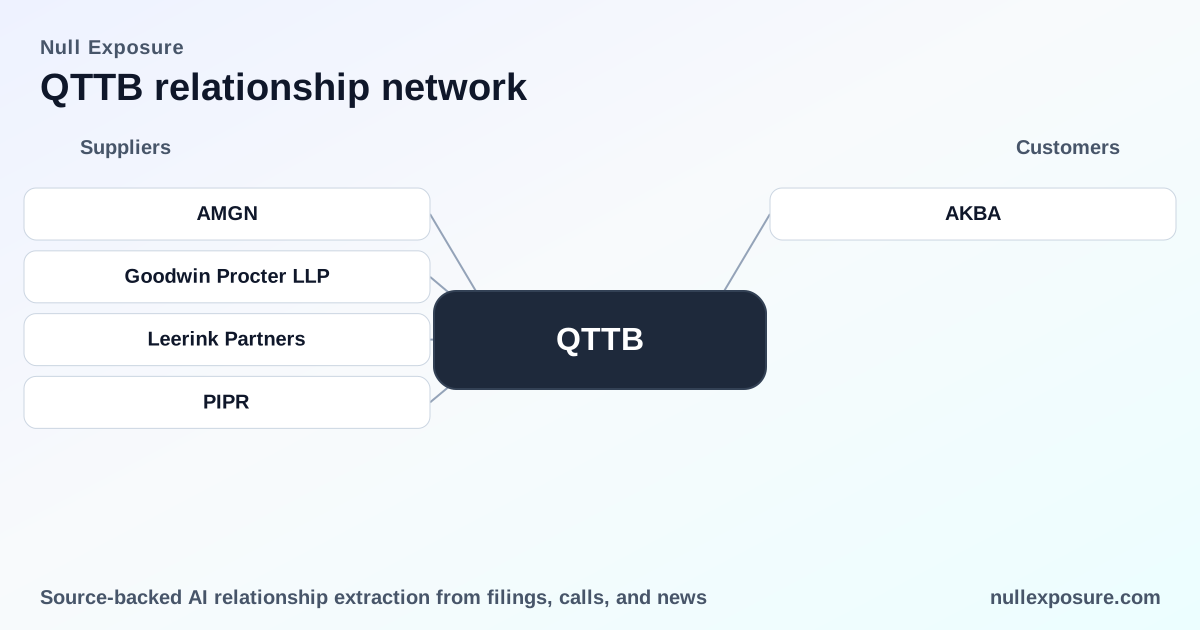
Akebia Therapeutics (AKBA)
Q32 sold global rights to its Phase 2 complement inhibitor ADX‑097 (renamed AKB‑097) to Akebia, receiving $12 million in upfront and guaranteed near‑term milestone payments with $7 million paid at signing and potential total consideration of up to roughly $592 million plus royalties. According to Q32’s press release via PR Newswire on March 10, 2026, the transaction transfers development and commercialization responsibility for the asset to Akebia while delivering immediate cash to Q32. (PR Newswire, March 10, 2026).
Amgen (AMGN)
Q32 recognized collaboration revenue linked to an amendment with Amgen that produced a non‑cash revenue recognition event and reduced R&D expense, contributing to improved year‑over‑year results reported in the company’s filings. TradingView’s coverage of Q32’s public filings notes that the Amgen amendment underpinned a material accounting recognition that drove reported improvement in net income for the fiscal period cited. (TradingView summary of Q32 filings, FY2026).
What these relationships tell investors about Q32’s operating model
Q32 runs a capital‑efficient, partnership‑oriented operating model. The Akebia transaction demonstrates a clear contracting posture: Q32 is willing to monetize non‑core mid‑stage assets to fund and focus its pipeline, preferring deal structures with upfront cash plus milestone and royalty upside rather than retaining all development risk. The Amgen‑linked revenue recognition indicates revenue variability tied to collaboration accounting and contract amendments, so reported profitability can shift substantially with one‑off contract events.
- Concentration and criticality: Q32 shows moderate concentration risk at the program level — a small set of biologics drive valuation and partner interest — but the company intentionally mitigates funding and development concentration by striking asset sales and collaborations.
- Maturity and contracting posture: Q32 behaves like a late‑stage clinical biotech that leverages strategic asset transfers and amendments to optimize liquidity and reduce burn, rather than relying solely on equity raises.
Financial context that makes partner deals meaningful
Q32’s most recent metrics signal a company moving from pure R&D burn toward positive operating performance: Revenue TTM of $53.7M, gross profit of $34.6M and reported EBITDA of $17.3M reflect realized collaboration and sale proceeds that materially affect earnings. Market capitalization is roughly $85.5M with institutional ownership above 60%, indicating that professional investors are already positioned around the company’s strategic reorientation. These figures underscore why deal execution (like the Akebia sale) has outsized impact on equity valuation.
Risks that investors and operators should prioritize
- Earnings volatility from contract accounting: collaboration amendments can create non‑cash revenue recognition that materially alters margins and profitability for a reporting period.
- Concentration of intellectual‑property value: the business depends on successful prioritization of a small number of programs; divesting an asset reduces development risk but also removes potential upside if the program succeeds in‑house.
- Counterparty execution: monetization depends on counterparties (acquirers, collaborators) executing clinical development and commercial plans; upside is therefore contingent, not realized, until milestones are achieved and royalties accrue.
Quick takeaways for capital allocators and operators
- Akebia purchase of ADX‑097 converts clinical risk into cash and contingent upside, improving Q32’s near‑term balance sheet and permitting singular focus on bempikibart (PR Newswire, March 10, 2026).
- Collaboration accounting (e.g., Amgen amendment) materially affects reported profitability, so investors should separate recurring operational performance from one‑time recognition events (TradingView, FY2026).
- Q32’s model is deliberate: optimize runway through selective asset sales and collaborations while preserving upside on prioritized programs.
For a detailed, partner‑level signal map and ongoing monitoring of counterparty activity, explore the company page at https://nullexposure.com/.
Bottom line
Q32 Bio has shifted from an exclusively internal‑development posture to a disciplined hybrid strategy: monetize select mid‑stage assets, realize collaboration economics, and concentrate internal capital on highest‑conviction programs. That operating stance materially reduces near‑term funding risk and creates a clearer pathway to value realization — provided counterparties like Akebia and collaborators deliver on clinical and commercial milestones.