QVCGP: Customer Relationships and the Logistics Levers Behind the Retail Model
QVCGP operates as a direct-to-consumer retailer that monetizes through product sales across broadcast, e‑commerce and mobile channels, earning retail margin and platform economics from high-touch, curated merchandising and vendor relationships. For investors, the core thesis is simple: QVC’s economics rely on scalable audience distribution to individual households combined with concentrated logistics nodes that convert viewership into orders; revenue comes from merchandise sold and related services rather than single large corporate customers. Learn more about how we surface these counterparty patterns at https://nullexposure.com/.
Why customer mapping matters for a TV‑retailer operator
QVC is a consumer-facing seller whose counterparty set is overwhelmingly individual households, not large institutional buyers. Company disclosures and historical materials show the brand is distributed to over 200 million households worldwide through broadcast networks, which underpins mass reach but forces dependence on fulfillment throughput and inventory turns to convert audience scale into cash flow. The operating posture is therefore retail‑centric: contracts and exposure are oriented to high-volume, low-ticket counterparties, where unit economics and logistic capacity determine profitability more than bespoke enterprise deals.
- Concentration signal: Public statements indicate QVC does not depend on any single customer for a meaningful share of revenue, which reduces counterparty concentration risk at the buyer level.
- Geographic footprint: Operational presence spans North America, EMEA and APAC, with specific country references including the United States, Germany and Japan—supporting a geographically diversified revenue base but exposing logistics and regulatory variation across regions.
- Role and segment: The firm’s role is a seller of core retail products via televised and digital experiences; that is the company’s primary revenue generator and strategic focus.
Logistics and critical infrastructure — why fulfillment nodes drive value
QVC’s retail model transforms broadcast reach into orders through fulfillment systems. That creates a two‑layer risk profile: low counterparty concentration among buyers but elevated operational concentration in logistics and fulfillment. A single high‑throughput fulfillment center can materially affect order flow, service levels and cost of goods sold when it is handling a large share of volume.
Operationally, this means investors should treat fulfillment locations as quasi-infrastructure assets: their capacity, insurance profile, lease arrangements, and redundancy plans will influence short‑term margins and resilience to shocks. Because QVC’s customers are individuals distributed globally, reliability and speed in operations are direct profit drivers.
Detailed customer relationships — what the record shows
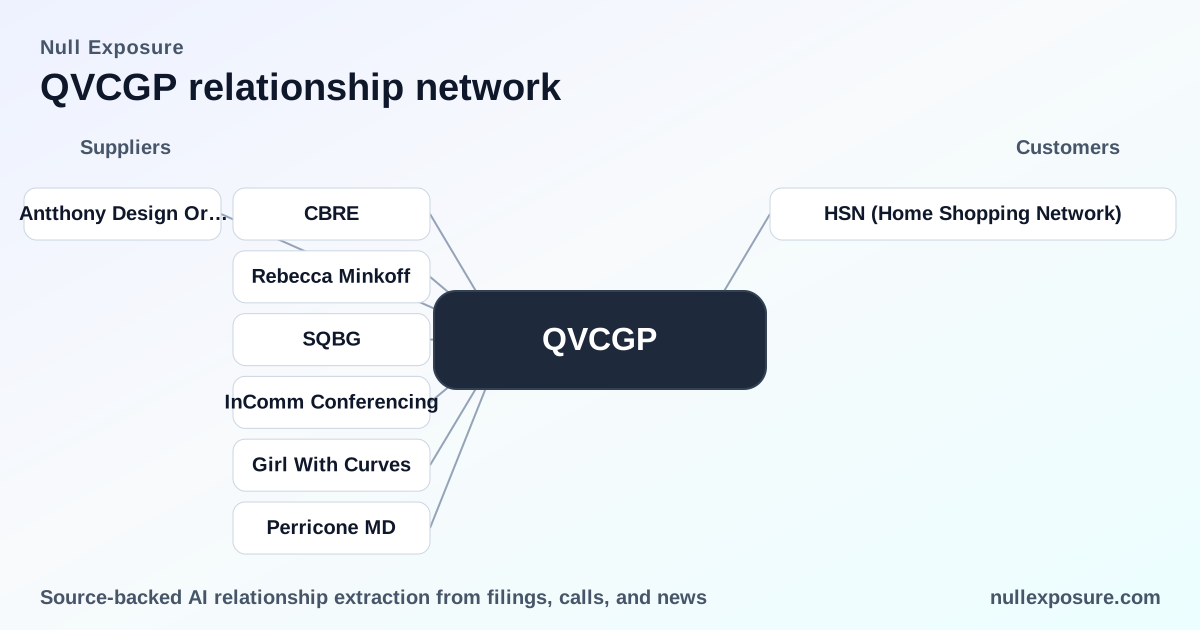
HSN (Home Shopping Network)
HSN historically shared logistics operations with QVC: a fulfillment site reported as QVC’s second‑largest center handled as much as 30% of the combined volume for QVC and HSN, creating a meaningful single‑site throughput concentration between the two networks. This arrangement highlights operational interdependence in order fulfillment and the potential for shared operational risk. (Insurance Journal, Dec. 20, 2021.)
What the constraints tell us about contracting, concentration and maturity
Use the following company‑level signals when modeling QVC’s counterparty risk and operational posture:
- Counterparty type: individuals. QVC’s customers are primarily households; the firm’s revenue is driven by many small transactions rather than a few large contracts. This limits single‑counterparty credit risk but raises sensitivity to consumer demand cycles and marketing effectiveness.
- Geographic reach: global, with explicit North America, EMEA and APAC exposures. The business operates across multiple markets (including the United States, Germany and Japan), which dilutes market‑level concentration but increases complexity in supply chain, compliance and local consumer preferences.
- Materiality: immaterial concentration at the customer level. Public signals state QVC does not rely on a single customer for a significant portion of revenue, which supports a view of diversified demand risk.
- Relationship role and segment: seller of core consumer products. The company’s primary activities are merchandising and selling curated product assortments through high‑engagement video and digital channels—this is the core product and revenue engine.
Taken together, these constraints indicate a mature retail operator with broad household reach and systemic operational dependencies around fulfillment and logistics rather than concentrated customer credit exposures.
Investment implications and risk checklist
- Operational concentration risk is top of the list. The historical HSN fulfillment overlap demonstrates that logistics nodes can consolidate volume; any disruption to a major center or shared hub will directly affect fulfillment costs and customer service metrics. Investors must treat fulfillment capacity, insurance exposure and lease/ownership structure as financial risks.
- Low counterparty concentration but high market sensitivity. Because the buyer base is individuals, revenue volatility will track consumer demand, promotional cadence and media engagement effectiveness rather than counterparty solvency.
- Geographic diversification is both a strength and a complexity. Presence in NA, EMEA and APAC spreads market risk, but currency, regulatory and logistics differences require active management and can compress margins.
- Maturity of the business model. The seller/retailer posture and emphasis on broadcast plus digital indicate a well‑established model that competes on merchandising and audience engagement rather than bespoke contracting—this favors steady cash flow when operations are stable, but operational hiccups translate directly into margin pressure.
Practical next steps for an analyst or operator
- Verify current fulfillment topology and throughput concentration metrics—identify which sites handle top percentages of volume and examine redundancy plans and insurance arrangements.
- Model sensitivity of EBITDA to fulfillment disruptions and incremental fulfillment cost per percentage point of volume re‑routing.
- Review regional operating contracts, tariffs and tax considerations for the United States, Germany and Japan to quantify structural margin differences.
- Monitor audience distribution metrics and promotional ROI, since customer acquisition and conversion are the primary levers for top‑line growth.
If you want an operationally focused breakdown of counterparty exposures and fulfillment concentration for diligence or portfolio monitoring, explore our platform at https://nullexposure.com/.
Final takeaways
- QVCGP is a retail seller whose economics are driven by broadcast reach and conversion into many small consumer transactions.
- Customer credit concentration is low, but operational concentration in fulfillment infrastructure is high and material to margin risk.
- Geographic diversification and a mature merchandising model support steady revenue potential, while logistical dependencies and execution risk determine short‑term financial performance.
For investors and operators, the decisive questions are not which corporate buyer will default, but whether the logistics backbone that converts millions of household impressions into orders is resilient, scalable and cost‑efficient.