Ultragenyx (RARE) — Customer Relationships, Concentration, and Commercial Signals
Ultragenyx is a specialist biopharma that discovers, develops, and commercializes treatments for rare and ultra‑rare genetic diseases and monetizes primarily through product sales, collaboration revenues, and manufacturing/supply agreements tied to a small portfolio of approved therapies. Revenue is highly concentrated by partner and region, distribution is mediated through a small number of commercial distributors and specialty pharmacies, and contract manufacturing and supply arrangements create both upside and expense volatility. For relationship-level diligence and ongoing monitoring, see https://nullexposure.com/.
Investment thesis up front
Ultragenyx operates a focused commercial model built around a handful of approved products (notably Crysvita and Evkeeza) plus strategic collaboration and manufacturing relationships. The company converts clinical assets into revenue through direct sales and partner agreements, while relying on third‑party distributors and specialty pharmacies for a meaningful portion of revenue flow. That structure delivers high revenue leverage when launches succeed, and high single‑counterparty concentration risk when a major collaborator or distributor dominates receipts.
How Ultragenyx makes money and how that shapes counterparty risk
Ultragenyx monetizes via three principal channels: (1) product sales of approved therapies, (2) collaboration revenues from partners who co‑develop or commercialize assets, and (3) manufacturing and supply agreements that generate both revenue and offsetting program expenses. The 2024 fiscal profile shows a company growing revenue but remaining unprofitable: RevenueTTM $673M with negative gross profit and operating margins and EBITDA of -$500M, underscoring commercial scale without operating leverage. Geographic revenue is uneven — North America is the largest market, with meaningful contributions from Latin America and EMEA and limited APAC exposure — which informs regional counterparty importance and go‑to‑market risk.
- Contracting posture: Ultragenyx relies on third‑party distributors and specialty pharmacies for a considerable portion of product sales; this is a structural component of the operating model rather than an ad hoc arrangement.
- Concentration: The business is materially concentrated at the counterparty level and by product, creating single‑counterparty revenue risk.
- Criticality: A small set of approved products drive the top line; partner and distributor relationships are operationally critical to fulfillment and revenues.
- Maturity: Commercial scale exists, but negative margins and significant program expenses indicate the company remains in an investment‑stage commercial transition.
Customer relationships that matter (direct coverage)
Below I cover every counterparty relationship identified in the available results and cite the underlying sources.
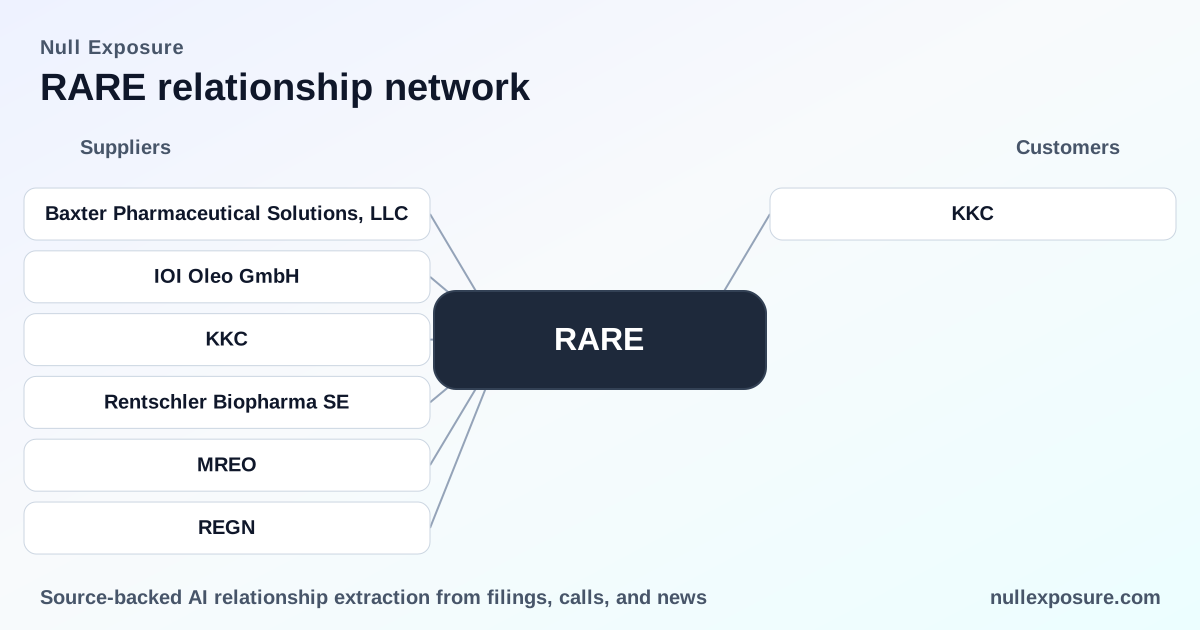
KKC
KKC generated 49% of Ultragenyx’s total revenues for the year ended December 31, 2024, making this collaboration partner the single largest revenue contributor in FY2024 and a primary driver of near‑term cash flow. According to Ultragenyx’s FY2024 Form 10‑K, that single partner accounted for nearly half of total revenues, signaling acute counterparty concentration risk. (Source: Ultragenyx 2024 Form 10‑K, year ended Dec. 31, 2024.)
MREO (Mereo Biopharma)
A March 19, 2026 news release covering Mereo Biopharma’s full‑year results attributes an increase in program expenses for setrusumab to amounts due under the manufacturing and supply agreement with partner Ultragenyx, indicating Ultragenyx’s active role as a counterparty in manufacturing/supply relationships that affect peer expense recognition and supply chain obligations. This is evidence of Ultragenyx’s dual posture as both commercial partner and contract counterparty in third‑party programs. (Source: GlobeNewswire, Mereo Biopharma FY2025 results press release, Mar. 19, 2026.)
Geographic distribution and distribution channel constraints — company‑level signals
The company’s disclosures break revenue down by region and highlight distribution dependencies that shape counterparty risk:
- North America is the dominant market with $340,463 (in thousands) recorded in the revenue table, indicating the largest portion of revenue originates in the U.S. and Canada.
- Europe, Middle East & Africa totaled $80,124 (in thousands) while Latin America contributed $130,713 (in thousands) and Asia‑Pacific $8,930 (in thousands), showing meaningful diversification but also an outsized Latin America contribution relative to APAC.
- Ultragenyx states it relies on commercial distributors and specialty pharmacies for a considerable portion of product sales, and that sales are concentrated within a small number of these distributors and pharmacies. That is a structural distribution constraint that amplifies counterparty and logistics risk across regions.
These items are company‑level signals: they describe how Ultragenyx operates across territories and through intermediaries rather than identifying any single distributor by name.
What these relationships imply for investors
- Concentration risk is elevated. One partner (KKC) supplied 49% of revenues in FY2024; any negotiation, pricing pressure, or termination would have an outsized impact on reported revenue and cash flow.
- Distribution leverage is structural. Reliance on a small set of commercial distributors and specialty pharmacies concentrates execution risk (billing, rebates, reimbursement timing) and can compress working capital or create episodic revenue swings.
- Manufacturing/supply agreements transfer costs and revenue dynamics. The Mereo disclosure shows Ultragenyx participates in manufacturing and supply contracts that simultaneously drive program expenses in partner financials and revenue or cost bases for Ultragenyx, which increases intercompany and counterparty operational complexity.
- Geographic exposure is uneven. North America and Latin America are material revenue sources; limited APAC revenue suggests a runway for growth but also localized regulatory and reimbursement dependency for launches such as Evkeeza in Japan and EEA approvals.
Key risks and monitoring priorities for credit or equity investors:
- Counterparty concentration metrics (percentage of revenue by partner over time).
- Payment terms and dispute history with large collaborators and distributors.
- Renewal and termination provisions in manufacturing and supply contracts that could shift program expense or revenue recognition.
- Regional reimbursement developments affecting Crysvita and Evkeeza uptake.
Bottom line and next steps
Ultragenyx has built a high‑leverage commercial profile: meaningful revenue growth driven by a small product set and heavy reliance on a few partners and distributors. This model offers upside during successful launches but creates material single‑counterparty and distribution concentration risk that requires active monitoring by investors and operators.
For ongoing relationship intelligence and contract‑level signal tracking, visit https://nullexposure.com/ to see how these counterparty footprints evolve over time.