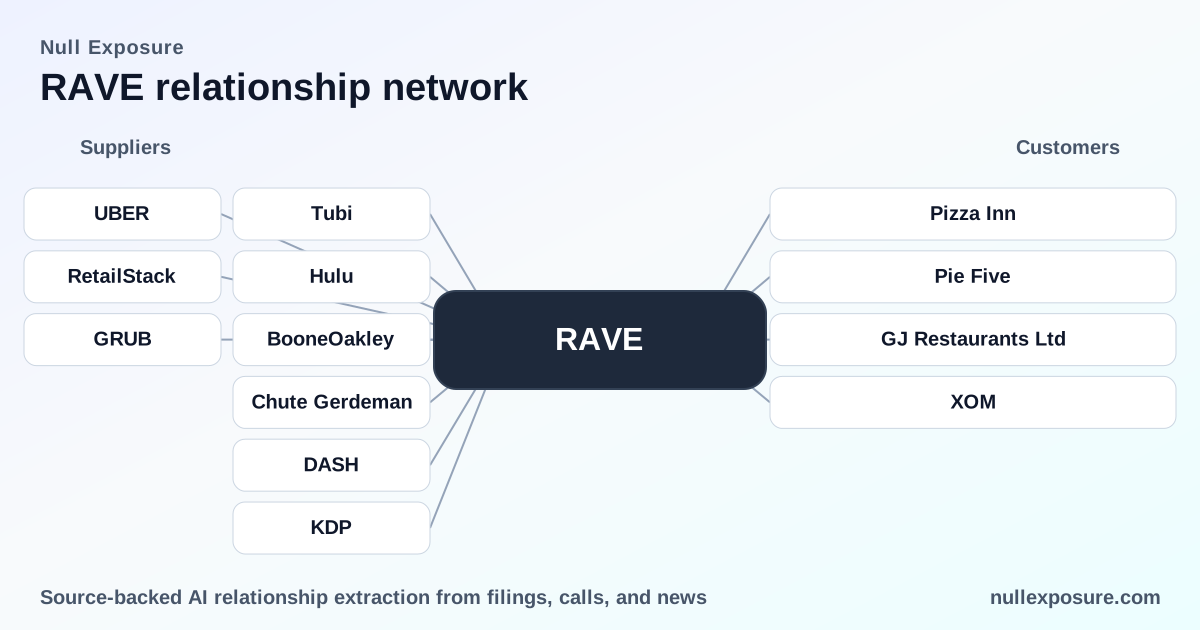
RAVE’s franchise footprint: how Pizza Inn and Pie Five drive recurring revenue
RAVE Restaurant Group operates and monetizes as a small-cap franchisor and licensor of two pizza concepts — Pizza Inn (buffet/express/PIE Units) and Pie Five (fast-casual individual-pizza). The company generates cash flow from franchise fees, long‑term license arrangements, usage‑based royalties and advertising fund assessments, supplemented by supply relationships and occasional development/master license sales; these revenue streams yield high gross margins on modest absolute revenue (Revenue TTM $12.375M). For investors, the core investment thesis is clear: durable, royalty-based cash flow with geographic concentration and modest scale, where growth depends on franchise expansion and same‑store retail sales. Learn more at the NullExposure research hub: https://nullexposure.com/.
How RAVE’s operating model shapes customer economics
RAVE functions primarily as a franchisor/licensor rather than an operator. This corporate posture produces several predictable business characteristics:
- Contracting posture — licensing plus long-term franchise agreements. RAVE issues licenses (including five-year PIE Unit licenses) and franchises with terms that range from five to 20 years, creating multi-year revenue visibility from upfront fees and ongoing royalties. According to company disclosures, PIE Units are typically offered for five‑year initial license periods with renewal options, and franchise fees are amortized over agreements that typically range from five to 20 years (company filing language, FY2025–FY2026).
- Revenue mechanics — usage‑based and recurring. Royalties and advertising fund revenues are recognized as a percentage of franchise retail sales, so cash flow tracks retail demand at franchise locations (company filing disclosures).
- Geographic footprint — US centric with targeted international exposure. Domestic restaurants represent the bulk of revenue (United States $11,791k versus foreign $248k in a cited geographic table), with international restaurants concentrated in the Middle East, indicating regional concentration risk in both consumer tastes and macro conditions.
- Segment and criticality. The franchising segment produces most service revenues — franchise royalties, fees and master-license proceeds — making the health of franchisees critical to corporate profitability and valuation.
- Maturity and scale. RAVE is a small franchisor by scale (Revenue TTM $12.375M; Market Cap ~$39.65M), so unit growth and same-store sales swings have outsized P&L and multiple effects.
These are company-level signals drawn from RAVE’s filings and public releases; where contract excerpts explicitly name an entity (for example, PIE Unit licensing under Pizza Inn), that detail is reported against the named relationship below.
For a structured view of RAVE’s customer relationships and related evidence, visit https://nullexposure.com/.
Relationship ledger: the counterparties that matter
Pizza Inn — the flagship franchised brand and PIE Unit licensor
RAVE franchises, licenses and supplies Pizza Inn restaurants and issues PIE Unit licenses under the Pizza Inn trademark, making it both franchisor and licensor for the Pizza Inn line (buffet and express formats). According to RAVE’s FY2026 results released on GlobeNewswire (Feb 5, 2026), the company franchises, licenses and supplies Pizza Inn restaurants operating domestically and internationally, and company filings indicate PIE Unit licenses are typically five‑year initial terms. (GlobeNewswire, Feb 5, 2026; company filing language, FY2025–FY2026)
Pie Five — the fast‑casual branded franchise system
RAVE holds the Pie Five concept in its franchising portfolio and franchises Pie Five units domestically and internationally, with royalties and development fees contributing to service revenue. RAVE’s FY2026 press materials and quarterly releases consistently list Pie Five alongside Pizza Inn as a franchised and supplied brand. (GlobeNewswire FY2026; QuiverQuant FY2025 results)
GJ Restaurants Ltd — an international master/franchise developer (New Zealand)
GJ Restaurants Ltd is identified as a regional developer planning a multi‑unit Pizza Inn roll‑out in Auckland; company press coverage reports that a director of GJ Restaurants Ltd intends to build ten Pizza Inn restaurants in Auckland over three years, highlighting RAVE’s use of local master licensees for international expansion. (Newswire coverage of international expansion, FY2023)
Exxon / ExxonMobil (XOM) — retail site partner for Pizza Inn Express
RAVE’s Pizza Inn Express format has deployed in nontraditional retail locations; a CSP Daily News report documents a Pizza Inn Express shop opening inside a renovated Exxon-branded station in Danville, Arkansas, demonstrating RAVE’s strategy of licensed PIE Units or express formats inside fuel/convenience retail partnerships. (CSP Daily News report, FY2020)
What the contract constraints tell investors about risk and predictability
RAVE’s disclosed constraints and excerpts reveal a franchising business with contractual stickiness and usage correlation:
- Licensing and long‑term contracts raise revenue visibility. Franchise fees are billed on execution and amortized over five‑to‑20‐year terms, and PIE Unit licenses run five years with renewal options — creating multi-year recognition and smoothing but also obligating the company to ongoing brand support (company filing excerpts).
- Royalties are usage‑based, linking corporate revenue to franchise retail performance. Because royalties and advertising fund contributions are a percentage of retail sales, RAVE’s top-line is sensitive to consumer traffic and price environment at the franchise level (company filing excerpts).
- Geographic concentration is material. The company reports the bulk of revenue from the United States and international restaurants concentrated primarily in the Middle East; domestic units are concentrated in about 15 southern states, implying regional exposure to local economic cycles and consumer trends (company geographic disclosures).
- Role and maturity. RAVE acts as licensor/franchisor (explicit for Pizza Inn/PIE Units) and its franchising segment is an active revenue producer: as of June 29, 2025 the company reported 117 franchised Pizza Inn restaurants, 17 franchised Pie Five units and one licensed PIE Unit, signaling an established but small base that requires continued unit growth to scale profitably (company filing, FY2025).
These constraints produce a balanced profile for credit and equity investors: predictable, recurring royalties offset by concentration and scale risk.
Investment implications and risk checklist
- Upside drivers: unit growth (franchise and PIE Unit expansion), higher same-store sales boosting royalty streams, successful international master‑license agreements (for example in New Zealand).
- Primary risks: domestic and regional concentration, retail‑sales sensitivity due to usage‑based royalties, and the operational challenge of converting small absolute scale into durable SG&A leverage.
- Catalysts to monitor: quarterly franchise unit counts and same‑store sales, new master license announcements (e.g., GJ Restaurants Ltd developments), and nontraditional distribution deals with retail partners (examples with ExxonMobil).
Final read and next step
RAVE’s model is a classic small franchisor play: long-term, usage-linked contractual cash flows anchored by two brands but constrained by modest scale and regional concentration. For an investor or operator mapping counterparty credit and growth opportunities, the relationship inventory above summarizes the universe of active counterparties disclosed in public releases and filings. For deeper tracking and structured signals on counterparties and contracts, visit https://nullexposure.com/ — our platform centralizes evidence and timelines for customer relationships.