Arcus Biosciences (RCUS): Why partner relationships drive valuation and operational runway
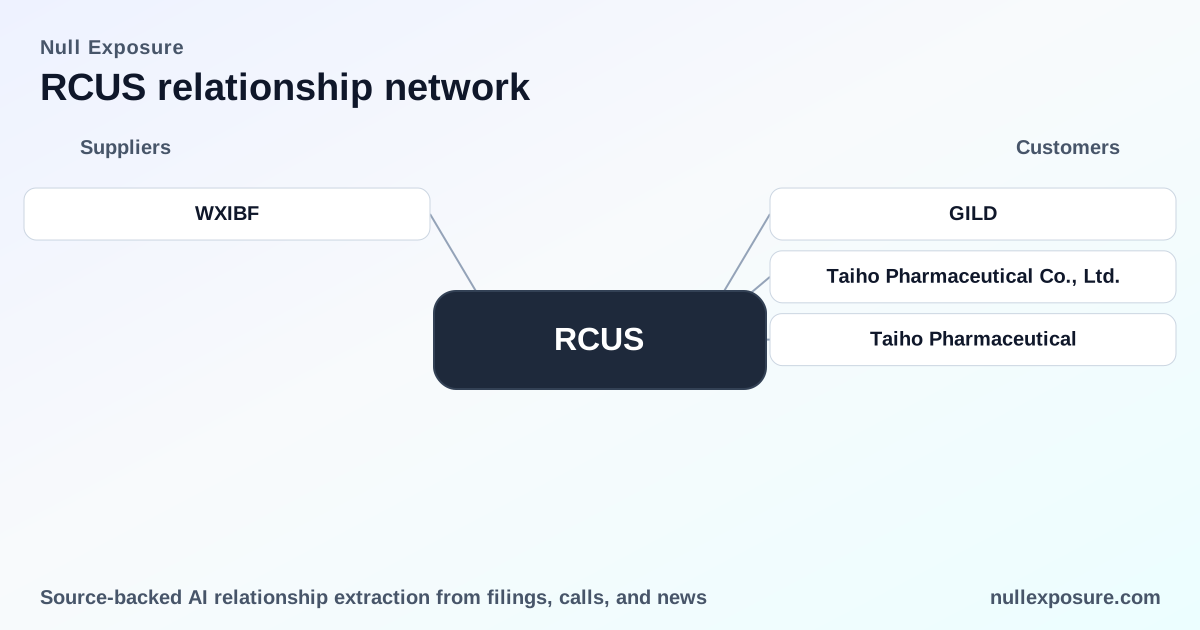
Arcus Biosciences develops and commercializes cancer therapies and monetizes primarily through collaborative licensing deals, milestone and option payments, and eventual product commercialization rights. Over the past two years Arcus’s cash runway and strategic flexibility have been materially shaped by collaborations with large pharma partners—most notably Gilead and Taiho—which have provided both upfront and milestone payments that underwrite R&D while the company remains clinical-stage. For a concise briefing on how partner dynamics translate to investor outcomes, see https://nullexposure.com/.
Collaboration economics: partners fund trials and shape optionality
Arcus operates as a single reportable segment focused on developing differentiated oncology therapies, which forces a concentrated operating model: clinical progress on a handful of assets and the choices of a small number of strategic partners determine near-term cash flow and long-term value. That single-segment posture implies a contracting approach oriented toward optionable licensing and risk-sharing arrangements rather than broad commercial infrastructure. Because Arcus is still clinical-stage, partner payments are critical to funding operations and reducing dilution; the company has historically relied on milestone and option payments when moving assets through expensive late-stage trials (company 10‑K and multiple news reports in 2026).
Relationship rundown: what investors need to know
Gilead Sciences — a strategic partner, a material shareholder, and an option holder
Gilead has executed multiple amendments with Arcus that include options to license additional programs and co-develop certain assets, and Gilead has provided meaningful payments that helped fund Arcus’s operations. According to news coverage of Arcus’s SEC disclosures in early 2026, Gilead’s option rights to earlier pipeline assets are set to expire in mid‑2026, and Gilead scaled back expansion of some early-stage options following the halt of the Phase 3 STAR‑121 study. Arcus’s 2024 Form 10‑K and subsequent reporting also show that Gilead acquired additional Arcus shares and held roughly 29.7% of common stock after a February 2025 underwritten offering, making Gilead both a commercial partner and a large equity holder (Arcus 10‑K FY2024; TradingView/SEC coverage, March–May 2026; Sahm Capital analysis, April 2026).
Source: Arcus 2024 Form 10‑K (shareholding disclosure, FY2024) and multiple March–May 2026 press reports summarizing SEC filings and coverage (TradingView, Sahm Capital, Investing.com).
Taiho Pharmaceutical — regional rights and localized commercialization optionality
Arcus retains worldwide rights to its asset casdatifan except in Japan and certain Asian territories, where Taiho was granted optioned rights in October 2025; those arrangements include payments that supported Arcus’s operations. Reporting in late 2025 and early 2026 underscores that Taiho’s options are focused on regional development and commercialization in Asia, preserving Arcus’s global upside while monetizing specific territory rights (Zacks/TradingView coverage, March 2026; Benzinga reporting).
Source: Zacks/TradingView and Benzinga coverage describing the October 2025 Taiho option and subsequent reporting in FY2025–FY2026.
How these relationships change the investment equation
- Funding profile: Partner milestone and option payments have been a material source of cash for Arcus; when options are exercised, Arcus receives non-dilutive capital and shares downstream development risk with a commercial partner (reported payments in company disclosures and news stories).
- Concentration risk: With a single operating segment and a small set of strategic partners, Arcus’s financial and operational trajectory is concentrated; the termination or non‑exercise of partner options can materially reduce near-term funding and change dilution dynamics.
- Strategic optionality vs. control: Option structures give Arcus upside (retained rights in many territories) while deferring development costs, but they also reduce Arcus’s unilateral control over program expansion if partners opt in.
- Shareholder alignment: Gilead’s near‑30% stake links partner decisions to shareholder incentives—Gilead’s financial interest aligns it with Arcus’s upside but also concentrates influence over corporate outcomes (Arcus 10‑K disclosure, FY2024).
Key takeaway: Arcus’s valuation and runway are a function of trial outcomes and partner choices; partner option expirations and strategic re‑prioritizations are primary drivers of near‑term upside or downside.
Recent events that change partner dynamics
- The Phase 3 STAR‑121 lung cancer study that Arcus ran in collaboration with Gilead was halted after a futility analysis, and Gilead stepped back from expanding certain early‑stage options, altering the near‑term development roadmap and funding cadence (Sahm Capital analysis, May 2026; SimplyWall.st reporting).
- SEC filings and subsequent news reports indicate that Gilead’s option rights in the cooperation agreement are scheduled to expire on July 14, 2026, a discrete near‑term contractual deadline investors should monitor (TradingView/Bitget coverage summarizing SEC documents, May 2026).
- Arcus continues to hold worldwide rights to casdatifan outside Japan and selected Asian territories, where Taiho holds the optioned rights, preserving value for Arcus in other major markets while providing localized upside through Taiho’s Asia strategy (Zacks/TradingView and Benzinga, March 2026).
Risk and upside — the investment tradeoff
- Upside drivers: retained global rights, potential exercise of partner options, re‑prioritization toward assets with more favorable risk/benefit profiles (press coverage notes a refocus on a kidney‑disease program after the trial miss), and continued milestone payments if partners re‑engage or exercise rights.
- Risk drivers: trial failures and option expirations that remove future milestone streams; concentration of strategic partnerships and the heavy shareholding by a single partner increase execution and governance risk.
Bottom line: Arcus is a clinical‑stage, partner‑driven story—partner decisions are the de facto funding and development levers. Investors should track trial readouts, option expiration dates, and partner statements as primary signals of value realization.
What to watch next (practical catalysts)
- July 14, 2026 — Gilead option expiration window per SEC disclosures; watch any announcements regarding exercise or termination.
- Quarterly filings and 8‑K disclosures — changes to partner agreements, milestone payments received, or amendments to development plans.
- Public statements from Gilead and Taiho on program prioritization and commercialization plans, especially in Asia for casdatifan.
- Arcus’s investor presentations and cash-runway disclosures that reflect partner payments and internal reprioritization decisions.
For a concise briefing and ongoing updates on partner‑driven biotech relationships, visit https://nullexposure.com/.
By focusing on partner economics, contractual deadlines, and the company’s single‑segment operating posture, investors can model Arcus’s runway and valuation sensitivity to collaborator behavior rather than to broad commercial execution alone.