Ring Energy (REI): Customer Concentration and Contract Dynamics in the Permian Basin
Ring Energy is a Midland‑based exploration and production company that monetizes hydrocarbons by producing and selling crude oil, natural gas, and NGLs from the Permian Basin. Revenue is generated at the wellhead and recognized on delivery to purchasers; Ring’s commercial model is therefore supplier‑facing, short‑term in cash conversion, and heavily concentrated among a few large buyers. For investors, the combination of high customer concentration and short payment cycles creates a cash‑flow profile that is predictable in the near term but dependent on counterparty access and commodity markets.
For a consolidated view of these customer relationships and their implications for credit risk and cash flow, see Null Exposure’s coverage: https://nullexposure.com/
The three purchasers that drive Ring’s topline
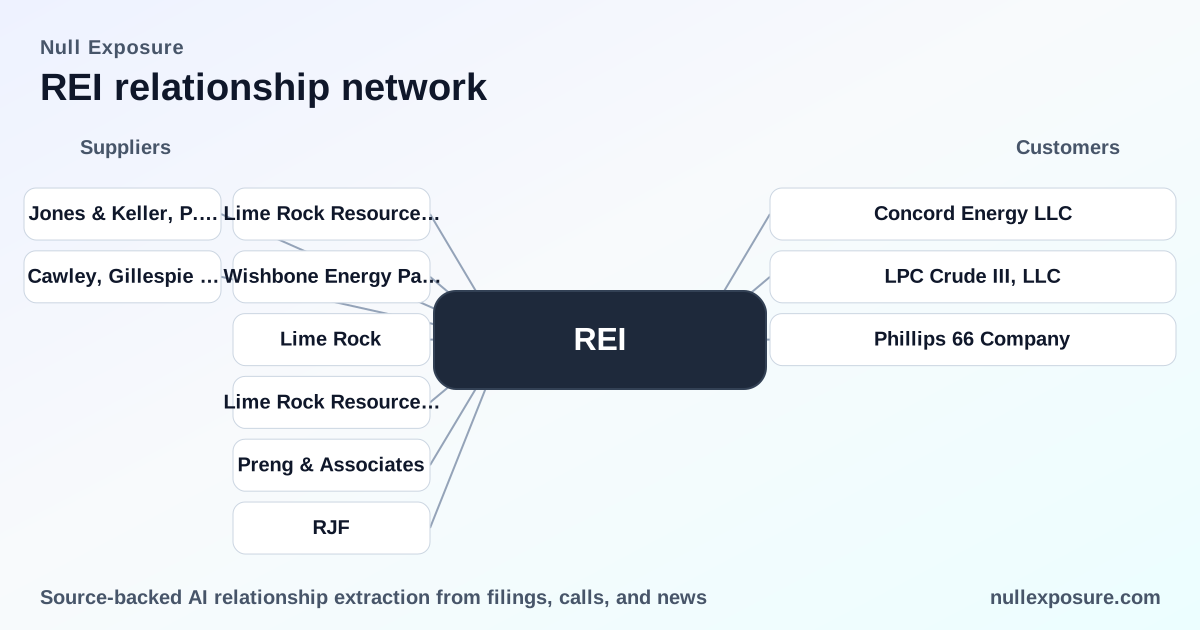
Ring discloses that three customers accounted for 88% of its oil, natural gas and NGL revenues for the year ended December 31, 2024. The 10‑K lists those purchasers and the percentage shares by year; below I summarize each relationship in plain English with the company’s disclosure as the source.
Phillips 66 Company — the anchor counterparty
Phillips 66 purchased 61% of Ring’s sales in FY2024 (64% in FY2023), making it by far the single largest purchaser of Ring’s production and the primary conduit for cash receipts. — Ring Energy Form 10‑K, year ended December 31, 2024.
Concord Energy LLC — a meaningful mid‑tier buyer
Concord Energy accounted for approximately 14% of Ring’s revenues in FY2024 (11% in FY2023), representing a material but secondary source of cash flow behind Phillips. — Ring Energy Form 10‑K, year ended December 31, 2024.
LPC Crude III, LLC — consistent third‑party demand
LPC Crude III purchased about 13% of revenues in FY2024 (11% in FY2023), completing the trio of customers that together supply the bulk of Ring’s realized prices and working capital. — Ring Energy Form 10‑K, year ended December 31, 2024.
What the disclosures imply about Ring’s commercial posture
Ring’s 10‑K provides constraint‑level signals that explain how these relationships operate and their implications for investors:
-
Short‑term receipts and fast cash conversion. The company receives payment one to three months after delivery, which means working capital is cycled quickly and sales translate to cash within a short window. This structure reduces long receivable risk but increases sensitivity to temporary purchaser disruptions. — Company filing.
-
Geographic concentration in the Permian Basin. All revenues are generated within the Permian Basin in the United States, and sales are accepted only in U.S. dollars, concentrating Ring’s market and counterparty exposure in a single North American hydrocarbon hub. — Company filing.
-
High concentration but asserted replaceability. Three customers represented 88% of revenue in FY2024, a material concentration that elevates counterparty risk; Ring also states it believes any individual purchaser could be replaced and that loss of a purchaser would not materially impair the business, which the company positions as a mitigation narrative. Investors should treat that replaceability claim as management judgment rather than a quantitative guarantee. — Company filing.
-
Active, seller‑led transactions and revenue recognition on delivery. Ring recognizes revenue when product is delivered to the purchaser, confirming its role as the seller in short‑term commodity transactions rather than a long‑duration contracted supplier. — Company filing.
-
Single operating segment; core product exposure. The company operates in a single reportable segment (Exploration and Production) and predominantly derives revenue from produced crude oil, natural gas and NGLs, underscoring that customer relationships are integral to core product monetization rather than ancillary services. — Company filing.
Risk and operational considerations for investors
These disclosure elements combine into a clear risk profile:
-
Concentration risk is high. With Phillips 66 taking a majority share of sales and two other buyers completing 88% of revenue, any counterparty dispute, downstream curtailment, or change in purchasing patterns will have an outsized impact on Ring’s cash flow.
-
Counterparty credit exposure is front‑line. Short payment windows limit receivable duration but make Ring dependent on the operational and credit health of a very small set of buyers; disruptions are quick to translate into cash‑flow volatility.
-
Market and logistics exposure are geographic. Being concentrated in the Permian improves operational focus and reduces transportation complexity, but it also ties pricing and basis risk to a single basin and to midstream capacity/price dynamics local to that region.
-
Management’s replaceability claim reduces, but does not eliminate, systemic risk. Management states they can “readily find other purchasers,” which supports flexibility; however, the reality of commodity markets is that replacements often come at the market price and with transitional friction.
Investment implications and action points
For investors and operators evaluating Ring Energy’s customer relationships:
-
Focus on counterparty stability and contract terms. Because Phillips 66 is the largest buyer, monitor any public filings or market signals related to Phillips’ purchasing stance and downstream throughput in the Permian. Confirmatory diligence on the credit and operational stability of Concord and LPC should accompany any exposure sizing decision.
-
Stress cash flow under temporary purchaser loss. Model scenarios where the largest purchaser reduces throughput for one to three months and assess liquidity buffers; short payment cycles mean stress is realized quickly.
-
Watch Permian midstream capacity and price differentials. Basis movements and takeaway constraints materially affect the netbacks Ring receives from these counterparties.
Key takeaways:
- Customer concentration is material (88% to three buyers).
- Phillips 66 is the dominant single customer (61% of FY2024 sales).
- Payments convert to cash quickly (1–3 months), which both limits receivable risk and accelerates the impact of counterparty disruption.
For deeper, continuous tracking of Ring Energy’s counterparty risk profile and similar E&P relationship intelligence, visit Null Exposure: https://nullexposure.com/
Bottom line
Ring Energy’s commercial model is straightforward: produce in the Permian, sell into a small set of large buyers, and turn product into cash within a month or two. That model delivers near‑term visibility on cash receipts but concentrates execution risk into a handful of counterparties and a single geographic basin. Investors should price Ring’s operational concentration and counterparty dependency into valuations and stress tests, while balancing the company’s claim of replaceability against market reality.