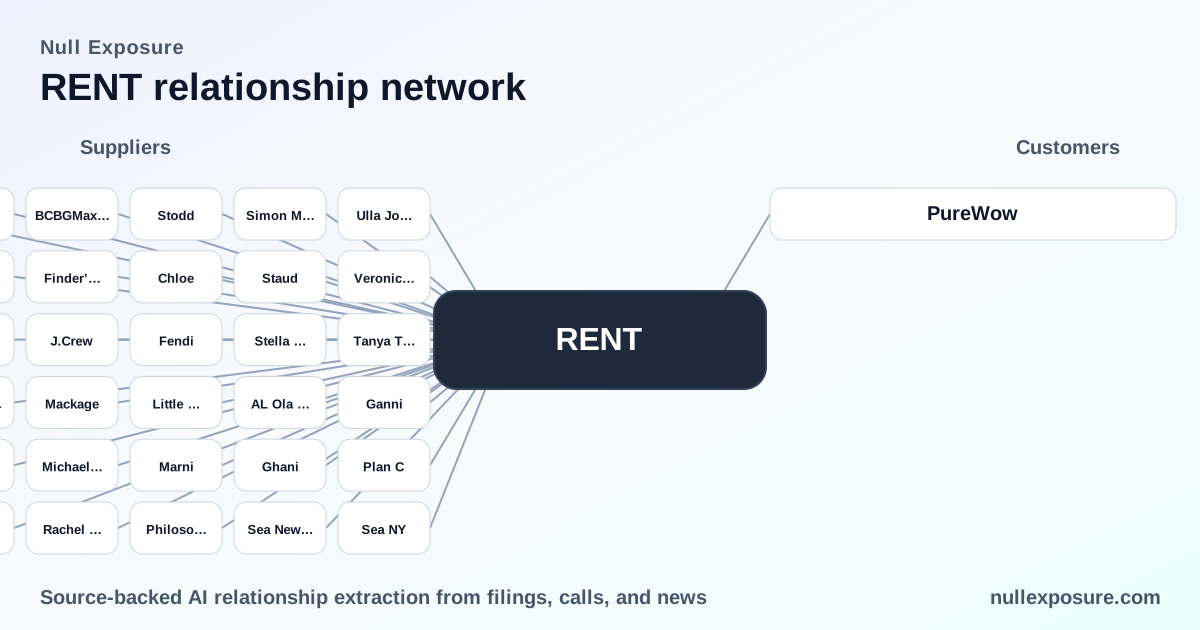
Rent the Runway: Customer Relationships That Drive Recurring Revenue and Channel Expansion
Rent the Runway operates a two‑pronged consumer platform that monetizes primarily through monthly subscription plans for clothing and accessory rentals, while supplementing revenue with a‑la‑carte rentals and resale channels. The business combines high recurring revenue from subscribers with short-term transaction economics for one-off rentals and outlet resale partnerships, creating a blended cashflow profile that rewards scale, logistics efficiency, and brand partnerships. For a concise investor briefing and data-driven monitoring, visit https://nullexposure.com/ for ongoing coverage.
What investors need to know about how customers plug into the model
Rent the Runway’s operating model emphasizes recurring, consumer‑facing revenue. The company’s subscriptions renew automatically on a monthly cadence and constitute the majority of top line — 88% of revenue in the fiscal years ended January 31, 2025 and 2024 was generated by subscribers while active or paused, per company disclosure. That subscriber base establishes a predictable revenue floor and makes churn management and unit economics the central operating levers.
At the same time, the firm recognizes fees for a‑la‑carte rentals over the short rental window (four‑ or eight‑day periods), which creates intermittent cash spikes and operational load tied to garment turnaround. A public filing explains that the company defers recognition of a‑la‑carte fees until delivery and then recognizes revenue ratably over the rental period, reflecting the short‑term service nature and the importance of fulfillment operations.
From a counterparty and concentration perspective, Rent the Runway is consumer‑centric and geographically concentrated in the United States — all revenue is currently generated domestically and the company reports approximately 3 million lifetime customers and 164,004 total subscribers (active and paused) as of January 31, 2025. No single customer accounted for more than 5% of revenue in the recent three‑year window, indicating low counterparty concentration but high dependence on many individual subscribers.
The practical constraints that define the customer franchise
- Contracting posture: The company runs recurring subscription contracts (monthly auto‑renew) alongside short‑term transactional rentals (four‑ or eight‑day recognition windows). This mix shapes cashflow volatility and requires operational elasticity.
- Concentration and criticality: Revenue is materially subscriber‑driven (88% subscriber share), so subscriber retention is critical, while no single external customer is material, reducing counterparty concentration risk.
- Counterparty type and geography: Customers are overwhelmingly individual U.S. consumers, not enterprise buyers, which emphasizes marketing and customer‑experience investment rather than B2B sales motions.
- Maturity and stage: The subscriber base is established and active — the company reported 119,778 active subscribers as of January 31, 2025 — and automatic renewal makes many relationships ongoing and renewing rather than one‑off. These constraints collectively indicate a business where scale, logistics efficiency, and customer lifecycle management determine margin expansion and resilience.
Relationship snapshots: three publicized customer/partner links
PureWow — editorial collaboration and product sourcing
PureWow reached out to Rent the Runway to source similar pieces used in a consumer fashion feature about dressing like Meghan Markle, demonstrating Rent the Runway’s role as a go‑to inventory partner for editorial and content collaborations. Source: PureWow fashion feature (March 10, 2026) — https://www.purewow.com/fashion/dressed-like-meghan-markle-for-a-week
Nordstrom Rack — resale distribution channel expansion
Rent the Runway expanded its resale footprint by partnering with Nordstrom Rack to sell used garments through Nordstrom Rack stores, converting previously rented inventory into an additional retail channel and unlocking incremental lifetime value from garments. Source: Retail Dive report (May 3, 2026) — https://www.retaildive.com/news/rent-the-runway-to-sell-used-garments-through-nordstrom-rack/570685/
KeyBank / Laurel Road digital bank (KEY‑P‑J) — benefits network placement
Rent the Runway is one of the premium brand partners included in a newly launched digital bank for physicians from KeyBank and Laurel Road, placing exclusive offers and discounts for professional customers through a partner‑benefits network and extending customer acquisition into specialty affinity channels. Source: PR Newswire release on KeyBank/Laurel Road digital bank (March 10, 2026) — https://www.prnewswire.com/news-releases/keybank-and-laurel-road-launch-digital-bank-for-doctors-301257891.html
What these relationships collectively imply for revenue and risk
Each relationship targets a different element of the revenue stack. The PureWow editorial tie demonstrates brand and demand affinity, useful for customer acquisition and PR‑driven conversion. The Nordstrom Rack partnership converts used rental inventory into resale revenue, improving garment economics and asset recovery while broadening customer channels beyond subscribers. The KeyBank/Laurel Road placement taps into affinity marketing and benefit networks, an efficient route to lower‑cost customer acquisition among high‑lifetime‑value cohorts.
Operationally, the model requires robust logistics, reverse supply‑chain controls, and inventory valuation discipline: short rental periods create concentrated fulfillment cycles, while resale distribution demands quality sorting and consistent brand presentation. The company’s revenue recognition practices — deferring a‑la‑carte fees until delivery and recognizing them over the rental term — reflect those operational realities and the mixed revenue cadence.
Key takeaways for investors
- Subscription backbone drives predictability. With 88% of revenue linked to subscribers, retention and ARPU optimization are the primary levers for revenue growth.
- Channel diversification reduces single‑counterparty risk. No single customer exceeds 5% of revenue, and partnerships such as Nordstrom Rack add resale monetization that improves garment yield.
- Operational execution is the earnings hinge. Short‑term rentals impose tight fulfillment windows and require efficient turnaround to protect margins.
- Marketing and partnerships extend acquisition reach. Editorial placements and affinity channel partnerships expand reach without relying solely on paid CAC.
If you want a consolidated intelligence view of Rent the Runway’s commercial links and operational signals, explore our investor resources at https://nullexposure.com/.
Bottom line
Rent the Runway’s customer relationships are tightly aligned with a subscription‑first monetization strategy augmented by transactional rentals and resale partnerships. Investors should value the company on subscriber economics and the firm’s ability to scale logistics and resale channels to extract more value per garment, while monitoring retention trends and channel expansion execution as the primary drivers of long‑term profitability.