ATRenew (RERE): Partnered distribution drives the pre-owned electronics moat
ATRenew operates a vertically integrated platform that acquires, refurbishes and resells pre-owned consumer electronics in China, monetizing through direct resale margins, refurbishment services and revenue-sharing trade‑in programs with major device brands and e‑commerce platforms. The company’s growth thesis is partner-led: channel placement via trade‑in programs and on-platform conversion (direct website and third‑party partners) converts device inflows into recurring inventory and service revenue, while scale in logistics and grading improves refurbished yields and gross margins.
For an interactive partner map and source coverage, visit the NullExposure home page: https://nullexposure.com/
Why partnerships are the commercial engine — not an afterthought
ATRenew’s business model is not pure retail arbitrage: it is a coordination platform that aligns three value pools — device supply (trade‑ins), technical processing (grading, refurbishment), and sales reach (direct site plus partner channels). That architecture makes the company inherently partnership‑centric: major channel agreements convert marketing and supply into repeatable revenue streams while its vertical operations capture margin on refurbishment.
Company‑level commercial characteristics:
- Contracting posture: ATRenew operates as a strategic channel partner to large brands and platforms rather than as a stand‑alone commodity reseller; commercial relationships are negotiated to embed trade‑in funnels and shared customer flows.
- Concentration: The partner base includes several large platforms and OEMs, producing meaningful exposure to a small number of counterparties while also delivering scale advantages across the network.
- Criticality: Trade‑in programs are a critical demand generator and primary supply source; partner program penetration materially influences throughput and same‑store-like growth metrics.
- Maturity: Public references to multi‑year partnerships and repeated program metrics indicate established, operational relationships rather than one‑off pilots.
These characteristics create a scalable revenue engine with concentrated counterparty risk — a core investment thesis and primary risk vector for operators evaluating RERE customer relationships.
The partner roll call — what the record shows
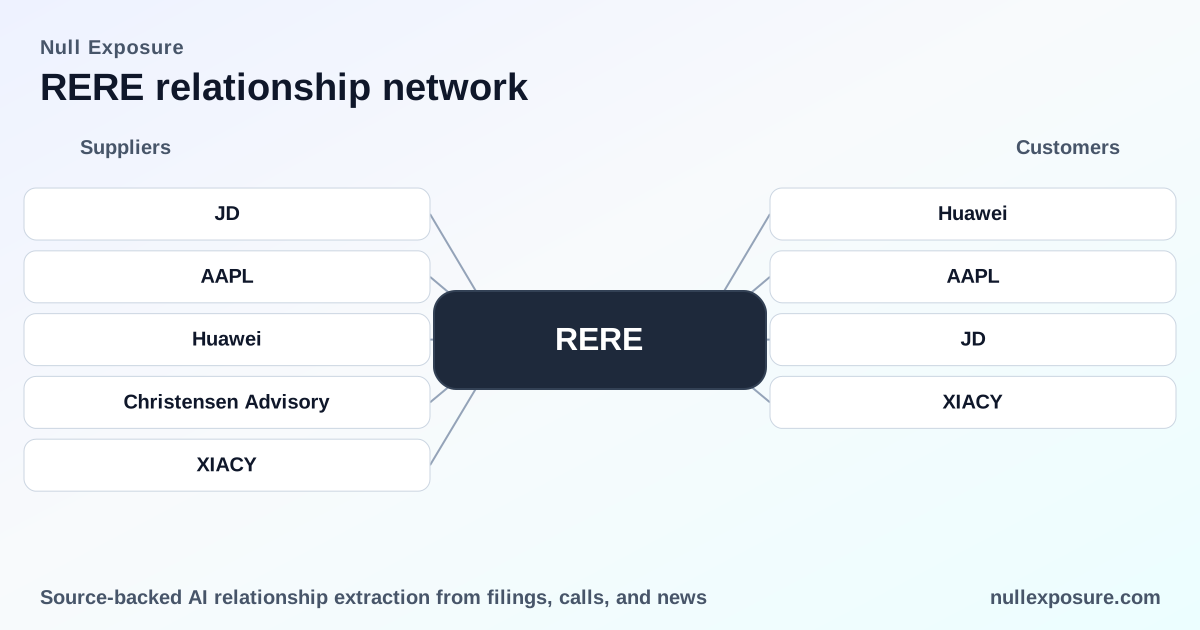
ATRenew’s public commentary and news coverage list four repeat partners in the customer scope: JD.com, Apple, Huawei and Xiaomi. Each relationship reported in source materials is summarized below with direct sourcing.
-
JD.com — ATRenew runs integrated trade‑in programs with JD.com that have become a major channel for device flows; JD trade‑in penetration exceeded 10% and ATRenew’s AHS website orders grew roughly 30% year‑over‑year. These figures are cited in the Q3 2025 earnings call transcript and a press release covering that call (March 2026), and reinforced in FY2026 coverage on Simply Wall St.
Source: Q3 2025 earnings call transcript (AHS / JD program commentary) and Globe and Mail press release on the Q3 2025 call (published March 2026); secondary FY2026 commentary on Simply Wall St. -
Apple (AAPL) — ATRenew works with Apple on trade‑in solutions and leverages Apple channel relationships to increase upgrade conversions through trade‑in offsets. Management highlighted collaborative trade‑in mechanics on the Q3 2025 earnings call, and industry coverage (Zacks FY2024 review and later FY2026 write‑ups) cites Apple as a strategic brand partner.
Source: Q3 2025 earnings call transcript and Zacks coverage (FY2024 initiation analysis); Simply Wall St FY2026 summary. -
Huawei — ATRenew partners with Huawei on device trade‑ins and brand partnerships that feed upgrade and refurbishment flows. Management referenced Huawei alongside other OEMs in the Q3 2025 earnings call, and analyst commentary anticipates further brand partnership expansion.
Source: Q3 2025 earnings call transcript (March 2026) and Zacks FY2024 commentary noting Huawei as a brand partner. -
Xiaomi — Xiaomi is listed among the OEMs participating in ATRenew’s trade‑in and upgrade facilitation programs, contributing device inflows for refurbishment and resale. Xiaomi was specifically named on the Q3 2025 earnings call and noted in the related press coverage.
Source: Q3 2025 earnings call transcript and Globe and Mail press release covering the call (FY2025 period).
Each relationship above is explicitly documented in ATRenew’s Q3 2025 earnings commentary and reinforced across public analyst writeups and market summaries between FY2024–FY2026.
What investors should extract from the relationship map
- Revenue scaling comes through embedded programs, not spot resale. Trade‑in penetration metrics and platform ordering growth are the proximate drivers of volume and gross margin expansion.
- Concentration risk is material. A relatively small set of large partners generates the majority of program throughput; partner commercial decisions — pricing of trade‑in offsets, placement on a platform, or promotional cadence — will move ATRenew’s near‑term revenue profile.
- Operational leverage is a competitive advantage. ATRenew’s vertically integrated logistics, grading and refurbishment capability convert partner‑sourced devices into higher margin pre‑owned inventory, protecting profitability as volumes increase.
- Regulatory and consumer trends are supportive. Chinese regulatory emphasis on electronic waste and growing consumer acceptance of refurbished devices increase the long‑run addressable market and strengthen the bargaining position of a scale operator.
Key risks and what to watch next
Investors and operators should track a small set of leading indicators that move the thesis from promise to performance:
- Trade‑in program penetration rates and any public updates to the >10% JD penetration metric cited in FY2025 materials.
- AHS website order growth and conversion trends — the 30% YoY growth reference in Q3 2025 is a baseline to beat.
- Announcements of expanded OEM or platform agreements, or any shift from revenue‑sharing to lower‑margin procurement models.
- Gross yield on refurbished devices and inventory turns — operational metrics drive margin capture as platform throughput scales.
For actionable partner coverage and curated relationship analytics, visit https://nullexposure.com/ for our investor‑facing partner summaries and transcript highlights.
Bottom line
ATRenew’s platform monetizes by converting partner trade‑in programs into a reliable, vertically integrated refurbishment and resale engine. Partnerships with JD.com, Apple, Huawei and Xiaomi are the connective tissue of the model — they supply devices, drive customer upgrades, and determine volume growth. The upside is clear: scalable gross margins and structural demand. The primary risk is partner concentration and the commercial terms those partners command. Active monitoring of trade‑in penetration, platform order growth and any changes in partner scope will be decisive for the stock’s trajectory and for operators assessing the durability of ATRenew’s customer relationships.