Regulus Therapeutics (RGLS): Customer relationships and strategic posture after a transformative sale
Regulus is a microRNA-focused biopharma that historically monetized through large pharma collaborations, milestone-driven licensing deals, institutional equity placements and, ultimately, an acquisition exit. Revenue and value realization have come via milestone payments and strategic M&A rather than product sales, with Regulus’ lead asset and pipeline acting as the primary commercial leverage. For investors and operators, the company’s counterparty list reads like a map of strategic validation (big-pharma deals) and financial backstopping (sophisticated institutional investors). Explore a concise profile and primary relationship evidence below; for ongoing monitoring, see https://nullexposure.com/.
How Regulus historically delivered value: collaborations, financings and the M&A exit
Regulus built value through a small number of deep collaborations with major pharmaceutical firms coupled with targeted institutional financings to bridge development milestones. That operating model produces four structural characteristics investors should track:
- Contracting posture: Regulus operated as a development partner and licensor—agreements with big pharma conveyed development responsibilities, milestone payments and potential buyout consideration rather than recurring product revenue.
- Counterparty concentration: The company relied on a handful of large counterparties (Sanofi, AstraZeneca historically) and a short list of institutional investors for financing, creating concentration risk but also concentrated validation.
- Criticality of relationships: For corporate value, partner decisions were critical—partner exits or program terminations materially affected Regulus’ development trajectory and workforce decisions.
- Maturity and optionality: Programs were clinical-stage and inherently binary; success unlocked outsized milestones or acquisition interest (as realized in 2026).
These characteristics explain why Regulus pursued equity placements in 2024 to sustain development and why a 2026 acquisition by Novartis translated directly into investor liquidity.
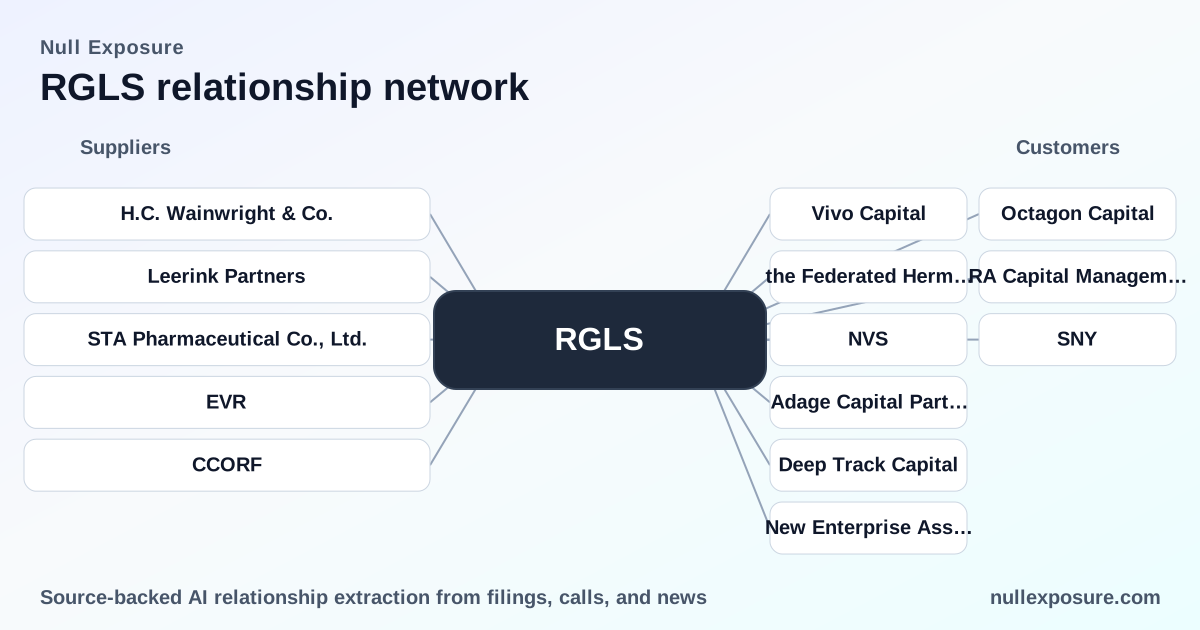
Counterparty snapshot: the full set of relationships identified
Below are plain-English summaries of every relationship reported in public sources for RGLS, with concise source citations for each counterparty.
-
Novartis AG (NVS / Novartis) — Regulus agreed to be acquired by Novartis for $7.00 per share in cash at closing (approximately $800 million) plus a contingent value right for another $7 per share tied to regulatory approval of the lead candidate farabursen, creating a structured payout tied to clinical/regulatory milestones. According to Latham & Watkins’ announcement of the merger agreement, Novartis will acquire Regulus with those cash and CVR terms (FY2025): https://www.lw.com/en/news/latham-watkins-advises-regulus-therapeutics-in-acquisition-by-novartis-ag. Additional reporting in BioCentury and FiercePharma documents the same terms and transaction timing (March–April 2026): https://www.biocentury.com/article/655806/kidney-disease-readout-sets-up-regulus-for-novartis-buyout and https://www.fiercepharma.com/pharma/details-novartis-winning-17b-bidding-war-regulus-therapeutics-and-its-kidney-prospect.
-
Sanofi (SNY) — Regulus ran a Collaboration and License Agreement with Sanofi for lademirsen (RG‑012) and completed enrollment in the Phase 2 HERA study under that agreement, reflecting a historical development partnership with milestone- and trial-driven obligations (FY2022): https://www.prnewswire.com/news-releases/regulus-therapeutics-announces-completion-of-enrollment-in-phase-2-clinical-trial-of-lademirsen-for-alport-syndrome-301489408.html. Earlier reporting documents the 2010 multi-target collaboration valued at up to $750 million, indicating long-standing strategic engagement (coverage referenced in BiopharmaDive, FY2018): https://www.biopharmadive.com/news/regulus-lays-off-60-of-staff-halts-development/527231/.
-
AstraZeneca (AZN) — AstraZeneca partnered with Regulus on RNA-targeted programs (including RG‑125) but later pulled out of certain programs—an example of partner-driven program termination that materially affected Regulus’ pipeline and staffing in past cycles (FY2017–FY2018): https://www.biopharmadive.com/news/regulus-program-terminate-end-lead-astrazeneca/444785/ and https://www.biopharmadive.com/news/regulus-lays-off-60-of-staff-halts-development/527231/.
-
Adage Capital Partners L.P. — Participated as an institutional investor in Regulus’ oversubscribed $100 million private placement of equity in FY2024, providing balance-sheet support ahead of late-stage readouts: https://www.prnewswire.com/news-releases/regulus-therapeutics-announces-oversubscribed-100-million-private-placement-of-equity-302086173.html.
-
Deep Track Capital — Identified as a participant in the same FY2024 oversubscribed private placement, signaling participation by specialist hedge or credit-oriented investors in Regulus’ financing round: https://www.prnewswire.com/news-releases/regulus-therapeutics-announces-oversubscribed-100-million-private-placement-of-equity-302086173.html.
-
New Enterprise Associates (NEA) — NEA participated in the FY2024 equity placement, representing venture-capital support alongside later-stage institutional investors: https://www.prnewswire.com/news-releases/regulus-therapeutics-announces-oversubscribed-100-million-private-placement-of-equity-302086173.html.
-
Octagon Capital — Listed among institutional participants in the FY2024 financing, further diversifying the shareholder base ahead of clinical inflection points: https://www.prnewswire.com/news-releases/regulus-therapeutics-announces-oversubscribed-100-million-private-placement-of-equity-302086173.html.
-
RA Capital Management — Named as an investor in the oversubscribed FY2024 placement, underscoring participation from life-sciences-specialist funds: https://www.prnewswire.com/news-releases/regulus-therapeutics-announces-oversubscribed-100-million-private-placement-of-equity-302086173.html.
-
Federated Hermes Kaufmann Funds — Participated in the FY2024 private placement, indicating interest from diversified institutional mutual-fund strategies: https://www.prnewswire.com/news-releases/regulus-therapeutics-announces-oversubscribed-100-million-private-placement-of-equity-302086173.html.
-
Vivo Capital — Included among the institutional investors in the FY2024 oversubscribed financing, reflecting continued strategic VC/PE support into later-stage development: https://www.prnewswire.com/news-releases/regulus-therapeutics-announces-oversubscribed-100-million-private-placement-of-equity-302086173.html.
What these relationships mean for valuation and operational risk
-
Acquisition as the ultimate monetization route. The Novartis purchase converts Regulus’ development optionality into quantifiable cash value: $800 million upfront plus a $7-per-share CVR tied to regulatory success for the lead program. That structure balances immediate liquidity with future upside tied to approval milestones (Latham & Watkins; BioCentury; FiercePharma, FY2025–FY2026).
-
Partner dependence shaped past volatility. Historical terminations (AstraZeneca) and the long-form Sanofi collaboration show that partner decisions determined staffing levels and program prioritization—a lesson in counterparty risk for any small biotech reliant on large pharma deals (BiopharmaDive, FY2017–FY2018; PR Newswire FY2022).
-
Institutional financing validated but concentrated. The oversubscribed $100M private placement in FY2024 brought high-signal investors (Adage, NEA, RA Capital et al.), but that financing also highlights reliance on periodic equity injections rather than operating cashflows (PR Newswire, FY2024).
Practical takeaways for investors and operators
- For acquirers and licensing partners: Regulus’ experience shows how structured CVRs and milestone-linked payouts can align risk-sharing between acquirer and target during clinical inflection points.
- For investors evaluating exposure: Focus on deal terms (upfront vs CVR), partner commitments, and the concentration of counterparties, because those factors directly governed Regulus’ trajectory and will govern similar small-biotech outcomes.
- For operators running asset-led biotechs: Design collaborations that preserve optionality and minimize single-counterparty concentration; maintain diversified funding channels to survive partner exits.
For a concise platform that tracks counterparty relationships and transaction terms for life-science firms, visit https://nullexposure.com/ for structured evidence and monitoring.
Conclusion — Regulus’ strategy executed the classic small-biotech playbook: scientific niche specialization, strategic pharma partnerships, targeted institutional financing and an M&A exit that monetized clinical progress into immediate cash and contingent regulatory upside. Investors and operators should evaluate similar firms with attention to partner concentration, milestone economics and the balance between upfront consideration and contingent future value.