RH’s customer relationships: where luxury furnishing meets recurring revenue
RH is a vertically integrated luxury home furnishings and lifestyle platform that monetizes through high-margin product sales, an annual membership program, and experiential services (hospitality and curated design). The company generates the bulk of revenue from direct-to-consumer sales across galleries, websites and Sourcebooks while collecting annual RH Members fees that are recorded as deferred revenue and recognized over the membership period. RH reported trailing twelve‑month revenue of $3.44 billion and EBITDA of $540.3 million, reflecting a profitable premium retail model underpinned by a membership-driven customer base. Learn more at https://nullexposure.com/.
Why RH’s customer relationships move the P&L
RH operates as both a traditional retailer and a lifestyle services business. The commercial logic is simple and powerful: sell high-ticket furnishings and lock customer lifetime value through an annual members program that drives purchasing behavior and repeat visits to Design Galleries and RH hospitality venues. Company filings disclose that members accounted for approximately 98% of core RH sales in fiscal 2024, a structural concentration that converts membership renewals into predictable revenue recognition (membership fees are deferred and recognized over the year). This combination of transactional luxury sales and subscription-like membership economics shapes RH’s contracting posture, customer concentration, and revenue maturity.
- Contracting posture: RH uses an annual-membership model—fees are collected up front and recognized over the membership period—creating short-duration recurring revenue that supports lifetime value strategies.
- Concentration: The business exhibits high customer concentration around members who drive the vast majority of sales, elevating retention and membership growth as primary stock catalysts.
- Criticality: Members are a critical revenue source; fluctuations in membership counts or satisfaction have outsized earnings impact.
- Maturity: The membership element introduces measurable recurring economics, but core revenue remains tied to seasonal, high‑ticket retail cycles and luxury housing trends.
- Geographic footprint: Operations are concentrated in North America with expanding EMEA presence through galleries and hospitality experiences, diversifying market exposure while keeping heavy reliance on U.S. demand.
Active customer engagements and commercial relationships to watch
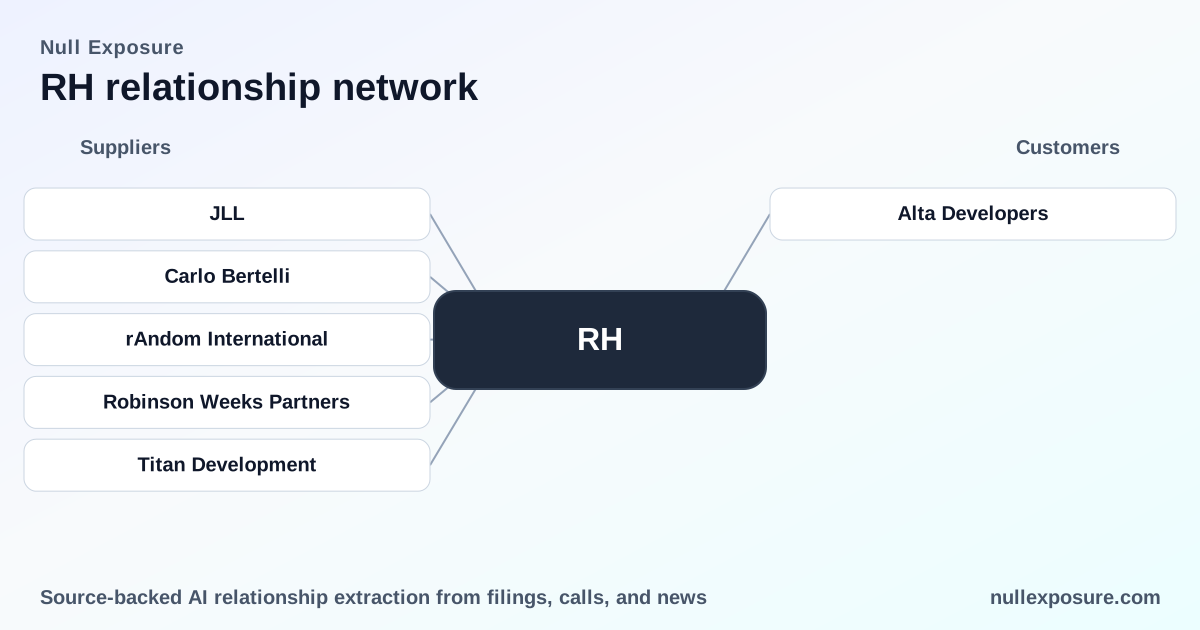
Below are the tracked customer relationships tied to RH’s furnishing and hospitality commercialization. Each relationship is summarized in plain language with a cited source.
Topnotch Resort — turnkey residential furnishing program
Topnotch Resort announced that its 27 new residences adjacent to the resort will be offered fully furnished with luxury home furnishings curated by RH, aligning RH with high‑end resort real‑estate turnkey offerings. This illustrates RH’s strategy to monetize through one‑off project furnishing contracts in hospitality and branded residences. Source: PR Newswire release via StreetInsider, May 3, 2026 (https://www.streetinsider.com/PRNewswire/Topnotch+Resort+Introduces+Fully+Furnished+Residences+Featuring+Luxury+Home+Furnishings+by+RH/26115509.html).
Alta Developers — larger-scale residential turnkey program at Cassia
Alta Developers reported that sales have passed 50% at Cassia — The Residences at Coral Gables — and noted the project will include 174 fully furnished turnkey residences featuring RH furnishings along with other luxury finishes, signaling RH’s role as a preferred furniture provider for high‑end condo developers and turnkey residential projects. Source: profilemiamire.com, March 10, 2026 (https://profilemiamire.com/miamirealestate/2025/3/28/sales-pass-50-at-alta-developers-cassia-in-the-merrick-park-district-of-coral-gables).
Gulfstream — company aviation assets referenced in hospitality context
RH’s corporate narrative has referenced customized Gulfstream G650 and G550 aircraft that are available for charter, reflecting the company’s investment in hospitality-grade assets and executive mobility that support design and client experiences. This note traces to earlier commentary on RH’s operational initiatives and executive travel/hospitality positioning. Source: Chain Store Age coverage (referencing RH initiatives, fiscal note FY2022), accessed May 2026 (https://chainstoreage.com/rh-details-multiple-2022-initiatives-ceo-cites-chaotic-challenges-retail).
What these relationships reveal about RH’s go‑to‑market and risk profile
Collectively, these customer relationships illuminate RH’s dual path to revenue: direct consumer sales underpinned by membership economics, and larger project or experiential contracts with hospitality and real‑estate partners that provide episodic, high-ticket revenue. The Topnotch and Alta Developer deals demonstrate RH’s ability to price and deliver complete furnishing packages for luxury properties — a complementary revenue stream to gallery and online sales. The Gulfstream reference underscores how RH treats hospitality and client experience as strategic assets rather than pure marketing spend.
Key investor takeaways:
- Memberships are the engine. The RH Members Program converts upfront fees into deferred revenue and drives the majority of core sales (members drove ~98% of core RH sales in FY2024 per company filings).
- Project furnishing is accretive but episodic. Contracts with resorts and developers deliver high‑value product revenue and brand exposure but are not a substitute for recurring member activity.
- Geographic diversification is underway. RH maintains a dominant North American footprint while growing EMEA Design Galleries and integrated hospitality, lowering single‑market concentration risk over time.
- Operational complexity increases with services. Hospitality venues, turnkey residential programs, and corporate assets like private aircraft elevate operating leverage and service delivery risk relative to pure retail.
For a detailed, ongoing view of RH’s customer relationships and how they map to revenue recognition and membership dynamics, visit https://nullexposure.com/.
Bottom line for investors
RH is a premium, vertically integrated retailer whose profitability stems from high ticket margins and a membership model that channels repeat purchasing. The company’s reliance on members for the bulk of sales is both a competitive advantage and a single‑point concentration risk: retention and the ability to upsell services and hospitality will dictate mid‑cycle performance. Project partnerships with developers and resorts expand addressable markets and complement gallery sales, but they remain episodic revenue contributors. Monitor membership trends, gallery traffic, and announced turnkey contracts for early signals on revenue momentum.