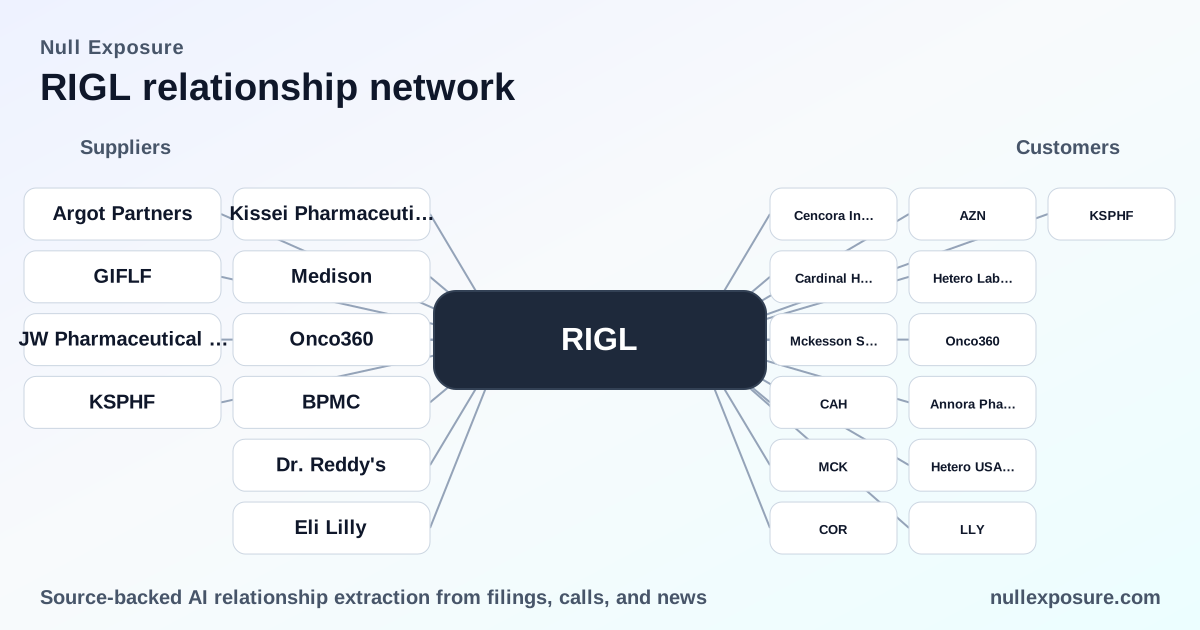
Rigel Pharmaceuticals: revenue concentrated in a distributor-led commercialization model with layered licensing upside
Rigel Pharmaceuticals discovers and develops small-molecule therapeutics and monetizes through three channels: direct product sales in the U.S. via specialty distributors, upfront and milestone payments plus royalties from out‑of‑territory licensing partners, and contract manufacturing/supply agreements for partner territories. The company’s revenue base is concentrated and distribution-driven, while licensing deals (AstraZeneca, Grifols, Kissei, historic Lilly collaboration) provide non-dilutive upside through milestones and royalties. For a concise view of Rigel’s customer concentration and partner exposure, visit https://nullexposure.com/.
How Rigel’s commercial machine is structured — a plain-language operating model
Rigel’s financial profile reflects a small portfolio of approved products (TAVALISSE as the core product) sold primarily in the U.S., with third-party commercialization arrangements for ex‑US territories. According to Rigel’s 2024 Form 10‑K, the company commercializes products directly in the U.S. and relies on third parties to commercialize fostamatinib outside the U.S. This structure produces a hybrid revenue stream: near-term cash from U.S. sales routed through specialty distributors, and contingent future revenue from licensing and milestone schedules overseas.
- Concentration and counterparty risk are material: Rigel discloses several customers that individually accounted for double‑digit percentages of product revenue in FY2024, creating operational leverage to a few large distributors.
- Multiple relationship roles exist simultaneously: Rigel functions as seller and manufacturer, while partners operate as distributors and licensees; in some territories Rigel retains manufacturing obligations under supply agreements.
- Geography is strategic: the U.S. is the primary commercial market, with ex‑U.S. commercialization run through partners.
Relationship map — every partner and customer in the public record
Below are one- to two-sentence plain-English summaries for every relationship reported in the collected sources; each note includes the original filing or press coverage cited.
Cencora Inc. (formerly ASD Healthcare)
Cencora accounted for 20% of Rigel’s total net product sales in FY2024, representing a major U.S. distribution channel for approved products. According to Rigel’s 2024 Form 10‑K, Cencora was a top customer in 2024. (Rigel 2024 10‑K)
Cardinal Health, Inc.
Cardinal Health represented 13% of net product sales in FY2024, indicating another significant distributor relationship that channels Rigel’s medicines to specialty pharmacies and providers. (Rigel 2024 10‑K)
Mckesson Specialty Care Distribution Corporation
McKesson Specialty Care Distribution is named in the 10‑K as a customer under Rigel’s customer concentration disclosures and represents a specialty distribution pathway for product sales. (Rigel 2024 10‑K)
COR
The data set also references COR as an inferred symbol for Cencora; this matches the Cencora listing and confirms the same entity’s prominence in Rigel’s customer concentration table. (Rigel 2024 10‑K)
AstraZeneca
AstraZeneca holds a license for Rigel’s oral rheumatoid arthritis candidate and is responsible for development and marketing in its territory, with Rigel entitled to royalties and milestone payments from that arrangement. Multiple 2026 market writeups note AstraZeneca’s licensing role and Rigel’s royalty exposure. (Mexc / SahmCapital coverage, 2026)
Eli Lilly (LLY)
Eli Lilly provided an upfront payment to license Rigel’s RIPK1 program (ocadusertib) and was contractually positioned to pay milestones and royalties; more recent reporting documents Lilly’s termination of the license, returning rights to Rigel. Industry news in 2026 chronicles the original $125 million upfront and the subsequent termination/return of rights. (FierceBiotech, FiercePharma, TradingView, 2026)
MCK / McKesson Corporation
McKesson Corporation accounted for 45% of Rigel’s net product sales in FY2024, making it the largest single counterparty and the primary driver of U.S. channel revenue concentration. (Rigel 2024 10‑K)
McKesson Corporation (duplicate entry)
A second 10‑K entry reiterates McKesson’s 45% share of product sales in 2024, underscoring the outsized reliance on this distributor. (Rigel 2024 10‑K)
CAH / Cardinal Health Inc (duplicate entries)
Rigel’s filings and tagging also reference Cardinal Health under the CAH identifier, confirming Cardinal’s role as a major distributor channel in Rigel’s revenue mix. (Rigel 2024 10‑K)
Cencora Inc (alternate entry)
An additional data line repeats Cencora’s listing in the customer concentration schedule and supports the company-level disclosure that Cencora is a top revenue source. (Rigel 2024 10‑K)
Annora Pharma Private Ltd.
Rigel announced a settlement with Annora (and related parties) that grants the counterparty a license to sell a generic version of TAVALISSE under certain conditions beginning in Q2 2032 or earlier. The agreement was disclosed in a March 2026 PR Newswire release. (PR Newswire, Mar 2026)
Hetero USA, Inc.
Hetero USA is named in the March 2026 settlement along with Annora and Hetero Labs, which collectively resolved patent litigation and established future licensing timelines for a generic product. (PR Newswire, Mar 2026)
Hetero Labs Ltd.
Hetero Labs Ltd. is a co‑party in the patent settlement disclosed in March 2026, receiving a pathway to market for a generic formulation under the settlement terms. (PR Newswire, Mar 2026)
GRFS / Grifols, S.A.
Rigel granted Grifols exclusive rights to commercialize fostamatinib in Europe and Turkey under a January 2019 license and a 2020 commercial supply agreement under which Rigel sells product to Grifols at a contract markup. Rigel’s press materials and the original collaboration announcement document the arrangement. (Rigel press release / 2019–2020 filings; PR coverage)
Grifols (alternate mention)
Later media coverage reiterates Grifols’ exclusive rights in Europe and Turkey under the 2019 deal, confirming the arrangement’s ongoing relevance to Rigel’s international licensing footprint. (FiercePharma coverage)
Onco360
Onco360 was selected as Rigel’s limited distribution specialty pharmacy partner for multiple products, placing it in the supply chain for controlled specialty distribution of TAVALISSE, GAVRETO, and REZLIDHIA. (GlobeNewswire, Jan 2026)
Hetero Labs Ltd. (duplicate)
The press release entries list Hetero Labs again in the patent settlement disclosure, reinforcing its inclusion among the Annora group parties. (PR Newswire, Mar 2026)
Eli Lilly (additional news entries)
Multiple news outlets in 2026 reiterated the Lilly collaboration terms and eventual program termination, documenting both the original financial terms and the strategic reversal that returns rights to Rigel. (FierceBiotech / TradingView / Zacks coverage, 2026)
LLY (ticker entry)
Market commentary referencing LLY repeats the same core fact set: an upfront licensing payment and milestone/royalty mechanics tied to the RIPK1 program. (TradingView / Zacks, 2026)
Bitget / trading sentiment referencing Eli Lilly
Additional short-form market writeups echo the Lilly partnership facts and Rigel’s milestone/royalty entitlements under the original agreement. (Bitget / trading coverage, 2026)
TradingView report on termination
TradingView reported that Lilly elected to terminate the License and Collaboration Agreement for ocadusertib, a development that changes the forward economics and R&D risk exposure for the program. (TradingView, May 2026)
KSPHF / Kissei Pharmaceutical
Kissei secured rights in 2018 to develop and commercialize Rigel products in Japan, China, Korea, and Taiwan; Rigel also agreed to supply drug product for Kissei’s activities under the collaboration. (Rigel 2024 10‑K; Korea media, 2025/2026)
Kissei (alternate entry)
The 10‑K lists Kissei as accounting for 11% of revenue in FY2024 (with higher percentages in prior years), reflecting meaningful partner income tied to Asian commercialization rights. (Rigel 2024 10‑K)
Operating constraints and what they signal for investors
Rigel’s public disclosures and press coverage create a clear operating profile:
- Geography and go‑to‑market: Rigel commercializes in the U.S. directly while relying on licensees for ex‑U.S. territories, which concentrates regulatory and reimbursement execution domestically. (Company 10‑K)
- Materiality: Products are the core value driver; Rigel explicitly states a significant portion of company value depends on successful U.S. commercialization. (Company 10‑K)
- Distributor dependence: The business is distribution‑centric — McKesson (45%), Cencora (20%) and Cardinal (13%) together create material counterparty concentration, amplifying operational risk if one channel shifts terms or availability. (Company 10‑K)
- Dual role as manufacturer/seller: Rigel often retains manufacturing and supply obligations under partner agreements (Kissei, Grifols and others), which increases operational responsibilities and cost exposure while stabilizing partner supply. (Company 10‑K)
- Licensing as a growth vector: Grifols and AstraZeneca demonstrate Rigel’s ability to capture upfront payments, milestones, and royalties; however, partnerships are subject to termination dynamics as seen with Lilly. (2019–2026 filings and news)
Note: the 10‑K explicitly names Grifols and Kissei in supply and license contexts, which supports the attribution of manufacturing and supply responsibilities to those partner relationships. (Rigel 2024 10‑K)
For a structured feed of Rigel’s customer and partner exposures with line‑item sourcing, see https://nullexposure.com/.
Bottom line for investors
Rigel’s revenue profile is concentrated and binary: steady cash from U.S. sales routed through a few large distributors underpins current performance, while licensing deals supply upside but are contingent on partner execution and patent outcomes. The Lilly termination and the Annora/Hetero settlement change the forward optionality on certain programs; meanwhile, Grifols and Kissei establish predictable ex‑U.S. channels but create manufacturing commitments. Investors should weigh the near‑term channel concentration risk against the longer-term royalty/milestone pipeline when modeling downside and upside scenarios.