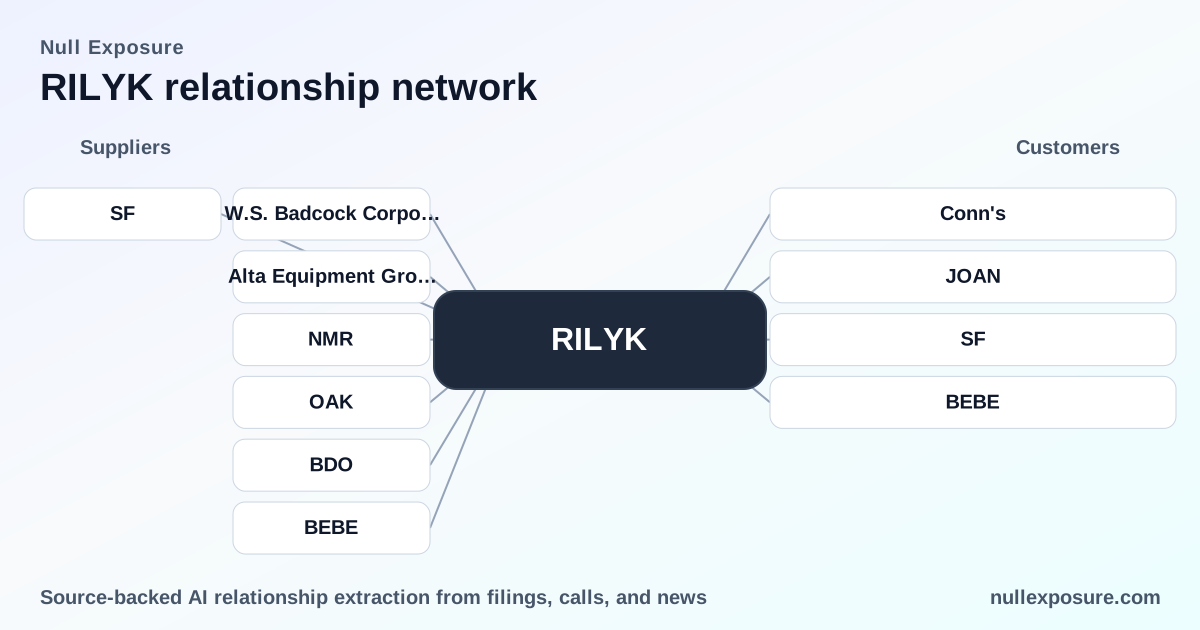
RILYK customer relationships: what investors need to know
Thesis — B. Riley operates as a diversified financial services platform that monetizes through fee‑based advisory and asset management, direct lending, and select product sales and commerce services; credit exposure and one‑off retail/portfolio dispositions sit alongside recurring services, producing a hybrid revenue profile that combines stable fees with episodic event‑driven gains. For investors evaluating RILYK’s customer counterparties, the operating mix signals both revenue diversification and concentration risks tied to lending and disposition activities. Learn more about how we surface counterparty detail at https://nullexposure.com/.
Operating model and business model constraints investors should treat as signals
- B. Riley’s contract mix blends subscription and transaction revenues: the firm runs subscription‑style services (communications/platform offerings) while recognizing transactional sales when control transfers. This produces predictable service revenue together with lumpy sale or disposition proceeds. (Company disclosures: revenue recognition policies, 2024 Form 10‑K.)
- Counterparties span individuals, small businesses, mid‑market companies, large enterprises, non‑profits, and government entities, indicating a broad client base and multi‑channel sales strategy rather than reliance on a single customer type. (Company overview, 2024 Form 10‑K.)
- Geographic reach is global with North America dominant; the firm reports material activity in EMEA, APAC and LATAM but the bulk of services and fees are North America‑centric—this shapes both growth runway and regional concentration risk. (2024 Form 10‑K revenue by region.)
- Roles the company plays range from service provider and lender to seller and manufacturer (via Targus and product lines), so counterparty risk includes credit exposure from receivables and operational exposure from product and platform inventories. (2024 Form 10‑K segments and business description.)
- Segment mix: services (investment banking, wealth, asset management, direct lending) is the primary revenue engine; software/CaaS and consumer hardware provide diversification but also operational complexity following acquisitions like Nogin and Targus. (2024 Form 10‑K and acquisition disclosures.)
Customer relationships — granular notes from filings and calls
Conn's (result: 10‑K entry)
- B. Riley records a small loan receivable from Conn's with a principal balance of $93,000 and additional loans with a fair value of $6,082 that are serviced by Conn's, reflecting a direct lending or receivable servicing relationship. Source: 2024 Form 10‑K (rilyk‑2024‑12‑31), fiscal year 2024.
JOAN / JOANN (result: earnings_call entry — first instance)
- Management described a partnership that produced a successful bid in a bankruptcy process to manage liquidation of all 800+ JOANN fabric and craft stores, indicating B. Riley’s role in asset disposition and restructuring services tied to retail bankruptcy work. Source: Q4 2024 earnings call transcript (rilyk‑2024q4‑earnings‑call), 2024Q4.
JOAN / JOANN (result: earnings_call entry — duplicate mention)
- The earnings call reiterated the same point on JOANN liquidation management, underscoring that this was a material, public execution of B. Riley’s disposition and restructuring business during the quarter. Source: Q4 2024 earnings call transcript (rilyk‑2024q4‑earnings‑call), 2024Q4.
SF (result: earnings_call entry)
- Management announced a definitive agreement to sell a portion of the traditional W‑2 Wealth Management business to Stifel Financial Corp., demonstrating active portfolio reshaping and strategic divestiture of wealth management assets. Source: Q4 2024 earnings call transcript (rilyk‑2024q4‑earnings‑call), 2024Q4.
Stifel Financial Corp. (result: earnings_call entry — duplicate listing)
- The duplicate earnings‑call entry names Stifel as the counterparty to the transaction for the wealth management carve‑out, confirming the buyer and the strategic nature of the sale within the quarter’s corporate actions. Source: Q4 2024 earnings call transcript (rilyk‑2024q4‑earnings‑call), 2024Q4.
BEBE (result: news_sentiment entry)
- Press reporting from Sourcing Journal notes that B. Riley acted as lender to Bebe, reflecting direct lending activity in retail and fashion sector engagements and the firm’s willingness to hold or manage stressed retail credit positions. Source: Sourcing Journal article on Bebe (FY2023 coverage): https://sourcingjournal.com/topics/financial/bebe-stores-18-5-million-manny-mashouf-b-riley-stake-womens-fashion-457406/, reported in 2026.
Bebe Stores Inc. (result: news_sentiment entry — duplicate listing)
- The duplicate news item reiterates B. Riley’s lender relationship with Bebe Stores, reinforcing the firm’s role as both financier and stakeholder in distressed retail situations. Source: Sourcing Journal article on Bebe (FY2023 coverage): https://sourcingjournal.com/topics/financial/bebe-stores-18-5-million-manny-mashouf-b-riley-stake-womens-fashion-457406/, reported in 2026.
What these relationships say about risk, concentration and runway
- Credit and disposition activity is core to B. Riley’s earnings variability. Multiple entries (JOANN, Bebe, Conn’s receivable) illustrate the firm’s direct lending and asset disposition playbook—these generate outsized returns when executed well and concentrated losses when retail stress accelerates.
- Service diversification reduces single‑counterparty concentration but raises operational complexity. The firm operates as lender, advisor, servicer, and seller across geographies and segments; this produces durable fee streams but increases integration risk after acquisitions (e.g., Nogin, Targus).
- Contracting posture blends recurring service agreements with event‑driven contracts. Subscription and CaaS arrangements provide recurring revenue characteristics while bankruptcy engagements and asset sales deliver one‑time gains or losses; both dynamics should factor into forward cash‑flow models.
- Counterparty mix is broad but skewed toward middle‑market and institutional clients. That positioning supports margin capture in advisory and lending but concentrates credit exposure in sectors like retail and consumer products when B. Riley undertakes balance‑sheet positions.
Key takeaways for investors
- B. Riley’s cash flows combine stable fee income with opportunistic credit and disposition returns; model accordingly—expect volatility tied to retail and restructuring cycles.
- Active portfolio management (e.g., sale to Stifel) signals management willingness to reshape footprint, which can crystallize value or reduce recurring fee base depending on transaction size and strategic intent.
- Counterparty evidence shows both global reach and North American dominance; allocate geographic risk weights in valuation models accordingly.
If you want a consolidated view of counterparty exposure and the primary public evidence behind each relationship, visit https://nullexposure.com/ for the underlying source‑driven summaries and to request bespoke reports.