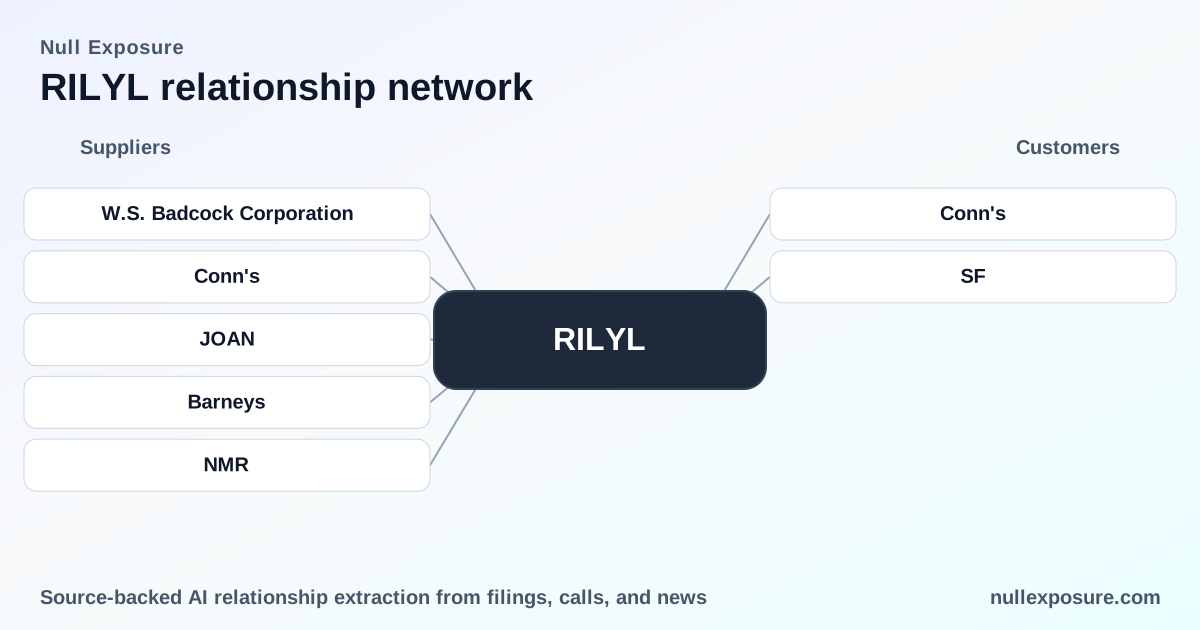
RILYL: How B. Riley’s customer actions reprice its service and capital profile
Thesis: B. Riley (RILYL preferred shares represent a capital claim on B. Riley group entities) operates as a diversified financial-services and asset-owning conglomerate that monetizes through fee-based advisory and asset-management services, recurring subscription communications and commerce revenues, transaction commissions, and strategic asset sales or equity exchanges. Investors should value the company as a hybrid operator—one leg driven by recurring service contracts and platform economics, the other by opportunistic balance-sheet transactions and portfolio re‑engineering that materially affect capital structure.
For more granular exposure mapping and relationship analytics, visit https://nullexposure.com/
How the customer map explains the business model in practice
B. Riley runs a multi-segment model that blends recurring services with transactional sales and occasional asset dispositions. The constraints in the filings show subscription contracts (communications/UCaaS and magicJack), usage-linked commissions (e‑commerce CaaS), and point‑in‑time product sales (consumer hardware such as Targus). That mix produces a revenue profile with steady fee streams alongside lumpy gains or capital adjustments when the company sells businesses or exchanges assets for securities.
Key operating characteristics derived from the company-level disclosures:
- Contracting posture: A clear tilt toward subscription and service agreements supports predictable cash flow in parts of the business, while usage-based CaaS and spot product sales inject revenue volatility. This hybrid contracting posture shapes working capital and churn risk differently across segments.
- Counterparty breadth: The firm serves individuals, small businesses, mid‑market companies, non‑profits and institutional clients, layering retail wealth and institutional capital markets exposure. That diversity reduces single‑counterparty concentration but increases operational complexity.
- Geographic posture: North America drives the majority of revenues (with foreign subsidiaries contributing a material but minority share — for example, foreign revenue of $134.5m or ~16.0% of total revenues in 2024), meaning U.S. macro and regulatory moves dominate short‑term revenue risk while global operations create execution exposures.
- Role and criticality: The company functions primarily as a service provider across advisory, wealth, e‑commerce CaaS and managed communications, while portions of the group act as manufacturer/distributor (Targus hardware) and seller of devices—creating multiple commercial relationship types that require different operational controls and sales channels.
- Maturity and concentration signals: Recurring subscription revenue implies a more mature, stickier cash flow in communications and wealth management; the presence of transactional asset sales and divestitures signals ongoing portfolio optimization and opportunistic capital deployment.
Explicit customer and counterparty relationships disclosed in filings and calls
Conn’s — FY2024 Form 10‑K
B. Riley’s subsidiary Freedom VCM sold all operations of WS Badcock to Conn’s in exchange for 1,000,000 shares of Conn’s preferred stock, reflecting an asset sale settled in preferred-equity consideration rather than cash. According to the FY2024 Form 10‑K, this transaction closed December 18, 2023 and is recorded as a strategic disposition. (Source: FY2024 Form 10‑K, company disclosure)
Takeaway: This deal converted an operating asset into a capital instrument, altering both ongoing revenue capacity and the company’s liquid/preferred‑security exposure.
SF — Q4 2024 earnings call
During the Q4 2024 earnings call management announced the signing of a definitive agreement to sell a portion of its traditional W‑2 Wealth Management business to Stifel Financial Corp., indicating active reshaping of the wealth segment through selective divestiture. (Source: Q4 2024 earnings call transcript)
Takeaway: The transaction reduces headcount‑intensive, employment‑contracted wealth management exposure and repositions the firm toward higher‑margin or higher‑return activities.
Stifel Financial Corp. — Q4 2024 earnings call
The company reiterated that the definitive agreement with Stifel Financial Corp. transfers part of B. Riley’s W‑2 Wealth Management operations to Stifel, marking a strategic exit from select retail wealth operations and a movement of recurring client relationships to a large broker‑dealer buyer. (Source: Q4 2024 earnings call transcript)
Takeaway: Selling to a major broker‑dealer consolidates client relationships off B. Riley’s books while crystallizing proceeds or reducing operating cost and regulatory complexity.
(These three entries represent every relationship flagged in the customer-scope results.)
For expanded relationship and exposure mapping across corporate customers and counterparties, see the B. Riley coverage at https://nullexposure.com/
What investors should focus on next: risk, runway, and valuation sensitivity
- Recurring revenue strength versus transactional variability. Subscription and CaaS fees create a floor for valuation; however, material portions of revenue remain subject to spot product cycles and one‑off asset sales that create headline volatility.
- Capital‑structure implications of equity consideration. The Conn’s preferred‑stock receipt swaps operating cash for a financial instrument—this reduces immediate cash inflows and increases sensitivity to the counterparty’s credit and preferred‑stock terms.
- Execution and regulatory risk tied to divestitures. The Stifel W‑2 sale reduces operating complexity but transfers legacy client exposure. Integration and transition steps can generate short‑term costs or retention issues that influence near‑term margins.
- Geographic exposure and FX/regulatory footprint. North America dominance keeps the business sensitive to U.S. rates, credit cycles and regulatory attention; international unit economics and regulatory risk remain relevant where Targus, Lingo and Nogin operate globally.
- Customer concentration and counterparty roles. The company’s client mix spans retail, mid‑market and institutional buyers, which insulates against single‑market shocks but obliges diversified operating controls and tailored commercial terms across service and product lines.
Bottom line — how these relationships reframe investment thesis
B. Riley is not a single‑product recurring‑revenue company; it is a multi‑vector financial services and asset operator that derives value from stable service revenue while capturing upside through asset transactions and portfolio management. The disclosed relationships—asset sale for preferred shares to Conn’s and the targeted sale of wealth operations to Stifel—show active capital reallocation that will influence near‑term cash flow composition and longer‑term return on equity.
Investors should price RILYL for a combination of recurring service cash flow stability and balance‑sheet‑driven episodic returns, with valuation sensitivity to transaction timing, counterparty credit on non‑cash consideration, and the company’s success in converting divestitures into higher-return redeployments.
For a deeper, relationship‑level scorecard and exposure dashboard, visit https://nullexposure.com/ and explore the customer coverage for RILYL.