RITM-P-A: Institutional Multi‑Asset Preferred — Customer Relationship Review
RITM-P-A is a preferred-stock tranche tied to the Ritual Multi‑Asset Strategy, an institutional vehicle that monetizes through portfolio returns and distributions to preferred holders while aligning with institutional mandates via disciplined asset allocation and governance. For investors, the critical questions are counterparty exposures, the fund’s role in direct funding or credit strategies, and any customer or portfolio concentration that could create outsized tail risk. Visit NullExposure for ongoing monitoring and relationship deep dives.
Executive takeaway: concentrated signals, limited public footprint
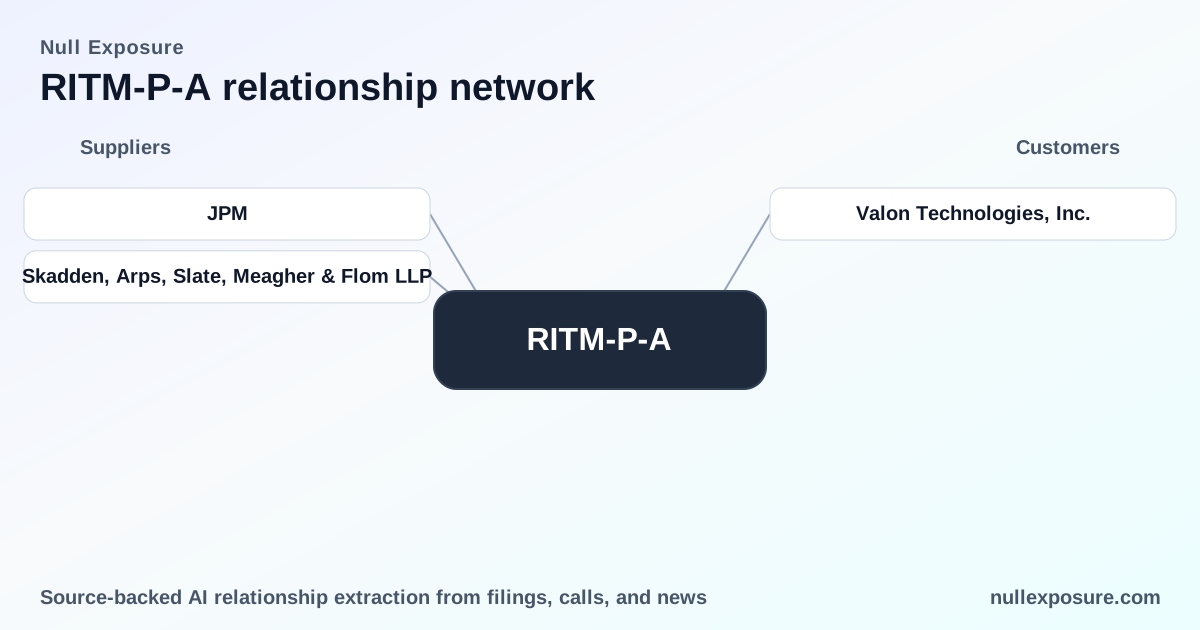
RITM-P-A presents as a governance‑oriented, institutionally positioned multi‑asset vehicle with almost no publicly reported operating metrics in standard filings. The public record available through our scrape shows a single customer relationship surfaced in news coverage: a funding relationship from Rithm Capital Corp. to Valon Technologies, Inc. That footprint implies direct‑lending or sponsored equity activity in the fund’s broader activity set, but overall customer visibility is low.
- Financial transparency is limited: most standard balance and income fields are zero or unavailable in public reporting.
- Market pricing has been tight: the 52‑week range is narrow (24.45–25.88), indicating low volatility in market quotes for the preferred instrument.
- Customer discovery is sparse: only one external customer relationship surfaced in available news sources.
What the record shows: each customer relationship reviewed
Valon Technologies, Inc. — funding from Rithm Capital
Valon Technologies announced it received funding from Rithm Capital Corp. on January 14, and this funding was reported in news coverage dated March 10, 2026. This indicates Rithm Capital — connected to the RITM product family — is active in direct funding transactions that touch fintech/property‑tech borrowers. (Source: MarketScreener news article, March 10, 2026.)
This is the only customer relationship surfaced in the available results.
What that relationship implies for investors
The disclosed transaction with Valon is small in the universe of institutional mandates, but it is strategically informative:
- Direct funding capability: The Rithm/RITM platform participates in funding deals, which positions the vehicle not just as a passive multi‑asset allocator but as an active deployer into credit or sponsor‑backed equity.
- Credit exposure and counterparty risk: Funding fintech companies introduces credit and sector concentration risk distinct from public market exposures; underwriting quality and covenants therefore become primary drivers of investor outcomes.
- Low public visibility increases governance premium: Because standard financial and portfolio metrics are not publicly available, governance, manager track record, and the structure of preferred distributions assume greater importance.
Company‑level signals: operating model and business model characteristics
With no explicit constraints reported in the relationship feed, the following are company‑level signals drawn from the product description and the single transaction record:
- Contracting posture — institutional, discretionary mandates: The product is structured for institutional investors and operates under strategic allocation frameworks, implying multi‑year mandates and discretionary portfolio management rather than short‑term transactional counterparty relationships.
- Concentration — operationally diversified but prospect-level concentrated: The vehicle’s stated objective is diversified multi‑asset exposure, yet the single public customer tie suggests the manager executes targeted private funding transactions that can be concentrated by obligor or sector at the deal level.
- Criticality — counterparty relationships are important but not singularly critical: For a diversified multi‑asset vehicle, any single borrowing counterparty is unlikely to be systemically critical, however large bilateral funding arrangements can be material to periodic cash flows and preferred distributions.
- Maturity — established governance emphasis, opaque reporting: The strategy emphasizes governance and capital preservation, indicating institutional maturity in approach, but public reporting of performance and exposures is limited, increasing reliance on manager disclosure and third‑party diligence.
Risk profile and what to watch next
Investors and operators should focus on a short list of actionable risks tied to the relationship profile and reporting posture:
- Concentration risk at the deal level: Monitor the manager’s disclosure on individual private placements and lending to understand maximum exposure per counterparty.
- Counterparty credit and sector risk: Valon is a fintech-ish borrower in the reported transaction; track sector performance and borrower credit metrics where available.
- Liquidity and distribution sensitivity: Preferred distribution stability can be sensitive to private credit realizations; examine liquidity waterfalls and subordination structure.
- Transparency gap: The lack of routine public metrics elevates the importance of governance reviews, third‑party audits, and investor reporting cadence.
Practical guidance for investors and operators
- Demand periodic detailed reporting on private placements and direct loans, including commitment size, covenant terms, and current performance.
- Validate dividend/waterfall mechanics for the preferred instrument relative to realized and unrealized asset valuations.
- Incorporate counterparty scenarios into stress tests — particularly for fintech and property‑tech sectors that can move quickly under macro stress.
For ongoing tracking and relationship verification, check our coverage hub at NullExposure where we consolidate customer and counterparty signals for institutional products.
Bottom line
RITM-P-A is positioned as an institutional multi‑asset preferred instrument backed by a manager that actively deploys capital into direct funding arrangements, as illustrated by the reported Rithm-to‑Valon funding event. The public record is sparse, so credit diligence, manager transparency, and deal‑level exposure monitoring are the primary levers investors must use to evaluate risk and return going forward.