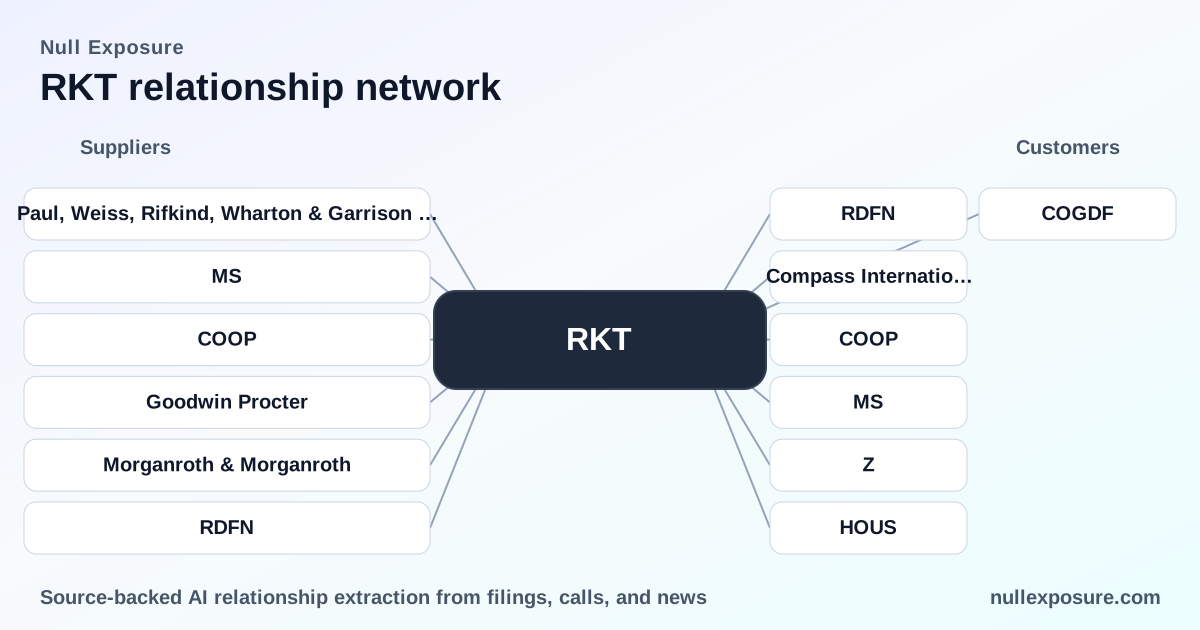
Rocket Companies (RKT): Customer Relationships That Underpin Origination, Servicing and Cross‑Sell
Rocket Companies is a technology-first mortgage and real‑estate platform that monetizes through mortgage origination margins, servicing fees, subscription products (Rocket Money premium), and attached settlement/title/appraisal services and referral economics. The company leverages consumer direct channels and increasingly tight partnerships with brokerages and institutional holders of mortgage servicing rights to drive origination flow, recapture servicing income, and sell ancillary products. For investors, the core thesis is straightforward: volume and attachment — scale origination and then extract recurring economics via servicing and services sold around each loan. Learn more on the platform at https://nullexposure.com/.
What the relationship map tells you about Rocket's operating model
Rocket operates a hybrid contracting posture: large-scale, individual retail relationships (borrowers) combined with strategic enterprise partnerships. Company disclosures show Rocket recognizes recurring subscription revenue from Rocket Money and that retail borrowers transact via the Rocket app and website, establishing a base of individual counterparties across North America. Meanwhile, earnings calls and press releases document enterprise arrangements — subservicing for MSR holders and preferred-pricing alliances with brokerages.
Key operating signals from public disclosures:
- Subscription and recurring revenue exists: Rocket recognizes Rocket Money subscription revenue ratably over contract terms (one month to one year), establishing a recurring, stand‑ready revenue stream (company filings on revenue recognition).
- Commercial geography is North America: Rocket is licensed in all 50 U.S. states and operates in Canada, reflecting regulatory breadth and cross‑border operating complexity (company filings).
- Customer base skews individual but partnerships are strategic: front‑end borrowers are individual customers using Rocket’s digital channels, while Annaly and brokerage alliances represent institutional customers and distribution partners.
- Service roles are mixed: Rocket acts as lender, servicer/subservicer, and service provider (title/closing/appraisal) rather than a pure marketplace.
- Monetary scale of third‑party services reported in “Other income” is modest, typically in the $6k–$13k range for the specific line items disclosed, indicating that some enterprise relationships are important strategically even if direct reported revenue is currently small.
These constraints imply a diversified revenue stack but concentrated execution risk: high borrower volume smooths origination volatility, but strategic deals and regulatory exposures can re‑rate the company quickly.
Relationship map: every named counterparty in the feed
Below are the distinct customer and partner relationships surfaced in the collected results, each with a practical, investor‑oriented summary and a concise source pointer.
Redfin / RDFN — affiliate, acquisition and cross‑sell engine
Rocket folded Redfin into its ecosystem and operates Redfin as a public-facing search portal integrated with Rocket branding, mortgage preapproval and financing options, and a preferred pricing program that offers buyers who use Redfin agents a one‑percentage‑point first‑year rate reduction or up to $6,000 in lender credits. (Source: multiple Redfin posts and acquisition coverage, e.g., Redfin blog and onlinemarketplaces report on the 2025 acquisition.)
Annaly Capital Management / NLY — strategic subservicing client
Rocket entered a subservicing agreement with Annaly under which Rocket will handle servicing and recapture activities for a portion of Annaly’s MSR portfolio, positioning Rocket to capture recurring servicing cash flows and recapture economics for loans it did not originate. (Source: Rocket press release announcing the Annaly subservicing relationship, Oct 2025; also reported in National Mortgage Professional.)
Mr. Cooper / COOP — merger and attached services opportunity
As part of the Mr. Cooper merger, Rocket expects incremental revenue from higher recapture and the ability to attach Rocket’s title, closing and appraisal services to Mr. Cooper originations, a stated $100 million pre‑tax revenue opportunity cited in transaction materials. (Source: Merger offering materials and related reporting, GlobeNewswire, Oct 2025.)
Zillow Group / Z — regulatory friction and distribution arrangements
Regulatory filings refer to an FTC action alleging that Redfin (a Rocket subsidiary) accepted compensation and contractual changes from Zillow that affect advertising competition for rental listings; the filing highlights regulatory and competitive risk in online listing and advertising distribution. (Source: GlobeNewswire summary of FTC lawsuit and related disclosures, Sep–Oct 2025.)
Compass / COMP — preferred‑pricing alliance for buyer flow
Rocket announced an alliance with Compass providing preferred Rocket Mortgage pricing to Compass clients (e.g., 1 percentage point off in year one or a lender credit up to $6,000) and positions Rocket as Compass’s digital mortgage partner to capture referral volume. (Source: Company earnings commentary and press reporting, including Rocket’s Q4 2025 results notes and Finviz/StockTitan coverage.)
Anywhere / HOUS — market context referenced on calls
Rocket’s management referenced competitive dynamics against national brokerage platforms such as Anywhere during earnings calls, using the comparison to explain pricing and market segmentation rather than announcing a direct commercial relationship. (Source: RKT Q4 2025 earnings call transcript.)
Morgan Stanley / MS — block sale and shareholder transactions
External reporting noted Morgan Stanley purchased blocks of Rocket stock in secondary transactions (e.g., $500 million block purchase from a related shareholder), which is relevant to shareholder liquidity and ownership structure rather than customer flow. (Source: Detroit Free Press coverage, Jul 2024.)
How these relationships translate into financial and execution risks
- Concentration of strategic flow through a few alliances raises execution risk. Preferred‑pricing arrangements with Redfin and Compass are high‑value for origination economics but concentrate dependence on integration and joint marketing execution.
- Regulatory exposure is material. The FTC action involving Zillow/Redfin highlights that distribution agreements in online real‑estate can generate regulatory scrutiny and potential remediation costs.
- Subservicing and MSR recapture are durable, margin‑accretive levers. The Annaly subservicing deal exemplifies how servicing contracts convert scale into recurring cash flow and higher lifetime loan income.
- Subscription revenue and individual retail borrowers provide margin stability. Rocket Money subscription recognition and a broad retail channel reduce sensitivity to single counterparty disruption.
Investment takeaways
- Growth relies on volume + attachment. Rocket’s path to higher recurring margins is through origination volume via affiliate channels (Redfin, Compass) and then attaching services (title, appraisal, Rocket Money).
- Strategic partnerships are double‑edged. They accelerate growth and cross‑sell but concentrate operational risk and invite regulatory attention.
- Servicing deals de‑risk earnings. MSR subservicing for institutional holders like Annaly converts scale into predictable fees and recapture upside.
For a deeper, relationship‑level picture and ongoing monitoring of material partner events, visit https://nullexposure.com/. For bespoke research or model inputs grounded in transactional signals, contact the team through https://nullexposure.com/.
Bold decisions should follow bold evidence: Rocket has built repeatable distribution and cross‑sell mechanics; investors must weigh those economics against regulatory and execution concentration risks.