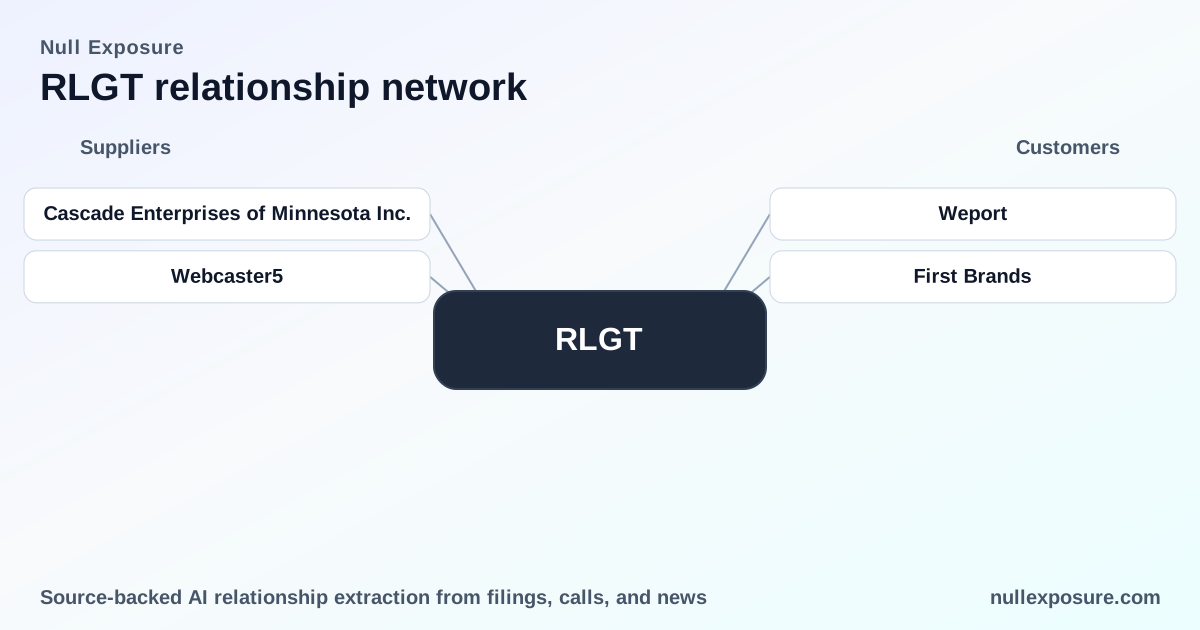
Radiant Logistics (RLGT): Customer relationships that shape an asset-light freight forwarder
Radiant Logistics operates as a non-asset-based, technology-enabled third‑party logistics (3PL) provider focused on freight forwarding, truck brokerage, intermodal transport and value‑added logistics. The company monetizes through transaction and contract services—taking margin on freight movement and ancillary logistics services—while scaling via strategic acquisitions and geographic expansion that increase fee-bearing volumes across North America and internationally. For investors, the primary operating lever is volume and margin capture on global trade flows combined with disciplined credit and integration of acquired platforms. Visit the Null Exposure research hub for related company coverage: https://nullexposure.com/
What the two disclosed customer relationships tell us
Weport — platform acquisition to accelerate Mexico and North America coverage
Radiant disclosed that it acquired Mexico‑based Weport and positions the business as a platform to support Radiant’s legacy and prospective customers across Mexico while scaling its North American footprint. This is presented as a strategic capability play to deepen cross‑border service coverage. (Source: RLGT Q4 2025 earnings call, March 2026.)
First Brands — a one‑time credit loss tied to customer bankruptcy
Management reported a one‑time bad debt expense of $1.3 million associated with the bankruptcy of First Brands, recorded in the FY2025 financial results discussion. The charge is presented as a discrete credit event rather than an ongoing revenue driver. (Source: TradingView coverage of Radiant Logistics Q1 2025 financial results, March 2026.)
How these relationships interact with Radiant’s operating characteristics
The disclosed relationships highlight two complementary dynamics in Radiant’s model: growth through targeted acquisitions that extend service footprint, and exposure to credit losses when customers fail. These dynamics must be read alongside company disclosures about contract tenor, geographic mix, and segment emphasis.
- Radiant operates under a mixed contracting posture: customer agreements “generally range from a few months to five years and include renewal provisions,” which enables both transaction flexibility and multi‑year revenue visibility. This is a company‑level signal of contract heterogeneity and renewal optionality.
- Geographic reach is North America‑centric but global in capability: Radiant emphasizes operations “primarily in the United States, Canada and Mexico” while offering international air and ocean services worldwide, informing both concentration and diversification of revenue sources.
- International services are a meaningful profit center: management disclosed that international services represented 45% of adjusted gross profit in fiscal 2025 (up from 40% in fiscal 2024), underscoring that cross‑border forwarding is material to economics.
- The business is asset‑light (service/forwarding) and growth is frequently achieved via acquisitions of regional platforms and service providers, which builds scale quickly but requires integration discipline and credit oversight.
These constraints combine into a clear operating profile: asset‑light, acquisitive, North America‑anchored with material international revenue, and a contracting mix that balances short‑term transactional work with multi‑year customer arrangements.
Why each disclosed relationship matters to investors
- Weport strengthens Radiant’s cross‑border capabilities into Mexico and acts as a scaling platform for North American growth; the acquisition is a strategic revenue‑growth vector rather than a pure cost center. (Source: RLGT Q4 2025 earnings call, March 2026.)
- The First Brands bankruptcy and the resulting $1.3 million bad debt expense demonstrate credit exposure in the book‑of‑business and highlight the importance of underwriting and receivables management as a margin and earnings lever. That loss was presented as a one‑time charge in FY2025 reporting. (Source: TradingView report on Q1 2025 financial results, March 2026.)
Investment implications and near‑term risk drivers
Radiant’s value proposition rests on scaling volume and taking a slice of global freight margins while keeping fixed costs low. The two relationships illustrate both the upside and the vulnerability of that model.
- Growth vector: Strategic M&A and regional platform integration (exemplified by Weport) accelerates market share and cross‑sell opportunities into Mexico and broader North America, supporting top‑line expansion and higher international gross profit contribution. (Source: RLGT Q4 2025 earnings call, March 2026.)
- Risk vector: Credit and concentration risk—the First Brands bankruptcy and $1.3M bad debt charge underscore that customer credit failures can produce profit volatility, especially in years with tightening freight volumes or macro stress. (Source: TradingView, March 2026.)
Operational implications for investors and operators:
- Maintain focus on receivables and customer credit underwriting as a core operational KPI; even a single mid‑market bankruptcy can move quarterly earnings.
- Manage integration risk from acquisitions to preserve margin uplift and realize cross‑sell synergies.
- Monitor the balance between short‑term transactional contracts and longer renewals (months to five years) for revenue predictability.
Tactical read for research teams and operators
- For credit analysts, the First Brands event is a clear signal to monitor days‑sales‑outstanding and allowance trends in future filings and calls. (Source: TradingView, March 2026.)
- For M&A and operations teams, the Weport acquisition is a concrete example of Radiant’s playbook: buy regional specialists to gain immediate route coverage and client relationships in strategic geographies. Evaluate the pace of similar acquisitions and integration success metrics in subsequent quarters. (Source: RLGT Q4 2025 earnings call, March 2026.)
If you want systematic coverage on how RLGT integrates platform acquisitions and handles credit exposure, Null Exposure maintains related research and updates: https://nullexposure.com/
Bottom line
Radiant’s customer relationships reflect an asset‑light, acquisition‑led growth strategy with material exposure to international forwarding economics and measurable credit risk. Weport reinforces the company’s North America/Mexico expansion thesis and should support international gross profit; the First Brands bankruptcy is a reminder that receivables management is a first‑order earnings risk. For investors, the balance of volume growth from strategic platforms and disciplined credit controls will determine whether Radiant converts its geographic reach into durable margin expansion.