RMAX customer relationships: how RE/MAX monetizes its global franchise network
RE/MAX Holdings (RMAX) is a fee-driven franchisor that monetizes a global network of independent brokerages through recurring franchise fees, usage-based marketing contributions, ancillary mortgage services and agent-facing software. The business converts brand licensing and franchise scale into predictable, fee-based revenue with embedded optionality from mortgage services and technology products. For investors, the signal set from recent customer-level disclosures highlights active master-franchise sales, local office launches, selective asset divestitures, and routine industry contact that collectively reinforce a mature, globally distributed franchising model.
Explore the full relationship inventory and implications at https://nullexposure.com/.
Why customer relationships matter for RMAX investors
RMAX’s operating model is contractual and recurring: franchise agreements typically span multiple years and revenue is recognized over those terms. Company-level disclosures identify long-term franchise tenors (generally five years for RE/MAX and seven years for Motto) and usage‑based marketing fees tied directly to agent counts or office counts. This structure produces steady cash flow while linking revenue to the underlying health and scale of local brokerages.
Other company-level signals important to underwriters and investors:
- Role mix: RE/MAX acts primarily as a licensor of brand and systems while also operating as a service provider for mortgage processing and agent tools.
- Counterparty profile: The network comprises largely small-business franchisees and independent brokerages, increasing revenue diversification but also raising exposure to local market cycles.
- Geographic footprint: The network is global (110+ countries and territories), while Mortgage and some other revenues are U.S.-centric.
- Product mix: Beyond franchise fees, RMAX derives revenue from Marketing Funds (operated at no profit), mortgage franchising and loan-processing services, and subscription-style data/technology delivered to agents.
- Maturity: The franchise system is a mature, established brand with a 50-year operating history, supporting stable renewal economics but limiting high‑velocity growth upside.
Reported customer relationships and what they indicate
The following entries summarize every relationship result reported in the collection, with concise source references.
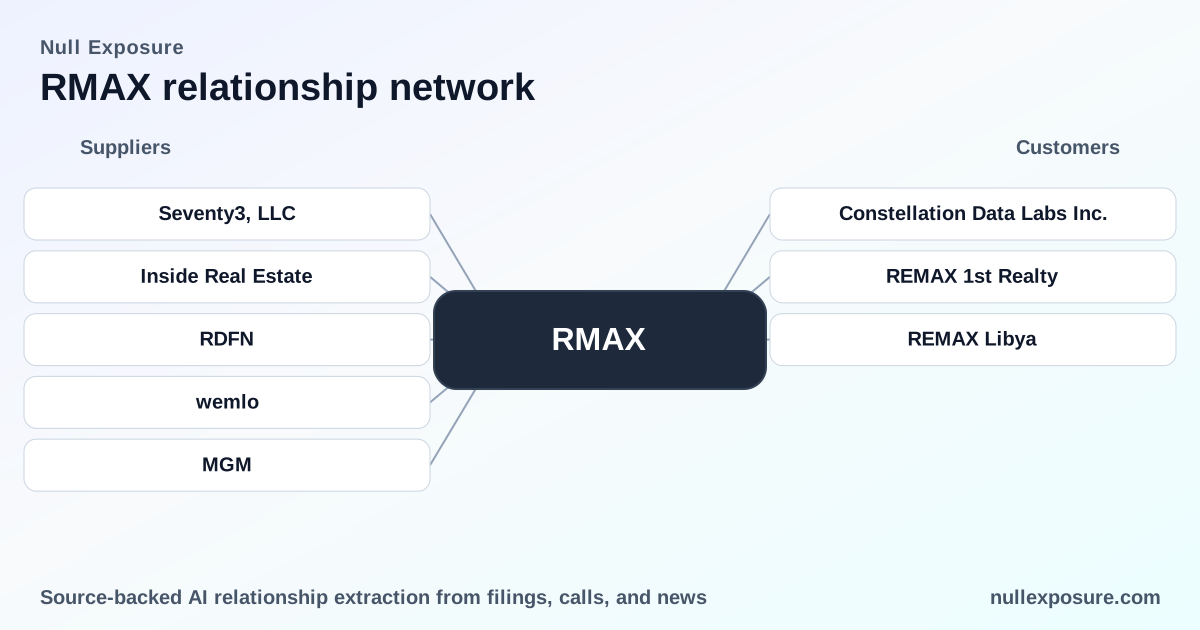
Constellation Data Labs Inc.
RE/MAX sold two businesses — Seventy3, LLC and Gadberry Group, LLC — to Constellation Data Labs Inc., signaling selective divestiture of non-core assets or localized operations. A MarketScreener report covering RE/MAX activity published March 10, 2026, records the transaction.
REMAX 1st Realty (source: Finviz, March 10, 2026)
RE/MAX launched an office in Baku, Azerbaijan, bringing on REMAX 1st Realty under local principal İdris Cengiz, who has a construction and real estate consulting background; this is an example of master-franchise or office-level expansion into an international market. The Finviz posting on March 10, 2026, reported the Azerbaijan office launch.
REMAX 1st Realty (source: MarketScreener, March 10, 2026)
A MarketScreener article the same day echoed the Azerbaijan opening and the appointment of İdris Cengiz to lead REMAX 1st Realty, reinforcing that local entrepreneur-led offices continue to be the vehicle for international growth.
REMAX Libya (source: Finviz, March 10, 2026)
RE/MAX executed a sale of master-franchise rights in Libya, extending the brand footprint through locally licensed master franchises that are typical of the company’s international expansion strategy, as noted in a March 10, 2026 Finviz report.
TSAT (source: TSAT 2025 Q3 earnings call transcript)
An earnings-call excerpt from TSAT’s Q3 2025 transcript recorded the line “We're in contact, as you can imagine, with MDA all the time to date,” which was captured in the matching process and indicates routine industry engagements and third‑party communications captured against RMAX-related mentions.
What these relationship entries collectively signal to investors
- Active global expansion through master franchises and local principals. The Baku and Libya items are representative of RE/MAX’s long-standing strategy to grow by licensing brand rights to local operators rather than opening corporate brokerages. This supports low-capex geographic growth and scalable fee capture.
- Occasional divestitures of regional businesses. The Constellation Data Labs transaction shows RE/MAX can monetize selected local assets, a lever for capital redeployment or margin optimization.
- Operational normalcy and market connectivity. The TSAT earnings-call capture is not a direct customer contract, but it reflects ongoing industry-level interactions that keep RE/MAX positioned within broader market conversations and partner networks.
Investment implications and risk considerations
- Predictable, recurring revenue with usage linkage. Long-term franchise terms and usage-based marketing fees create a revenue base that grows with local agent counts; this is a structural advantage for cash flow stability.
- Small-business counterparty concentration increases cyclicality. Dependence on independent brokerages means RMAX revenue correlates to housing market cycles and local economic conditions; agent attrition or local downturns can compress revenue quickly.
- Geographic diversification reduces single-market risk but raises execution complexity. Global master-franchise expansion mitigates country-specific shocks but requires effective partner selection and brand governance.
- Margin pressure from marketing funds and ancillary services. Marketing Funds operate effectively as a pass-through (no profit), and mortgage/loan-processing services add operational complexity — monitor margin mix between Real Estate, Mortgage, Marketing Funds, and Software segments.
- Technology and subscription revenue are incremental levers. Agent-facing platforms like BoldTrail and data subscriptions introduce higher-margin, scalable revenue if adoption accelerates.
If you want a systematic view of relationship-level exposures across RMAX’s global footprint, see the full coverage at https://nullexposure.com/.
Bottom line for portfolio managers
RE/MAX is a capital-light franchisor converting brand equity into recurring, fee-based cash flows. Investor focus should be on agent counts, master-franchise sales velocity, U.S. mortgage activity, and adoption of higher-margin technology services. Short-term downside stems from housing-cycle contractions and small-business counterparty risk, while upside depends on cross-border master-franchise wins and successful monetization of agent technology.
Key monitoring items for the next two quarters:
- Master franchise sales and new office openings reported regionally.
- Trends in Marketing Funds revenue relative to agent headcount.
- Mortgage/Motto segment performance within the U.S. and loan-processing volumes.
- Adoption and monetization of BoldTrail and wemlo tools.
For ongoing signal updates and relationship analytics tailored to investor due diligence, visit https://nullexposure.com/.