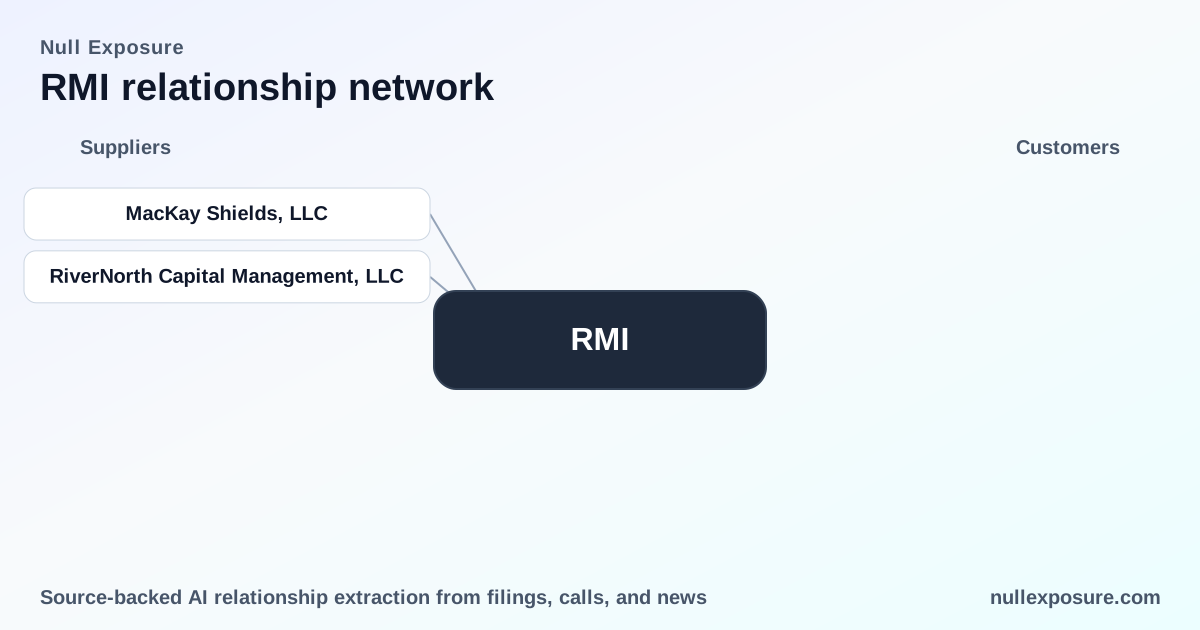
RMI: Investor briefing on customer relationships and what they imply
RMI (NYSE:RMI) operates as a closed-end municipal income fund managed by RiverNorth, generating returns for shareholders through interest income on municipal securities and the fund’s active portfolio management, while monetizing via management and advisory fees charged to the fund. For investors and operators evaluating counterparty exposures, the visible customer relationships are concentrated and informationally light; the single public relationship in our coverage is an affiliate insider transaction rather than an external commercial customer contract. Learn more about our coverage at https://nullexposure.com/.
Quick read: core business model in plain language
RMI purchases municipal bonds and related instruments, distributes income to shareholders, and compensates its adviser out of fund assets. The business model is fee-driven and sensitivity to interest-rate and credit cycles is central: portfolio performance determines distributable income and NAV dynamics, while adviser fees create steady gross revenue to the manager. This is a classic asset-management monetization where investment returns and asset-liability timing drive investor outcomes, not product sales or recurring enterprise contracts.
What public customer data shows — one relationship, clear context
The public customer-relationship record for RMI in our coverage contains a single, specific interaction:
RiverNorth Financial Holdings, LLC — An affiliate of the fund’s adviser acquired 4,138 shares of common stock on October 15, 2025, indicating an insider-level purchase rather than an external client contract. According to an Investing.com insider-trading report in May 2026, the affiliate purchase was disclosed as a transaction by an entity tied to the fund’s adviser. (Investing.com, Insider Trading News, reported May 2026.)
Takeaway: the only customer-facing entry in the dataset is an intra-group purchase by an adviser-affiliated entity, not a third-party commercial engagement.
How that single relationship should be read by investors
- Not a commercial revenue signal: The affiliate purchase is a securities transaction and not a service contract; it does not generate fee revenue for RMI beyond the normal advisory economics.
- Governance and alignment signal: Insider purchases by adviser-affiliated entities can be interpreted as alignment of interests between adviser and shareholders when taken together with other governance disclosures. The observed trade strengthens that interpretation in isolation, but it is not determinative of overall governance quality.
Operating-model characteristics and company-level signals
With no public contractual customer constraints identified in the relationship payload, the following company-level signals describe RMI’s operating posture:
- Contracting posture: RMI’s economics are governed by fund/adviser agreements and regulatory filings rather than negotiated customer contracts. Expect standardized adviser and custodian arrangements with limited bespoke contracting complexity relative to corporate vendors.
- Concentration: The public relationship set shows no external customer concentration because the observable entry is internal; revenue concentration must be assessed through asset ownership and adviser arrangements in regulatory filings rather than external customer lists.
- Criticality: For downstream counterparties—custodians, administrators and the adviser—the fund’s operational continuity is critical; for RMI shareholders, portfolio performance is the critical driver. The visible relationship does not change fund criticality profiles.
- Maturity of relationships: Adviser and custodian relationships in closed-end funds are typically stable and multi-year, governed by standard fund agreements. The lack of third-party customer entries in public results is consistent with a mature, governanced asset-management structure.
These are company-level signals derived from the absence of external customer entries in the dataset and the nature of the single observed transaction.
Risk and monitoring implications for investors and operations teams
- Focus on adviser economics and disclosures. Given that the only public relationship is adviser-affiliated, investor due diligence should prioritize the advisory contract, fee schedule, and related-party transaction policies disclosed in SEC filings and shareholder reports.
- Monitor insider activity and governance filings. Insider purchases or sales by adviser affiliates are informative; track Form 4/13D disclosures and adviser statements for patterns of alignment or divergence.
- Operational counterparty checks remain important. Custodial, transfer-agent and liquidity-provider arrangements are not visible here but are material to execution risk; confirm service providers and SLA expectations via fund filings and third-party confirmations.
Relationship-by-relationship summary (concise)
- RiverNorth Financial Holdings, LLC — An affiliate of RMI’s adviser purchased 4,138 shares of the fund’s common stock on October 15, 2025; this transaction was reported in a May 2026 Investing.com insider-trading item and reflects an intra-group securities purchase rather than a third-party customer contract. (Investing.com, Insider Trading News, May 2026.)
What investors should do next
- Read the adviser and related-party sections of the fund’s most recent annual and quarterly filings for detail on fees, side letters and affiliate arrangements.
- Track insider disclosures and material contracts for any newly disclosed counterparty relationships that would change concentration or counterparty risk. For curated monitoring and relationship intelligence, visit https://nullexposure.com/.
Bottom line
The publicly visible customer footprint for RMI is currently limited to an affiliate insider purchase, which does not create a new revenue stream but does provide a governance alignment signal. For investors and operators, the priority is assessing adviser contractual economics, governance disclosures, and operational service-provider arrangements—areas where actual counterparty risk and revenue concentration manifest for closed-end funds.