Atrium Therapeutics (RNA): partnership-driven early-stage biotech with licensing revenue and large strategic partners
Atrium Therapeutics operates as an early-stage oligonucleotide therapeutics company spun out of Avidity/Bio‑platform assets; it monetizes through research collaborations, license agreements, and milestone payments from large pharma partners while retaining asset development optionality. For investors, the core thesis is straightforward: Atrium is a small public vehicle backed by marquee collaborators that converts R&D progress into discrete licensing cashflows rather than product sales today — an outcomes‑driven business model where a few partner relationships materially determine near‑term revenue and upside. Learn more on our homepage: https://nullexposure.com/
How the company actually earns money and how it contracts
Atrium’s revenue profile is dominated by collaboration and license agreements rather than commercial product revenue. The company’s financials show modest TTM revenue (approximately $18.6 million) and negative operating margins, consistent with early clinical-stage biotech that recognizes milestone-driven revenue when partners hit development triggers or exercise options. According to company disclosures referenced in the constraints, “revenues are derived from our research collaboration and license agreements,” which makes licensing the structural backbone of the business.
This operating posture implies several structural characteristics for investors:
- Contracting posture: Partnership agreements and licensing terms govern cash flow timing — Atrium captures milestone and potentially royalty-like economics instead of recurring product receipts.
- Concentration: A small number of major collaborators (and their decision points) drive the majority of near-term revenue; this concentrates execution and market risk in a few counterparties.
- Criticality: For Atrium the relationships are strategic — partners supply funding and validation rather than commoditized services, so partner program decisions are high‑impact.
- Maturity: Programs are early stage (pre‑Phase 3 origin), so revenue is lumpy and tied to discrete technical and regulatory milestones rather than predictable recurring streams.
One company-level signal in the constraints: Atrium operates an Employee Stock Purchase Plan, which implies direct transactions with individual participants and that the company acts as a seller of equity to employees as part of compensation programs. The constraints also flag the company’s role as a licensor, reinforcing the licensing-first revenue model.
Counterparty relationships that shape investor outcomes
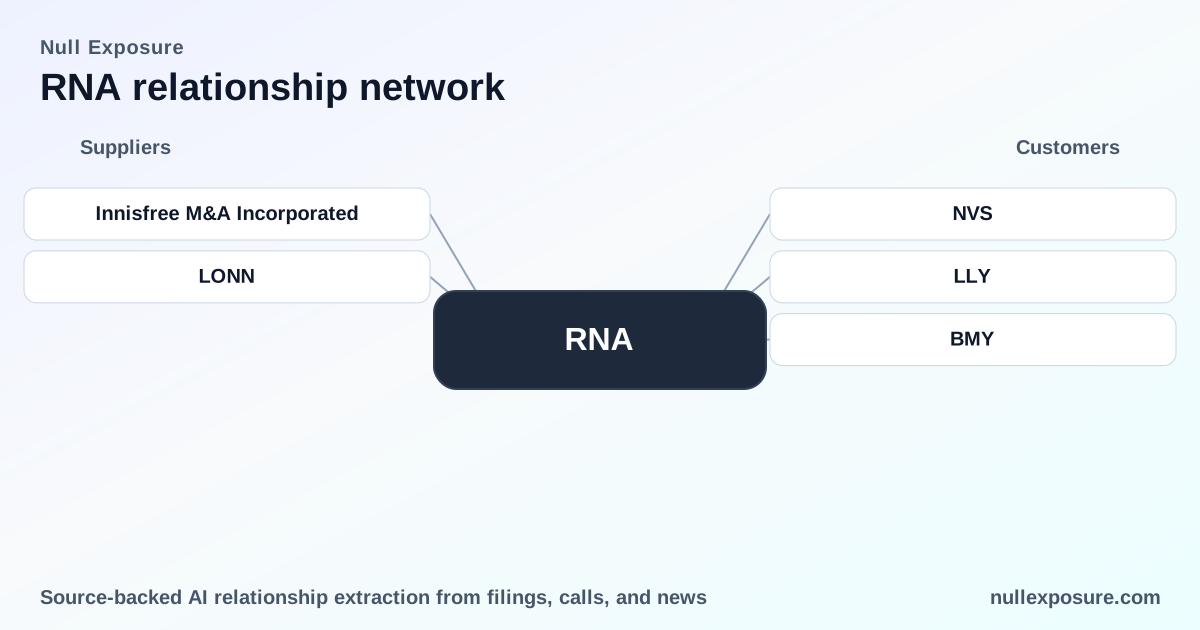
Novartis (NVS)
Novartis completed a major acquisition of Avidity Biosciences and the corporate reshuffle produced Atrium as a follow‑on entity; Novartis’ acquisition of Avidity for approximately $12 billion is the catalytic event behind Atrium’s creation (press coverage in early May 2026). BiopharmaDive reported on May 3, 2026 that “Called Atrium Therapeutics, the startup is emerging four months after the $12 billion buyout of Avidity” (https://www.biopharmadive.com/news/atrium-avidity-spinout-novartis-rna-cardiomyopathy-heart/813365/). Additional industry coverage (DCAT VCI, FierceBiotech, Finviz) chronicles the transaction and related financing activity tied to the deal (https://www.dcatvci.org/top-industry-news/novartis-completes-12-bn-acquisition-of-avidity-biosciences/; https://www.fiercebiotech.com/biotech/atrium-arises-novartis-avidity-buy-270-million-and-pair-preclinical-cardio-candidates; https://finviz.com/news/246128/avidity-biosciences-inc-rna-a-bull-case-theory).
Takeaway: Novartis’ acquisition is a transformational event that created Atrium as a derivative company; the relationship is strategic and validates the underlying platform while reshaping asset ownership.
Eli Lilly (LLY)
Atrium/Avidity maintain a multi-year research and licensing relationship with Eli Lilly that has produced material milestone recognition — TradingView captured a note from the company that FY2026 revenue rose to $18.8 million “primarily due to a $10.0 million milestone under the Lilly Agreement” (TradingView summary of the SEC 10‑K, March 2026: https://www.tradingview.com/news/tradingview:9f2a3fd4d4473:0-avidity-biosciences-inc-sec-10-k-report/). A formal press release (PR Newswire) recounts the 2019 global licensing agreement and ongoing collaboration to expand AOC reach beyond muscle indications (https://www.prnewswire.com/news-releases/avidity-advances-rna-programs-and-expands-into-new-therapeutic-areas-utilizing-its-aoc-platform-301756216.html).
Takeaway: Lilly is a revenue-driving collaborator whose milestone payments directly influence Atrium’s financial runway and validate the platform in non‑muscle therapeutic areas.
Bristol Myers Squibb / MyoKardia (BMY / MyoKardia)
Atrium (via its legacy Avidity programs) has a research collaboration with MyoKardia — now a wholly‑owned subsidiary of Bristol Myers Squibb — to explore AOC utility in cardiac tissue, per the company press release describing ongoing research collaborations (PR Newswire, March 2026: https://www.prnewswire.com/news-releases/avidity-advances-rna-programs-and-expands-into-new-therapeutic-areas-utilizing-its-aoc-platform-301756216.html).
Takeaway: The MyoKardia/BMS relationship situates Atrium’s platform in cardiac indications and serves as strategic development validation from a major cardiac‑focused biotech unit inside a large pharma.
What the relationship map means for investors
- Revenue is lumpy and partner-dependent. The FY2026 increase from a Lilly milestone illustrates how single payments can materially shift reported revenue; Atrium’s runway and headline numbers therefore depend on partner milestones rather than product sales. (TradingView and PR Newswire coverage cited above.)
- Validation from top-tier pharma reduces technological risk but not timing risk. Partnerships and the Novartis acquisition are powerful validation signals, yet clinical and regulatory timelines remain the gating items for large outcome payments.
- Concentration risk is real and actionable. A small set of counterparties supplies the majority of near-term monetization; any change in a partner’s strategic priorities or development timelines would propagate quickly to Atrium’s financials.
- Equity-based employee programs and licensor role affect governance and dilution. The ESPP and the company’s licensor posture imply ongoing equity transactions and potential share issuance as a component of compensation and partnering economics.
Investment implications and risks
Atrium is a high‑variance, partnership‑dependent biotech: upside comes from partner milestones and platform de‑risking; downside comes from missed development endpoints and partner reprioritization. Financials show negative operating margins and a small market cap (~$200 million), which means investors should treat Atrium as a timing and event‑driven position rather than a yield or cashflow play. For a concise read on the company positioning and partner map, visit our site: https://nullexposure.com/
Final verdict: Atrium’s partner roster — Novartis’ strategic transaction, Lilly’s milestone payments, and collaboration with MyoKardia/BMS — positions the company as a partnership-first biotech with validated technology and concentrated revenue levers, but investors must underwrite event risk and milestone timing when allocating capital.