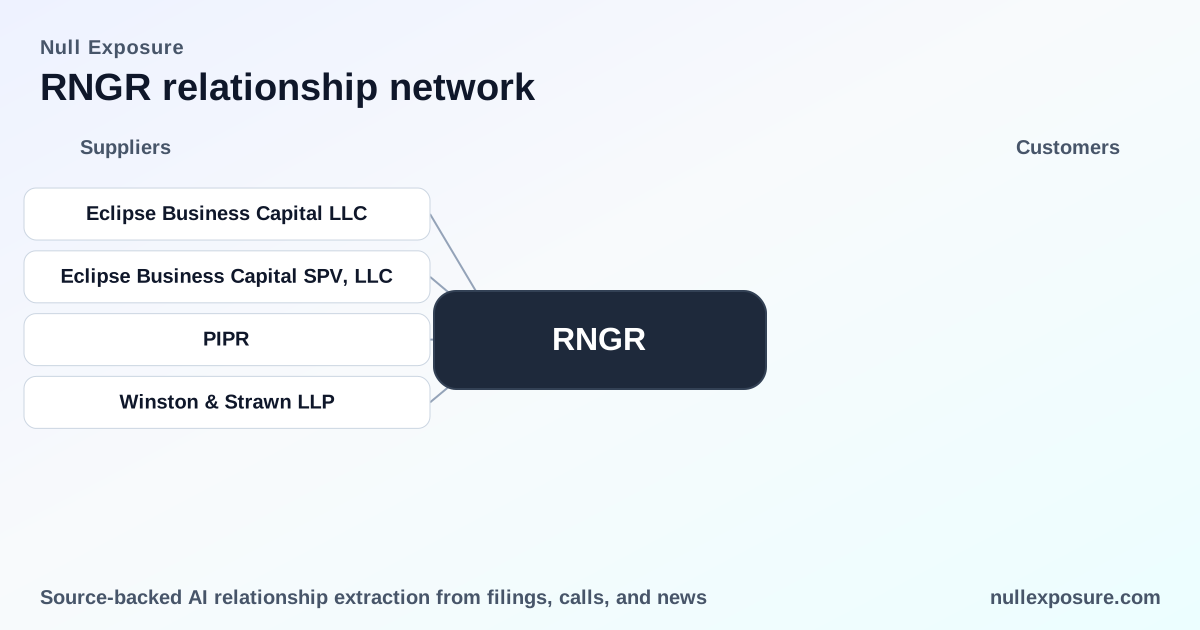
Ranger Energy Services (RNGR): Customer Relationships, Concentration and Service Economics
Ranger Energy Services operates and monetizes a high‑specification onshore well services platform: it deploys service rigs, wireline units and ancillary processing solutions to exploration & production companies across major U.S. basins and is paid primarily on a usage basis — hourly, daily or per‑job billing. Revenue is concentrated: four customers generated roughly 59% of 2024 revenue and accounted for ~61% of accounts receivable, making counterparty selection and credit management central to enterprise risk and cash conversion. Learn more about how these customer dynamics translate into commercial leverage and risk at https://nullexposure.com/.
How Ranger gets paid: the economics of a usage‑based oilfield services business
Ranger’s core monetization model is straightforward and operating‑intensive. Pricing is usage‑based — hourly or daily rig rates and per‑job wireline fees — so top‑line performance tracks activity levels, pricing environment and equipment utilization rather than long, fixed‑fee contracts. According to the company’s disclosures for the year ended December 31, 2024, customers are billed on an hourly basis for rig services and on per‑completion, monthly or per‑job bases for wireline work. This structure delivers high revenue elasticity to oilfield activity while limiting fixed recurring revenue.
This contracting posture creates two investor realities: high sensitivity to rig count and E&P activity, and short revenue visibility but direct linkage of pricing to operational throughput. For valuation context, RNGR trades at a forward P/E near 12.3 and an EV/EBITDA of ~6.1 on the latest reported metrics, reflecting the market’s assessment of cyclicality balanced against current EBITDA generation.
Concentration and credit risk: four customers define the company’s near‑term cash flows
Ranger reported that four customers accounted for approximately 22%, 13%, 13% and 11% of consolidated revenue in 2024, and those same customers represented roughly 61% of consolidated accounts receivable at year end. That level of concentration is material and defines both upside in a recovery and downside in a credit deterioration.
Key implications:
- Credit exposure is concentrated: a deterioration at one or more of the top four customers will meaningfully impact cash collection and working capital.
- Short contracts amplify credit importance: because most billing is usage‑based and near‑term, collections and payment terms, not just contract volumes, drive realized revenue.
- Diversification exists but is limited: Ranger served ~215 distinct customers in 2024, providing breadth, but meaningful revenue share remains concentrated at the top.
Geographic footprint and service role — national reach, services orientation
Ranger’s operations are firmly U.S.‑centric. The company operates in most active U.S. basins — Permian, DJ, Bakken, Eagle Ford, Haynesville and Gulf Coast among others — positioning it to reallocate assets across plays as activity shifts. Ranger defines itself as a service provider of onshore high‑specification well service rigs, wireline services, and ancillary processing solutions, which makes it an operational partner to large E&P companies rather than a long‑term strategic integrator.
Company disclosures classify customers broadly as large E&P enterprises and show Ranger operating at an active commercial stage with a services segment focus. That combination supports scale benefits and pricing power in tight markets but also ties performance to E&P capital spending cycles.
Relationships identified in public sources
- Rocky Brands (RCKY): SmartBusinessDealmakers reported on March 10, 2026 that Rocky Brands agreed to acquire Honeywell’s lifestyle and performance footwear business, including the consumer “Ranger” boot brand. This item reflects a naming coincidence with Ranger Energy Services rather than an operational customer relationship for the oilfield business. (SmartBusinessDealmakers, March 10, 2026)
What the relationship signals — company‑level constraints and operating characteristics
The public evidence and company disclosures collectively paint a consistent operating profile:
- Contracting posture: usage‑based. Ranger bills hourly/daily or per‑job for most services, signaling revenue sensitivity to activity and day rates. This is a company‑level signal derived from the billing language in the company’s 2024 disclosures.
- Counterparty profile: large enterprise customers. Ranger positions itself as a supplier to leading U.S. E&P companies, indicating counterparty credit and procurement sophistication matter more than retail exposure.
- Geography: North America (U.S.) focus. Operations span most active U.S. basins, delivering flexibility across plays and reducing single‑basin concentration.
- Materiality: significant customer concentration. Four customers together accounted for the majority of revenue and a disproportionate share of receivables, making top‑customer credit and contract terms primary monitoring items for investors.
- Relationship role and stage: active service provider. Ranger is an operational services company with an active customer base (~215 customers in 2024), concentrated revenue pockets, and exposure to near‑term activity cycles.
- Segment focus: services. The company’s revenues and capital deployment prioritize well services and wireline activities rather than product sales or long‑term engineering contracts.
Investment implications and monitoring checklist
For investors evaluating RNGR customer relationships, the following are the key takeaways and items to watch:
- Top‑customer credit and AR aging: With ~61% of AR tied to the top customers, watch receivables evolution and any signs of delayed payment or increased days sales outstanding.
- Activity vs. pricing: Because revenue is usage‑based, rising day rates and utilization are the clearest drivers of margin expansion; conversely, falling rig counts compress revenue rapidly.
- Geographic redeployment: Ranger’s multi‑basin footprint is a strategic asset for smoothing cycles; monitor capital redeployments and fleet utilization per basin.
- Customer diversification strategy: Management commentary on sales penetration beyond the top four customers and contract term changes will materially alter risk profile.
- Valuation context: The company’s forward P/E and EV/EBITDA imply the market prices in cyclicality but recognizes current profitability; keep an eye on quarterly revenue and EBITDA trends versus analyst expectations (consensus target price ~$18.50 as a reference point).
Bottom line and next steps
Ranger Energy is a classical usage‑based oilfield services operator: high operating leverage, concentrated customer risk, and strong sensitivity to U.S. E&P activity cycles constitute the primary investment levers. Investors should prioritize counterparty credit tracking and utilization metrics over long‑dated contract analysis when assessing RNGR. For ongoing updates on customer relationships, concentration analytics and credit monitoring, visit https://nullexposure.com/ to subscribe to the coverage and receive timely signals.