Gibraltar Industries (ROCK): What the GameChange Transaction Reveals About Customer Strategy
Gibraltar Industries manufactures and distributes building products across Residential, Renewables, Agtech and Infrastructure segments and monetizes through product sales, installation services and aftermarket parts sold to a mix of retailers, wholesalers, distributors and direct end customers. The company runs a capital-light distribution overlay atop manufacturing capabilities: it generates recurring product revenue from established channels while selectively pruning non-core units to improve balance-sheet flexibility. For investors, the recent sale of the renewables eBOS business and the company’s disclosed counterparty profile provide a clear line-of-sight into concentration risk, geographic focus, and a deliberate portfolio simplification strategy. Learn more at https://nullexposure.com/.
Operational snapshot
- Revenue (TTM) ~$1.14B, EBITDA ~$171.7M, market cap ~$1.095B — Gibraltar is a mid-cap industrial with a manufacturing backbone and distribution channels that account for the majority of revenue.
- Channel mix matters: roughly 60% of revenue comes through retailers, wholesalers and distributors, and roughly 40% direct to end users — a structure that compresses working-capital cycles but concentrates exposure to a handful of large buyers.
What happened: the GameChange eBOS sale and why it matters Gibraltar sold its Renewables electrical balance-of-systems (eBOS) business to a subsidiary of GameChange Energy Technologies for approximately $70 million in cash, subject to customary post-closing adjustments. Multiple press accounts in March 2026 reported the sale and noted proceeds were earmarked to reduce debt and simplify the company’s portfolio. Source: CityBiz, TradingView, Marketscreener (March 10–May 2026).
Complete coverage of disclosed customer relationships
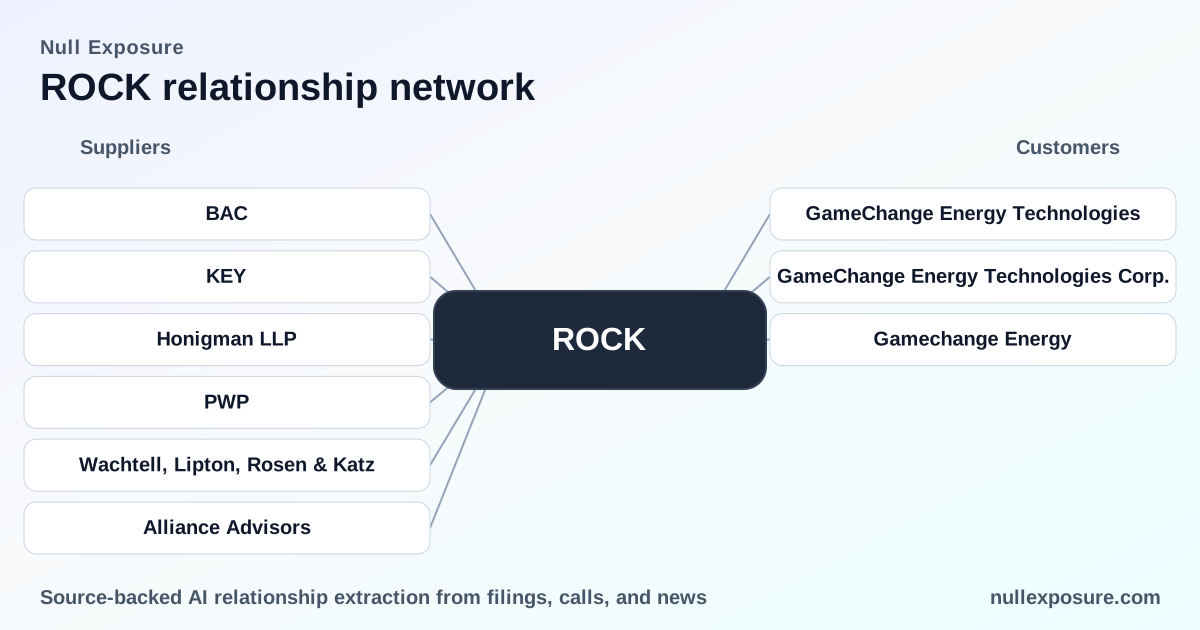
- GameChange Energy Technologies — Gibraltar executed a cash sale of its renewables eBOS business to a GameChange subsidiary for about $70 million in FY2026; press coverage frames the deal as part of Gibraltar’s portfolio simplification and debt reduction plan. Source: CityBiz and TradingView reporting, March 10, 2026.
Operating model and business-model characteristics (company-level signals)
- Contracting posture: transactional with strategic buyers. Gibraltar sells packaged products and services through established retail and wholesale contracts, while also executing opportunistic divestitures to redeploy capital. The company’s reliance on large channel partners implies negotiated terms and cadence driven by retailers’ purchasing cycles.
- Concentration: moderate-to-high customer concentration at the company level. One home improvement retailer accounted for roughly 12% of consolidated net sales in the referenced period, signaling meaningful single-account exposure that investors must monitor for pricing and volume risk.
- Criticality: product-level criticality varies by segment. Residential and infrastructure products are embedded in construction supply chains and display steady demand; Renewables was sufficiently non-core to be sold, indicating varying strategic importance across segments.
- Maturity: mature industrial operating model—design, engineering, manufacturing and distribution are long-established capabilities. The company balances manufacturing scale with distribution relationships that shorten route-to-market.
- Geography: North America-centric. The company reports the bulk of customers located in North America, with Asia contributing minimally to net sales in the periods referenced.
- Customer types: mix of distributors, retailers, contractors and end consumers. Management characterizes customer sets across retail home centers, building material wholesalers, roofing distributors, contractors and online direct channels.
- Spend concentration signal: a company-level excerpt indicates at least one large customer relationship in the >$100M implied band (12% of ~$1.31M in reported net sales base), which translates into a material single-account risk for revenue volatility.
Why the GameChange transaction is relevant to customer analysis
- Signals strategic focus: Selling eBOS to GameChange clarifies that Gibraltar prefers to concentrate on core building-products manufacturing and its higher-margin, higher-volume channels. The transaction is consistent with a de-emphasis of specialty renewables manufacturing in favor of established residential and infrastructure product lines.
- Balance-sheet and counterparty implications: Cash proceeds were explicitly directed toward debt reduction in public reporting and media coverage, reducing leverage and improving the company’s ability to negotiate with large retail and distribution partners.
- Customer continuity risk: The sale transfers customer relationships linked to the eBOS product to GameChange, reducing Gibraltar’s exposure to renewables customers but also removing a diversification vector; this concentrates revenue risk further into the core channels.
- Operational immateriality precedent: Prior divestitures (e.g., electronic lockers and a Japan-based solar racking business) were treated as immaterial to operations in financial statements, indicating management executes disposals without disrupting the core revenue engine. This is a corporate-level signal rather than a claim about the GameChange deal specifically.
Investor takeaways and risks
- Positive: sharper focus and debt reduction — the $70M sale funds deleveraging and clarifies management’s strategy to prioritize core building products where distribution relationships and scale provide margin durability.
- Watch: customer concentration — with a single retail customer historically representing ~12% of sales, revenue swings tied to retailer buying patterns or contract renegotiations represent the key downside risk.
- Geographic concentration — North American revenue dominance reduces currency and regional diversification benefits but improves predictability tied to U.S. construction cycles.
- Execution risk on portfolio moves — past divestitures have been handled as immaterial; continued simplification must preserve gross-margin mix and avoid transferring core distribution relationships away from Gibraltar.
How investors should monitor developments
- Track follow-on disclosures related to use of proceeds and any contemporaneous changes in seller- and buyer-side channel agreements after the GameChange closing (March–May 2026 coverage). Source: Finviz, TradingView, BizJournals.
- Monitor gross margin and working-capital trends for signs the loss of eBOS revenue tightens margins or reduces seasonally diversified cash flows.
- Watch procurement and pricing dynamics with the top retail customer that contributed ~12% of sales — any shift in that relationship would materially change revenue visibility.
Final perspective Gibraltar is repositioning into a clearer manufacturer-plus-distributor play focused on building products where its channel relationships create repeatable demand and higher operating leverage. The GameChange eBOS sale is notable primarily as a portfolio-cleanup and deleveraging move rather than a restructuring of core customer channels. For investors evaluating ROCK’s customer exposure, the story is one of concentration risk offset by deliberate simplification and balance-sheet repair.
For deeper relationship mapping and ongoing monitoring of corporate divestitures and counterparty exposures, visit NullExposure: https://nullexposure.com/.