Repay Holdings (RPAY): Customer relationships that drive a usage-based payments engine
Repay Holdings provides integrated payment processing to vertical markets and monetizes primarily through usage-based transaction fees and processing services sold to enterprise and mid-market clients; the Consumer Payments segment accounts for roughly 83% of revenue and concentrates the company's commercial exposure. For investors, the company’s value rests on durable, mature client relationships, a large-enterprise sales focus, and the scalability of front-end authorization and back-end settlement services that translate transaction volume into recurring revenue. For more context on how Repay’s customer links affect valuation and risk, visit the NullExposure research hub: NullExposure homepage.
How Repay actually sells and sticks with customers
Repay operates as a seller of integrated payment services to industry-focused markets. Contracts are structured so that the company stands ready to process an unspecified number of transactions and collects variable consideration tied to client usage. This contracting posture creates a revenue stream that tracks transaction volume rather than fixed subscription fees.
Key company-level signals from filings and disclosures:
- Usage-based contracting is explicit in Repay’s revenue recognition language: the firm recognizes revenue for performance obligations tied to the number and timing of client transactions. This makes top-line growth highly correlated with client payment volume and retention metrics.
- Large-enterprise focus guides new-sales efforts; management explicitly targets enterprise accounts as a strategic priority.
- North America centric billing (U.S. and Canadian dollars) positions the company in a familiar regulatory and payments rails environment.
- Concentration and maturity: Repay’s top 10 clients have an average tenure of about seven years and accounted for roughly 20% of gross profit in the most recent year, indicating long-standing, material relationships rather than early-stage experimentation.
- Segment profile: the business is dominated by services-oriented payments (consumer payments form the majority of revenue), reinforcing dependence on transaction volumes and merchant activity.
These signals together define an operating model that is transaction-driven, enterprise-focused, and concentrated, which investors should translate into sensitivity to macro spending cycles, client churn rates, and the health of vertical markets served.
What the market coverage turned up — relationship evidence and sources
Below are every customer relationship captured in the available coverage, summarized for investment analysis. Where a company was mentioned more than once in the collected results, I note the multiple media citations.
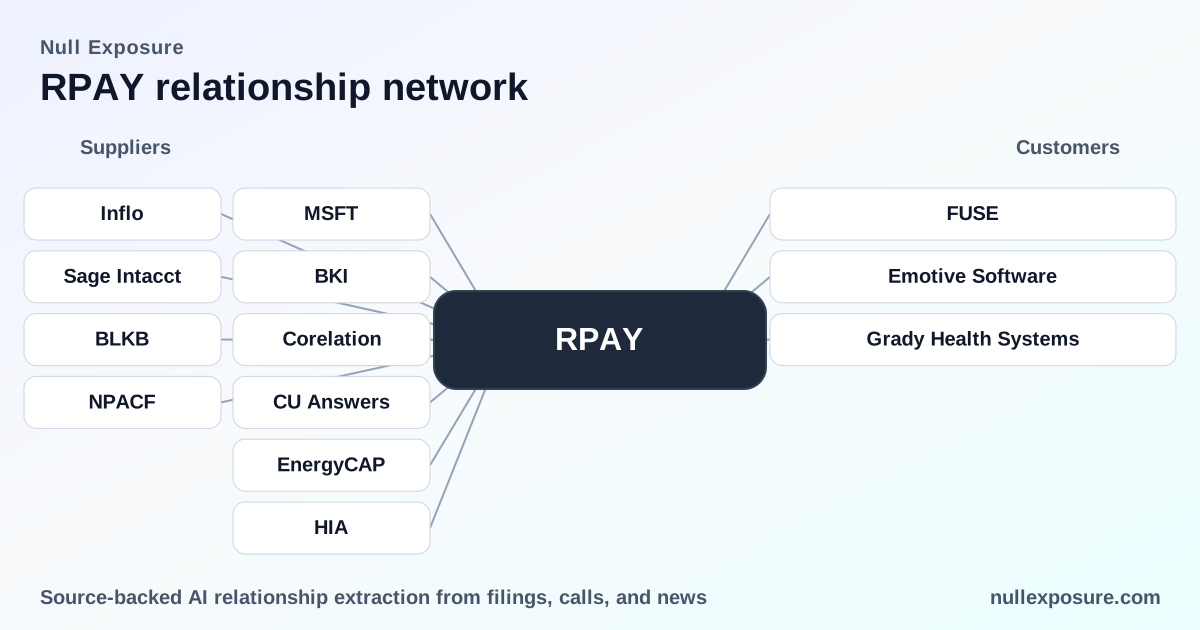
Fuse — AI lending software integration (two media mentions)
Repay integrated its digital payment technology into Fuse’s AI-powered lending platform, enabling banks, credit unions and lenders using Fuse to process payments directly through Repay’s front-end and back-end payment services. This integration positions Repay as the payment rails provider for lenders leveraging Fuse’s origination stack. Source: Yahoo Finance coverage of the partnership (March 2026).
Emotive Software — automotive lending payments (two media mentions)
Repay partnered with Emotive Software to allow auto lenders using Emotive’s platform to accept and reconcile payments across debit/credit, digital wallets, ACH, SMS and IVR channels, increasing Repay’s footprint in automotive finance payments. The partnership was reported in multiple news outlets highlighting multi-channel payment acceptance and reconciliation benefits. Sources: Futunn report and MarketScreener coverage (both referenced in March 2026).
Grady Health Systems — rapid implementation into health payments
Repay implemented its payment solution at Grady Health Systems quickly enough that management described Grady as a meaningful Business Payments client, demonstrating the company’s ability to onboard large healthcare providers and convert them into a revenue-generating relationship. Source: Repay’s earnings call transcript coverage (Q2 2024) published on InsiderMonkey.
Why these relationships matter to valuation and risk
- Customer mix and strategic verticals: Partnerships with lending platforms (Fuse, Emotive) and healthcare systems (Grady) show Repay is winning across fintech and healthcare verticals where payment flows are recurring and high-frequency. This supports a predictable revenue base that scales with client transaction volume.
- Distribution via platform integrations: Integration into third-party loan origination and servicing platforms is a force multiplier for acquisition and retention: once Repay becomes the embedded payment handler inside a platform, switching costs and technical integration work create stickiness.
- Materiality and concentration: With Consumer Payments at ~83% of revenue and top clients comprising meaningful gross profit share, company performance is sensitive to volume changes among a concentrated set of clients; this drives the importance of client tenure and platform partnerships documented above.
- Contracting and cash flow dynamics: Usage-based contracts align revenue with client activity but create revenue volatility tied to spending patterns and seasonality in consumer payments. Operating leverage will amplify transactional growth into margins if volume increases, as suggested by the company’s positive EBITDA (reported EBITDA ~67.4M on revenue ~309.3M TTM).
- Valuation context: Market multiples signal investor expectations for growth and profitability: Repay’s EV/Revenue (~2.06) and EV/EBITDA (~8.44) imply the market is valuing the company as a mid-growth payments operator that should convert transaction volume into steady cash flow.
Tactical implications for investors and operators
- Investors should prioritize metrics that reflect the usage-based model: transaction volume growth, monthly active merchants, average revenue per transaction, and churn among the top accounts. These will be the leading indicators of revenue trajectory.
- Operator focus: preserve integration stickiness by lowering switching friction and deepening product hooks with platform partners such as lending and loan servicing providers; these relationships converted into real client revenue in the examples above.
- Risk checklist: monitor concentration among top clients, sensitivity to consumer spending cycles (given the Consumer Payments concentration), and any changes to interchange or regulatory fees that affect margins.
Bottom line: durable payments relationships with concentrated exposure
Repay’s customer evidence shows strategic platform integrations and enterprise clients driving a usage-based revenue engine that is both scalable and concentrated. The firm’s mature client tenures and partnerships into lending and healthcare are strength indicators for a payments operator, but concentration and volume sensitivity remain principal risks for investors evaluating RPAY.
For a concise institutional briefing and ongoing tracking of these customer dynamics, see our research portal: NullExposure homepage.