Rapid Micro Biosystems (RPID): Customer Relationships That Drive Growth Direct Adoption
Rapid Micro Biosystems sells automated, growth-based microbial detection systems (the Growth Direct platform), consumables, software connections, and validation and field services to large pharmaceutical manufacturers and CDMOs. The company monetizes through upfront system sales, recurring consumables and service contracts, and software/integration offerings that lock in long-term revenue streams from high-value life‑science customers. For investors, the key lens is commercial concentration and the growth cadence of multi-system orders from strategic manufacturers, which directly translate into recurring consumable and service revenue and higher lifetime customer value.
For a concise institutional view of our coverage and signals, visit the NullExposure home page: https://nullexposure.com/
Commercial relationships that matter: who is buying Growth Direct
Below I walk through every counterparty found in the coverage set, summarizing what each relationship means for Rapid Micro’s revenue profile and operational risk.
Amgen — large strategic adopter and reference account
Amgen placed a significant multi-system order in Q4 2025 as part of an expanded global Growth Direct rollout and is slated to sponsor a North American Growth Direct Day in Q2 2026. This is a clear endorsement from a major biopharma customer that strengthens Rapid Micro’s referenceability and supports follow-on consumables and services revenue. (Source: Rapid Micro’s financial release reported via Sahm Capital, March 12, 2026.)
Samsung Biologics — scalable CDMO deployment and repeat ordering
Samsung Biologics has issued follow-on multi-system orders to expand Growth Direct deployment across its manufacturing network, with orders referenced in both FY2025 and FY2026 communications. A repeat multi-system order from a leading CDMO indicates deepening operational adoption across multiple sites and predictable recurring spend on consumables and validation services. (Source: Rapid Micro press releases and related news via GlobeNewswire and Sahm Capital, June 2025 and March 2026.)
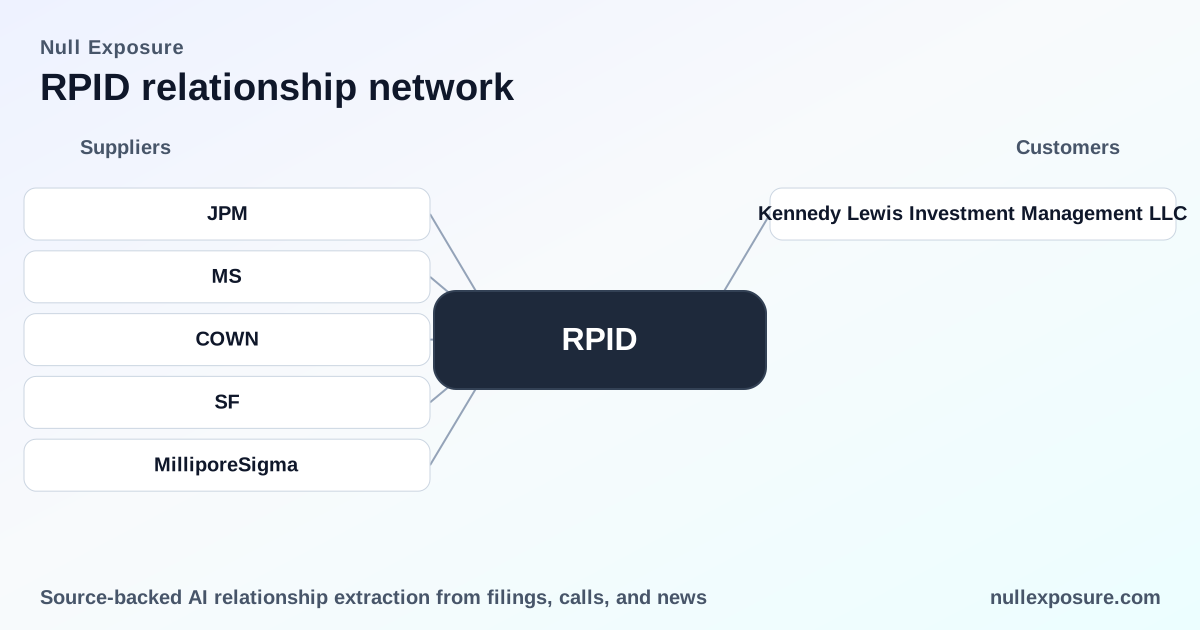
Kennedy Lewis Investment Management LLC — an acquisition proposal, not a customer purchase
Kennedy Lewis proposed in FY2022 that one or more of its funds acquire 100% of Rapid Micro for $5.00 per share in cash, representing roughly a 57% premium to the June 29, 2022 trading price. That outreach is transactional (an M&A proposal) rather than a commercial customer relationship, and it signals third‑party investor interest in the company’s strategic positioning and recurring revenue potential. (Source: Akin Gump press release referencing Kennedy Lewis’s proposal, FY2022.)
What these relationships reveal about Rapid Micro’s operating model
Rapid Micro’s customer base and the extracted constraints provide a coherent picture of how the company sells and scales.
-
Concentration and customer quality: The business serves large and very large enterprises; management reports that its customer base includes 70% of the top twenty largest pharmaceutical companies and multiple high‑profile manufacturers. This is not a roll‑up of SMB buyers — Rapid Micro sells to enterprise pharmaceutical and CDMO customers, which drives longer sales cycles but materially larger order sizes and recurring revenue potential. (Company disclosures, fiscal 2024 data.)
-
Global footprint with multi-site deployments: As of Dec. 31, 2024, Rapid Micro had placed 162 Growth Direct systems across 46 customers and roughly 98 sites in 18 countries. This geographic diversity translates into cross‑sell opportunities and operational scale for consumables and services. (Company disclosures, FY2024.)
-
Product mix drives recurring revenue: The company lists systems, LIMS connection software, consumables, validation services, service contracts, and field service as its principal performance obligations. This structure makes hardware sales the primary acquisition event and consumables and service contracts the recurring annuity. Gross profit today is modest, but the installed base is the lever for margin expansion. (Company filings.)
-
Contracting posture and payment terms: Payment terms are typically 30–90 days after shipment or delivery, and the company reports immaterial remaining performance obligations with contract terms greater than one year. That indicates predictable near‑term cash collection on system sales but limited long‑dated contracted revenue on new deployments. (Company disclosures.)
-
Relationship roles: Rapid Micro acts primarily as a seller/manufacturer of systems and a provider of validation and field services; its customers are buyers that then deploy Growth Direct across manufacturing sites. This dual role—hardware vendor plus services integrator—creates both cross-sell advantage and operational delivery obligations. (Company filings.)
Strategic implications for investors
-
Growth signal: Multi-system orders from Amgen and Samsung Biologics are high-signal commercial wins; repeat orders from large CDMOs and top pharma customers accelerate recurring consumables and service revenue, improving revenue visibility and margin leverage.
-
Revenue concentration risk: Serving a relatively small number of very large enterprise customers creates both upside (large, repeatable orders) and downside (customer-specific churn could materially affect revenue). The company’s placement of 162 systems across 46 customers shows healthy breadth, but investor monitoring should focus on order cadence from top accounts.
-
Operating execution risk: Rapid Micro must execute on installation, validation, and ongoing field service to convert system sales into recurring revenue. The company derives service revenue from validation services and service contracts, which requires a mature field organization and robust supply chain for consumables.
-
Balance-sheet and margin context: Current financials show negative operating margins and modest gross profit, highlighting that the business model is still in a scaling phase where system deployment drives future annuity streams rather than immediate profitability. (Company financials, latest reported periods.)
For additional investor-focused signals and curated coverage of RPID relationships, visit the NullExposure home page: https://nullexposure.com/
Bottom line for research and operations teams
Rapid Micro’s commercial strategy is clear: win multi‑system deployments with global pharma and CDMOs, then monetize through consumables, software integration and services. The recent multi‑system orders from Amgen and Samsung Biologics validate this playbook and drive a path toward higher lifetime customer value. At the same time, investors should track order concentration among top customers, service delivery capability, and the pace at which installed systems convert into recurring revenue streams.
Key relationship takeaways:
- Amgen: High-profile adopter expanding rollout and serving as a strong reference (Sahm Capital release, Mar 12, 2026).
- Samsung Biologics: Repeat multi-system orders and network-wide deployments that underpin recurring consumable and service revenue (GlobeNewswire and Sahm Capital releases, Jun 2025 and Mar 2026).
- Kennedy Lewis: Acquisition proposal in FY2022 that signals external investor interest but is a distinct transactional event, not a commercial customer engagement (Akin Gump press release, FY2022).
Investors and operators should prioritize monitoring multi-system order cadence, installed-base conversion to consumables and services, and the company’s ability to maintain enterprise client concentration without exposing earnings to single-customer volatility.