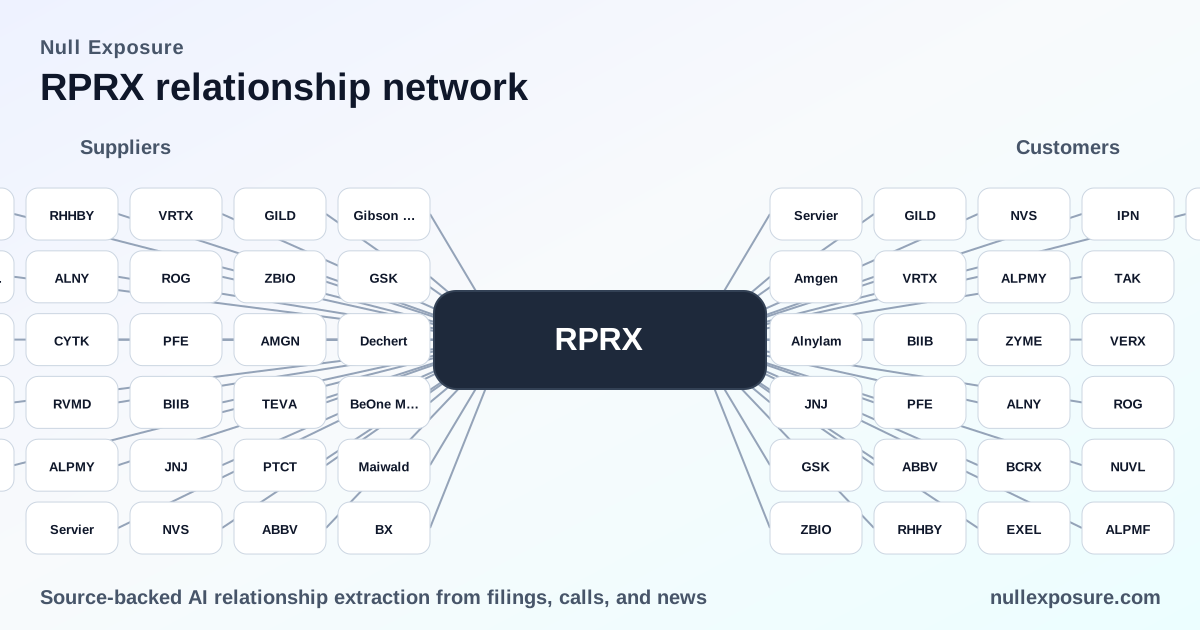
Royalty Pharma (RPRX): A portfolio-first royalty engine, paid by top-line drug sales
Royalty Pharma buys interests in biopharma royalties and provides structured funding to drug developers in exchange for sales‑linked cash flows; it monetizes by collecting long‑dated, top‑line royalties on marketed therapies and by packaging financing agreements that convert future royalties into present capital, returning cash to shareholders through dividends and reinvestment. Investors should value RPRX as an annuity manager of drug revenue streams — its economics depend on portfolio composition, the commercial durability of a handful of large franchises, and the pace of new funding transactions that replenish and diversify future cash flows. For a quick look at the platform and datasets that underpin this analysis visit https://nullexposure.com/.
The business model in one line — how RPRX contracts and earns
Royalty Pharma purchases royalty interests (outright or synthetic) and advances development funding in return for contractual payment rights tied to product sales; those payments are collected over long horizons and recognized as revenue when cash is received. Key structural characteristics: long‑term contracts, a concentration in large global counterparties, global cash flow exposure, and an active deal flow model that mixes commercial royalties with development‑stage royalties to manage yield and growth.
Operating constraints that shape valuation and risk
Royalty Pharma’s public filings signal four company‑level operating constraints: it treats royalty assets as long‑term financial instruments and calculates effective interest rates against expected life‑of‑asset cash flows; counterparties span the full spectrum from small biotechs to major pharmaceutical companies, but the firm explicitly targets large enterprise partners as a core counterparty type; revenues are global with both U.S. and non‑U.S. sources; and the portfolio is actively generating payments today, i.e., the relationships are active. These attributes mean RPRX’s cash flows are durable but sensitive to:
- franchise concentration (a small number of blockbuster drugs drive material cash),
- commercial execution by large licensees, and
- pipeline outcomes for development‑stage royalties that underpin future growth.
A mid‑article note: to compare RPRX’s counterparty exposures across deals and time, see additional resources at https://nullexposure.com/.
What investors need to monitor: portfolio drivers
Royalty Pharma’s returns are driven by three variables: (1) the underlying drug sales trajectory for its largest royalties, (2) the structure and duration of royalty contracts (fixed percentage tiers, milestones, territorial carve‑outs), and (3) new originations and secondary purchases that replace run‑off cash flows. Monitor litigation and disputes (Vertex/Alyftrek), milestone contingencies on synthetic deals, and regulatory risk around development candidates — each can reprice expected cash flows materially.
Relationship inventory — every counterparty reported in available sources
Below is a plain‑English, itemized account of every relationship referenced in the compiled results, with concise source citations.
- Amgen — Royalty Pharma owns a royalty interest in Amgen’s Imdelltra, listed among its commercial product royalties in the FY2025 10‑K. According to the FY2025 10‑K, Imdelltra is included in the portfolio.
- Servier — Servier’s Voranigo is cited as one of the company’s commercial royalties in the FY2025 10‑K. (FY2025 10‑K)
- Alnylam — Royalty Pharma acquired a royalty interest in Alnylam’s Amvuttra; the FY2025 10‑K lists Amvuttra among commercial holdings and QuiverQuant reported a $310m acquisition from Blackstone Life Sciences. (FY2025 10‑K; QuiverQuant, Mar 2026)
- Johnson & Johnson — Tremfya is a named commercial royalty in Royalty Pharma’s portfolio per its FY2025 10‑K disclosures. (FY2025 10‑K)
- GSK — Trelegy is identified as a portfolio royalty; the FY2025 10‑K and subsequent press summaries list GSK among major counterparties. (FY2025 10‑K)
- Zenas BioPharma (ZBIO) — Royalty Pharma agreed to provide up to $300 million in funding in exchange for a royalty on obexelimab, announced in a GlobeNewswire release on Sept 2, 2025. (GlobeNewswire, Sep 2, 2025)
- Vertex Pharmaceuticals — Vertex’s Trikafta and Alyftrek are repeatedly listed as material commercial royalties; investors should note an ongoing royalty dispute referenced in market commentary. (FY2025 10‑K; TradingView market commentary, Mar 2026)
- Biogen — Tysabri and Spinraza are listed as royalties in the FY2025 10‑K, and analysts have highlighted potential upside from a royalty on Biogen’s lupus drug litifilimab. (FY2025 10‑K; Investing.com coverage, May 2026)
- Denali Therapeutics (DNLI) — Denali closed a synthetic royalty funding deal with Royalty Pharma for $200 million at closing (part of a potential $275m package), reported in May 2026 coverage. (Investing.com / SimplyWall, May 2026)
- Blueprint Medicines (BPMC) — Royalty Pharma monetized royalties receivable from GAVRETO net sales outside the U.S. in a strategic financing that paid $175 million upfront, as announced in a partnership release. (Sixth Street announcement via Blueprint Medicines coverage)
- Revolution Medicines (RVMD / RVMDW) — Royalty Pharma entered a strategic partnership providing up to $2 billion in committed capital, including a synthetic royalty on daraxonrasib, disclosed in earnings commentary. (RVMD earnings call, Q4 2025)
- Teva — Royalty Pharma entered a funding agreement with Teva for a program referenced as TEV‑’408 with potential payments up to $500 million, reported in TradingView summaries. (TradingView news, May 2026)
- Novartis — Promacta is listed among Royalty Pharma’s commercial royalties in SEC and press filings. (SEC press release / FY2024 disclosure)
- Gilead Sciences — Trodelvy is identified in Royalty Pharma’s portfolio as a commercial royalty in the FY2024/2025 filings. (SEC / FY2024 disclosure)
- Roche (RHHBY / RHHBF) — Royalty Pharma acquired ownership of a tiered 8%–16% royalty on Evrysdi and purchased the final PTC‑originated portion for $240 million upfront, according to press and market releases. (SahmCapital summary; Investing.com, Mar–May 2026)
- Pfizer — Pfizers’ Nurtec ODT and Xtandi (via Astellas/Pfizer co‑ownership) are listed among the portfolio royalties in filings and press summaries. (FY2025 10‑K; GlobeNewswire)
- Revolution Medicines (separate mention) — included earlier; trading and press reports describe a $2 billion funding arrangement tied to daraxonrasib. (TradingView, May 2026)
- Zymeworks (ZYME) — Entered a $250 million royalty‑backed financing transaction with Royalty Pharma, reported in market summaries. (MarketScreener, Mar 2026)
- Cytokinetics (CYTK) — Royalty Pharma expanded funding arrangements that include support for late‑stage programs; market pieces referenced a funding collaboration. (Finviz / TradingView coverage, Mar 2026)
- Nuvalent (NUVL) — Royalty Pharma acquired a pre‑existing royalty interest in Nuvalent’s neladalkib and zidesamtinib for up to $315 million, disclosed in December 2025 press releases. (ManilaTimes / GlobeNewswire, Dec 16, 2025)
- BioCryst Pharmaceuticals (BCRX) — Orladeyo is called out as a named royalty in Royalty Pharma’s SEC filing summaries. (SEC FY2024 disclosure)
- Exelixis (EXEL) — Cabometyx/Cometriq are listed in FY2024 portfolio detail (market and SEC summaries). (SEC FY2024 disclosure)
- Ipsen — Cited alongside Exelixis and Takeda for the Cabometyx/Cometriq program in FY2024 disclosures. (SEC FY2024 disclosure)
- Takeda — Named in FY2024 portfolio mentions related to oncology royalties. (SEC FY2024 disclosure)
- PTC Therapeutics — Previously held a royalty on Roche’s Evrysdi; Royalty Pharma acquired the remaining PTC portion, as reported in market commentary about the Evrysdi purchase. (Investing.com / SahmCapital, Mar–May 2026)
- AbbVie — Imbruvica (AbbVie & J&J co‑owned) is listed as a portfolio royalty in filings and press coverage. (FY2025 10‑K; QuiverQuant)
- Astellas — Xtandi (co‑developed with Pfizer) appears among commercial royalties in Royalty Pharma disclosures. (FY2025 10‑K; QuiverQuant)
- RVMDW (warrant class) — Appears in an earnings call extract referencing the strategic partnership with Revolution Medicines and funding commitments. (RVMDW earnings commentary, Q4 2025)
- Additional repeat tickers (VERX, ALNY/ALNY variation, ALPMY/ALPMF, ABBV, BIIB, GILD, PFE, JNJ, RHHBY, RHHBF, VRTX) — These are ticker variations or repeated mentions of the counterparties above and are aggregated into the company‑level summaries already provided; relevant source documents include the FY2025 10‑K and multiple press releases and market summaries (FY2025 10‑K; GlobeNewswire; MarketScreener; QuiverQuant; TradingView, Mar–May 2026).
Portfolio implication summary and investor takeaways
- Diversified but franchise‑heavy: Royalty Pharma lists royalties on over 35 commercial products and multiple development‑stage candidates; that diversification reduces idiosyncratic risk, but a handful of blockbusters (Vertex, Roche, Biogen, J&J, Pfizer, GSK) still drive meaningful cash. (FY2025 10‑K; market press)
- Cashflow visibility is high for marketed drugs, lower for development assets: commercial royalties deliver current income; synthetic and development deals provide optionality and upside through milestone triggers. (FY2025 10‑K)
- Contracting posture is long‑term and global: company disclosures indicate long‑dated financial royalty accounting, global revenue sources, and active partnerships with large enterprises — features that support annuity‑like valuation but require active pipeline origination to sustain yields. (FY2025 10‑K)
Final read: what to watch next quarter
Track revenue contribution from newly acquired royalties (Evrysdi, Imdelltra, Amvuttra), the cadence of funding agreements (Zenas, Denali, Teva, Nuvalent), and any legal developments in the Vertex Alyftrek dispute. Those three vectors will determine whether RPRX’s current dividend and forward guidance are supported by stable cash flow or require further balance‑sheet actions.
For ongoing monitoring and a consolidated view of RPRX counterparties and deal flow, visit https://nullexposure.com/ — the hub for reconciled relationship data and deal summaries.