Red Rock Resorts (RRR): Tribal Partnerships, Development Fees, and Vegas Core Cash Flows
Red Rock Resorts operates integrated casino-resort assets in Las Vegas through Station Holdco and Station LLC, and monetizes through core gaming revenue (slots and table games), hotel and food & beverage operations, tenant leases, plus management and development fees when partnering with Native American tribes. The business combines steady, high-margin casino cash flows with episodic development revenue from tribal management agreements and property dispositions, creating a hybrid of recurring operating income and event-driven fee spikes that investors should value differently.
Learn more about Red Rock’s coverage and signals at https://nullexposure.com/
How to read Red Rock’s customer relationships: steady gaming plus strategic tribal deals
Red Rock’s customer relationships fall into two distinct flavors. First, retail gaming is a high-frequency, low-duration cash flow engine—wagers are settled daily and drive the majority of operating profit. Second, the company executes multi-year development and management contracts with Native American tribes, which generate lump-sum development fees and ongoing management revenue while transferring asset ownership or operating control. The corporate financials show this mix: gaming is the principal source of revenue and operating income, while tenant leases and development fees are a meaningful adjunct to operating cash flow (company disclosures, 2024–2025).
What the public signals say about contract posture and concentration
- Contracting posture is mixed: public disclosures indicate both long-term contractual commitments (management and development agreements with multi-year terms) and spot, transaction-level gaming activity that is completed daily. The firm’s portfolio therefore blends durable fee relationships with high-frequency gaming receipts.
- Geographic concentration is material: Red Rock aggregates all Las Vegas properties into a single reportable segment, which concentrates risk in the Las Vegas metropolitan area while also centralizing marketing and regulatory structure (company 2024 disclosures).
- Revenue criticality and concentration: Gaming is the principal revenue driver and slot play accounts for roughly 80% of casino revenue, underscoring dependence on a narrow set of in-market behaviors for margin generation (company disclosures).
- Relationship roles: Red Rock acts as seller/operator of casino services and as a development/management services provider to tribes, giving it multiple monetization levers and different counterparty dynamics across relationships.
- Maturity and stage: Many relationships are active and recurring—tenant leases generated steadily rising revenue through 2024, and tribal management/development arrangements produce episodic but material fees.
These signals should be treated as company-level operating model characteristics rather than characteristics of a single counterparty unless specifically identified in the source disclosures.
Tribal and partner relationships: everything public investors should know
Below I cover each relationship surfaced in the monitoring results and the concrete public evidence available.
North Fork Rancheria of Mono Indians — development partner, fee revenue recognized (FY2025)
Red Rock recognized $3.9 million in development fee revenue for the quarter and $13.9 million for the nine months ended September 30, 2025 under its agreement with the North Fork Rancheria of Mono Indians to develop the North Fork Project, illustrating active development income from tribal partnerships; this relationship is explicitly identified as a tribal (government) counterparty in company disclosures. The detail comes from a TradingView item summarizing Red Rock’s SEC filing (10-Q) for FY2025, which quotes the development fee amounts and project description (TradingView summary of Red Rock 10‑Q, FY2025).
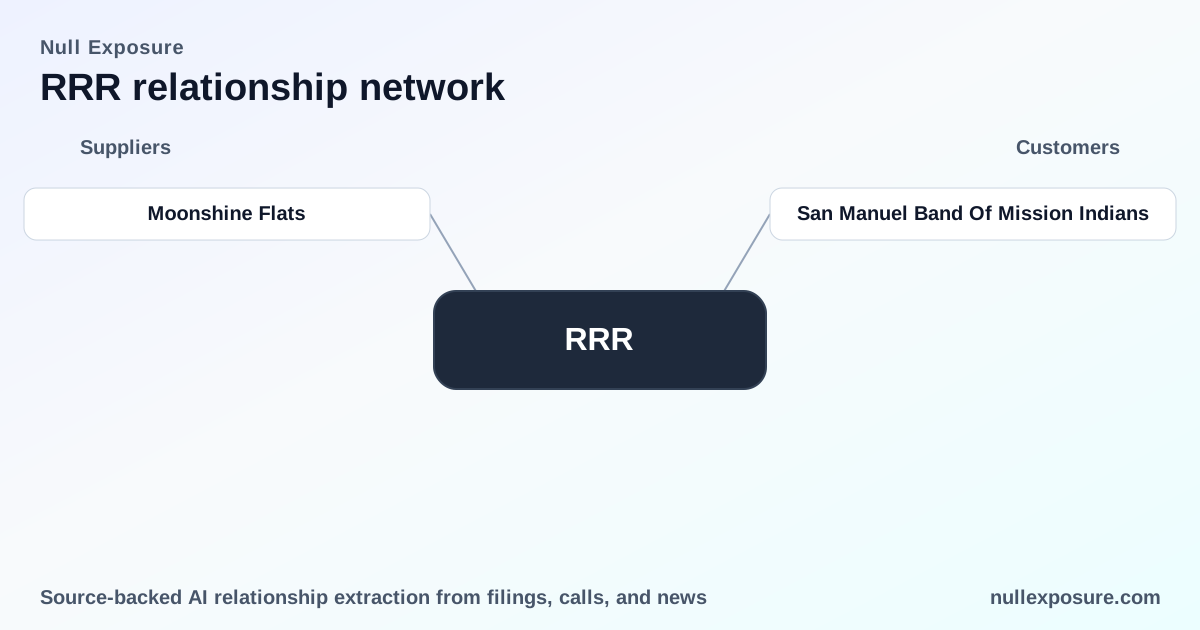
San Manuel Band Of Mission Indians — asset sale / transfer of operational control (reported acquisition of the Palms)
A March 2026 media report noted that the San Manuel Band of Mission Indians agreed to acquire the Palms Las Vegas from Red Rock for $650 million, a transaction that transfers ownership and alters Red Rock’s exposure to that asset while underscoring the company’s use of asset sales and tribal partnerships as capital and strategic levers. The report was covered by CBS News in March 2026 as part of broader coverage of tribal operators expanding into Las Vegas (CBS News, March 2026).
How these relationships map to investor risks and optionality
- Earnings mix and volatility: Development fees and property sales produce non-recurring uplifts that can materially change reported earnings in a given period, while underlying gaming revenue remains the steady base. Investors must separate core operating EBITDA (driven by slot play and hotel operations) from episodic development income when modeling organic growth.
- Counterparty credit and political risk: Tribal partnerships are with sovereign entities; where the source text explicitly names a tribe (North Fork), that relationship is a government counterparty. Investors should treat tribal agreements as legally distinct from private lessees and evaluate revenue timing and enforceability in the context of sovereign arrangements (company disclosures).
- Geographic concentration risk: The company’s concentration in Las Vegas is an operational lever for scale but also a risk; local demand shocks or regulatory changes disproportionately affect results because Red Rock aggregates its Las Vegas properties into a single reportable segment (company 2024 disclosures).
- Contract-term mix: Public evidence supports long-term management and development agreements (multi-year terms) alongside the inherently short-duration nature of gaming transactions, creating both predictable fee streams and high-frequency volatility from gaming operations.
Constraints and company-level signals investors should model explicitly
- The company reports management and development agreements with terms of seven years from facility opening, and tenant leases with remaining terms up to ~27 years at December 31, 2024—this creates durable contracted cash flows in some parts of the portfolio (company 2024 disclosures).
- Gaming revenue is settled daily, so model cash flow smoothing conservatively; gaming contracts are transaction-level obligations rather than long-term receivables (company disclosures).
- Gaming is material and core to operations; the company says gaming is its principal source of revenue and operating income, with slot play concentration around 80% of casino revenue—this amplifies sensitivity to slot demand and carded player metrics (company disclosures).
- Relationship roles are dual: seller/operator of casino services and service provider on development/management engagements, giving flexibility to monetize expertise through fees in addition to operating income.
If you want a structured signal report on Red Rock’s customer relationships or to track changes to these tribal arrangements, visit https://nullexposure.com/ for detailed relationship monitoring and signal feeds.
Investment takeaway
Red Rock’s equity combines steady, high-margin gaming cash flow anchored in Las Vegas with episodic, material development and asset monetization events via tribal partnerships and property dispositions. The credit and operating profile reflect a company that is both an operator and a development contractor—model valuations accordingly: separate recurring gaming EBITDA from development fee volatility, stress-test slot-play concentration, and account for the legal and timing nuances of tribal contracts. For investors and operators evaluating RRR customer relationships, the core truth is straightforward: value the repeatable gaming franchise as base cash flow and treat tribal development fees as strategic, event-driven upside.