Reliance Steel & Aluminum: customer relationships that underpin a fragmented, high-frequency distributor
Reliance Steel & Aluminum Co. (RS) monetizes a nationwide network of 320 service-center locations by buying metal products and selling them with value-added processing and just‑in‑time delivery to fabricators, OEMs and government buyers. Revenue comes from high-frequency, spot fixed‑price orders (average order ≈ $2,980) and a small number of large, multi‑year defense and government contracts that uplift margins episodically. For investors, RS is a distribution-first business with low customer concentration, broad geographic scale (U.S.-centric) and mature repeat relationships that translate operational predictability into cash flow stability. Learn more at https://nullexposure.com/.
How Reliance’s customer model drives margins and risk
Reliance runs a classic metals service‑center model: inventory financing, cut‑to‑size processing and logistics at scale. The operating model creates these characteristics:
- Contracting posture: predominantly spot, fixed‑price sales orders, limiting long-term revenue visibility but enabling pricing pass-through in inflationary cycles.
- Customer concentration: immaterial — the largest customer represented only 0.7% of 2024 net sales, signaling low counterparty credit risk.
- Customer type: skew to small machine shops and fabricators with frequent, small orders that require rapid fulfillment; at the same time, RS services large OEMs and government programs through specialized subsidiaries (AMI Metals).
- Relationship maturity and criticality: mature repeat business (95% repeat orders over five years) that underpins steady volumes, while a handful of defense contracts are higher‑value and more critical to particular processing units.
- Geography: U.S.-centric with modest international exposure (~7–9% of sales) — currency and regional macro risks are limited relative to peers.
Key takeaway: Reliance’s economics rely on scale, rapid-turn inventory and a distribution margin on many small transactions, punctuated by occasional large defense contracts that can materially boost segments of revenue.
The evidence: every named customer relationship in the public results
Below are concise, source‑linked summaries of each customer relationship referenced in the collected results.
-
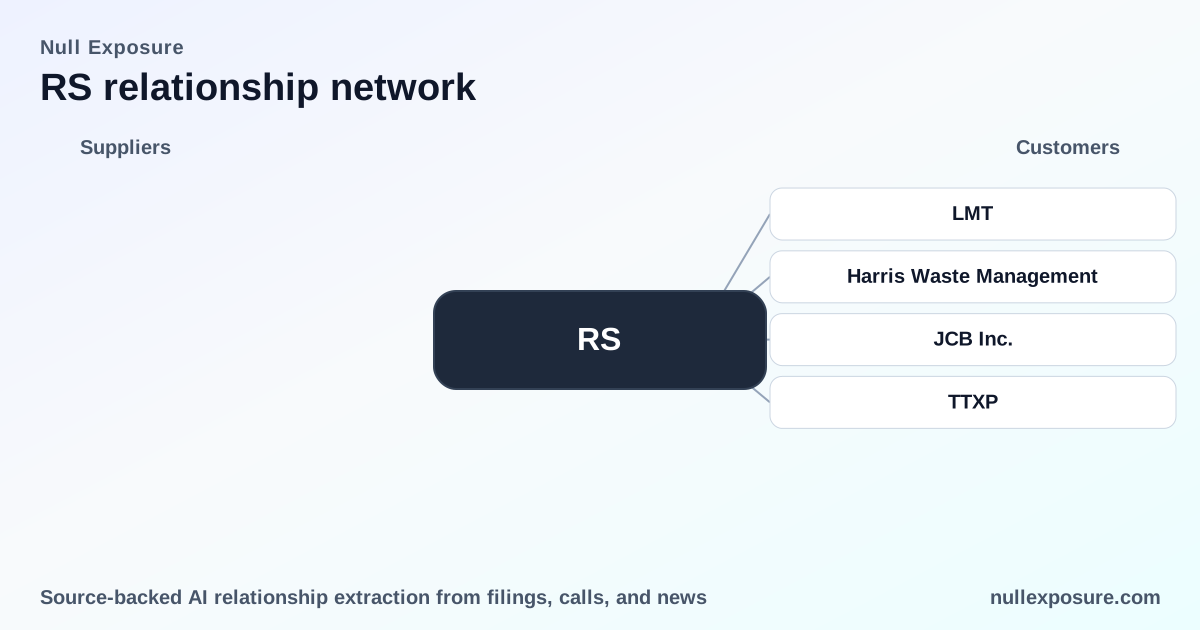
Lockheed Martin Corporation (LMT) — AMI Metals, a Reliance subsidiary, holds a multi‑year IDIQ to supply aluminum plate and flat‑rolled material to Lockheed Martin; recent reporting places a five‑year IDIQ contract potentially worth up to $654 million, supporting defense program supply chains. According to Bitget and Insidermonkey coverage of RS’s FY2026 results, AMI Metals signed a five‑year IDIQ with Lockheed Martin (May 2026), and the Q1 2026 earnings transcript confirmed existing programs under contract with Lockheed Martin.
Sources: Bitget (May 3, 2026); Q1 2026 earnings transcript reported by InsiderMonkey (May 2026). -
Lockheed Martin — historical relationship — AMI Metals won a prior five‑year award to supply aluminum for the F‑35 program valued at approximately $300 million, illustrating a multi‑year supplier role to prime defense contractors. This earlier award was reported in 2015 and documents an established supply relationship with Lockheed.
Source: UPI news report (2015). -
Department of Homeland Security — AMI Metals secured a multi‑year agreement to supply border‑wall related materials, cited by management on the Q1 2026 earnings call as one of two significant government contracts announced in that quarter and included in FY2026 contract disclosures. This represents a government prime contract channeling larger, multi‑year demand to AMI Metals.
Source: Q1 2026 earnings transcript reported by InsiderMonkey (May 2026). -
Harris Waste Management — local manufacturing clientele listings for a Chatham Steel facility included Harris Waste Management among customers, indicating that Reliance (through legacy or local plant channels) supplies industrial equipment manufacturers and compactor producers. This is a narrower, facility‑level commercial relationship documented in local reporting.
Source: SavannahNow feature on Chatham Steel (2010). -
JCB Inc. — the same SavannahNow article lists JCB Inc. as part of a local plant’s manufacturing clientele, showing Reliance’s reach into construction equipment supply chains at the regional level.
Source: SavannahNow (2010). -
TTX (TTXP) — regional manufacturing client lists also included TTX, the railcar builder, indicating relationships with transportation OEMs at local plant operations. The story names TTX as a customer for a Chatham Steel facility.
Source: SavannahNow (2010).
Collective observation: these items show two distinct customer cohorts for Reliance — large, multiyear government and defense contracts routed through AMI Metals, and broad, local OEM and fabricator customers served by the national distribution footprint.
What the relationships imply for investors
-
Revenue quality is diversified across many low‑value, high‑frequency orders and episodic larger government contracts. That mix reduces single‑counterparty concentration while offering upside when defense programs or DHS agreements ramp. Investing.com and management commentary in FY2026 flagged government awards with aggregate ceiling figures cited as high as $2.9 billion across contracts, underscoring the potential scale of these pockets of demand.
Source: Investing.com coverage of FY2026 commentary (May 2026). -
Margin dynamics will continue to depend on commodity cycles and service margins. The spot market posture gives Reliance pricing flexibility; when metal prices rise, RS can reprice new orders quickly, but margin protection on inventory turns and processing scope remains the critical lever.
-
Credit and operational risk are contained by breadth and repeat business. Reliance reports geographically diversified customers and low receivables concentration; the company’s average small order size aligns with just‑in‑time logistics rather than dependence on a few large accounts.
Strategic constraints and investor considerations
- Spot market orientation requires strong working capital management. Because RS predominantly transacts on spot fixed‑price sales orders, earnings sensitivity to metal price volatility and inventory turns is structural rather than anecdotal.
- Scale in processing and distribution is a competitive moat. The 320‑location footprint and product breadth (100,000+ SKUs) support logistics advantages for small shops and OEMs.
- Defense and government contracts add episodic scale but are concentrated within AMI Metals. These contracts are higher margin opportunities but represent program‑specific exposure that requires execution on quality, delivery and compliance.
Explore full coverage and relationship mapping at https://nullexposure.com/.
Bottom line for operators and allocators
Reliance Steel & Aluminum is a distribution‑led, service‑centric metal supplier whose low customer concentration, mature repeat relationships and U.S. revenue base support a stable cash flow profile. Investors should weigh the steady economics of many small, recurring orders against the upside and execution risk tied to large government and defense contracts run through AMI Metals. For research teams evaluating customer credit and operational counterparty exposure, the mix is favorable: broad, predictable demand with periodic high‑value contracts that can materially influence segment results.
Want a deeper dive into customer exposures across industrial OEMs and defense primes? Visit https://nullexposure.com/ for expanded relationship intelligence and trend tracking.