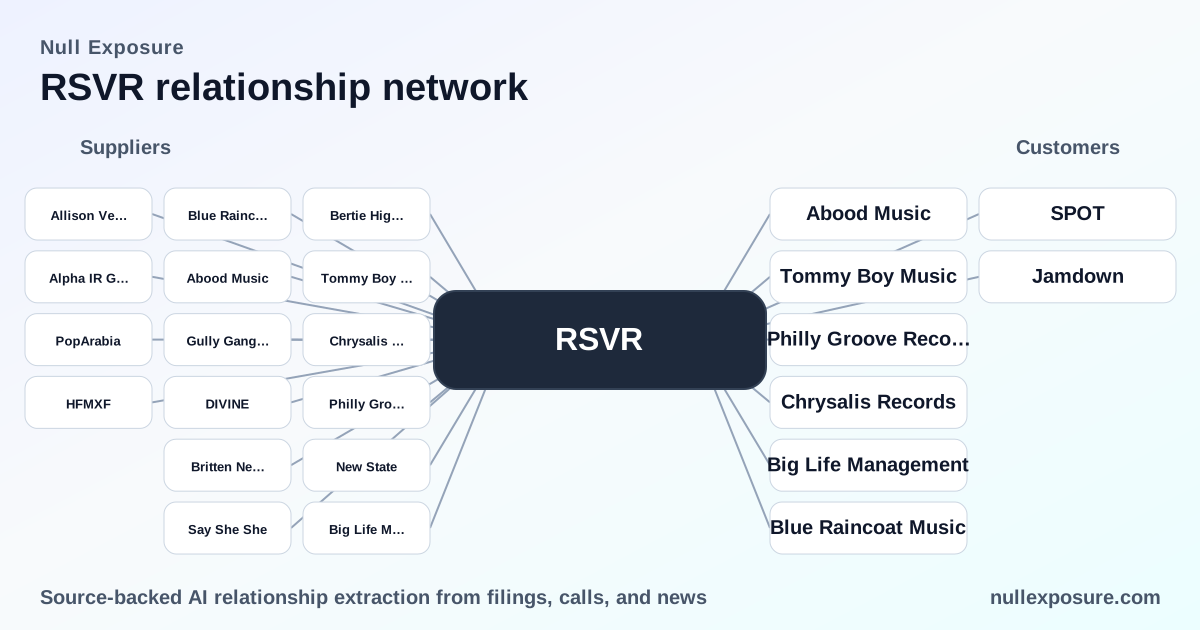
Reservoir Media (RSVR): Customer Relationships and What They Mean for Investors
Reservoir Media acquires and administers musical intellectual property and monetizes it through licensing, royalties, synchronization, recorded-music sales, and artist-management ventures. The firm acts both as a licensor to digital services and as a representative/partner to labels and management companies, collecting usage‑based, often long‑term royalties and recurring recorded‑music revenues. For investors, Reservoir’s cash flow profile is driven by catalog scale and licensing reach, while its customer concentration and active legal/licensing posture create identifiable risk and opportunity vectors. Learn more at https://nullexposure.com/.
How Reservoir’s customer model actually works (and why it matters)
Reservoir runs a rights‑centric commercial model: it secures ownership or administration of compositions and master recordings, then monetizes those rights via licensed exploitation. That operating posture produces a mix of steady, usage‑based receipts (monthly royalty settlements) and episodic, higher‑margin events such as sync deals or catalogue sales.
Key operating characteristics for investors:
- Contracting posture: Licensing is the primary contract type, usually long‑term and usage‑based, with monthly accounting and payouts — an arrangement that favors predictability but ties revenue to platform economics (streaming volumes, royalty rates).
- Concentration: Revenue and receivables are materially concentrated; company disclosures show a single customer contributing ~11% of revenues and a small number of customers accounting for large shares of receivables, which elevates counterparty dependency risk.
- Counterparty mix and criticality: Reservoir collects significant royalties from non‑profit collecting societies (copyright collecting societies), while also contracting directly with commercial platforms and labels — positioning Reservoir as both licensor (rights owner/administrator) and seller/representative to industry partners.
- Geography and scale: The business is global in reach (offices from Los Angeles to Abu Dhabi), but the United States remains a material revenue source (the U.S. represented ≥10% of revenue in recent fiscal years).
- Maturity and stage: Customer relationships are active and operational, with routine monthly accounting and settlements, while the company’s services segment focuses on promotion and administration of songwriters and artists.
Investigate these dynamics in the context of legal and platform risk — Reservoir’s recent involvement in licensing disputes illustrates how enforcement and negotiation can shift near‑term economics. For deeper research, visit https://nullexposure.com/.
The customer roster, relationship by relationship
Abood Music
Reservoir publishes Abood Music’s acquired catalogue in the United States, including the acquired 2003 Coolie Dance Riddim catalog, which Reservoir administers for U.S. publishing. Source: Jamaica Gleaner report on the Coolie Dance publishing arrangement (Dec 2025).
Jamdown
Jamdown — a Jamaican publisher/label — announced it will leverage Reservoir’s backing to scale global distribution and development of Jamaican artists, with Reservoir described as providing the international reach Jamdown sought. Source: Jamaica Gleaner interview with Jamdown leadership (Dec 2025).
Philly Groove Records
Reservoir represents recorded music from Philly Groove Records as part of its recorded‑music catalogue representation, positioning the label’s masters for licensing and distribution under Reservoir’s umbrella. Source: TradingView coverage of Reservoir’s FY2026 releases and catalogue representation (Feb–Mar 2026).
Chrysalis Records
Chrysalis Records is listed among the labels whose recorded music Reservoir represents, indicating an administrative/representation relationship that expands Reservoir’s catalogue of master recordings for monetization. Source: TradingView coverage of Reservoir’s FY2026 catalogue and label relationships (Feb–Mar 2026).
Tommy Boy Music
Reservoir represents recorded music from Tommy Boy Music, adding legacy and contemporary urban/dance catalogues to Reservoir’s monetizable masters. Source: TradingView coverage describing Reservoir’s label representations (Feb–Mar 2026).
Blue Raincoat Music
Reservoir manages artists through a venture relationship with Blue Raincoat Music, implying joint management and exploitation of artist catalogues and rights as part of Reservoir’s services and recorded‑music strategy. Source: TradingView investor notices mentioning ventures with Blue Raincoat Music (Feb–May 2026).
Big Life Management
Reservoir manages artists through ventures with Big Life Management, indicating contractual management and artist representation that feed publishing and recorded‑music revenue streams. Source: TradingView investor notices referencing Reservoir’s artist‑management ventures (Feb–May 2026).
Spotify
Reservoir’s catalog achieved multiple entries into Spotify’s “Billions Club,” reflecting strong streaming performance on the platform and the importance of Spotify as a high‑volume revenue channel for Reservoir’s rights. Source: TradersUnion report celebrating Reservoir’s Spotify streaming milestones (FY2025 reporting, noted Mar 2026).
Anghami (ANGH)
Reservoir, in partnership with PopArabia, filed suit against Anghami in FY2023 alleging unlicensed streaming, and later industry reporting indicates the dispute was settled with a licensing agreement executed through regional collecting/rights arrangements in FY2024. This sequence underscores Reservoir’s willingness to litigate to protect licensing economics and to negotiate licenses where commercial resolution is possible. Source: Music Business Worldwide and related reporting on the Anghami dispute and subsequent settlement (2024–2026).
What the relationships and constraints imply for revenue durability and risk
- Revenue durability is real but concentrated. Usage‑based, long‑term licensing contracts and monthly settlements create recurring cash flow, yet material customer concentration amplifies exposure if one large platform or partner changes terms or delays payments.
- Legal enforcement is part of the operating model. Reservoir actively enforces rights (as with Anghami), which preserves royalties but can produce irregular recovery timing and legal costs that affect near‑term margins.
- Global reach with U.S. dependence. The company operates globally, but the U.S. market is a material revenue driver, so macro shifts in U.S. streaming economics and copyright policy will disproportionately affect results.
- Counterparty diversity includes non‑profit collecting societies. Collecting societies provide a stable collection channel, yet differences in international collections efficiency introduce receipt timing and recoverability variance.
Investment implications — what to watch next
- Monitor accounts receivable concentration and any signs of payment deterioration from large customers; a few counterparties account for outsized receivables and revenues.
- Track licensing disputes and settlements as both a source of upside (recovered royalties, newly negotiated rates) and a timing risk (legal expenses, delayed cash).
- Watch streaming performance on major platforms (Spotify and others) and platform negotiations, because usage‑based royalties drive the bulk of recurring revenue.
- Evaluate the company’s M&A cadence (catalog acquisitions) — growth depends on disciplined purchases that expand high‑quality, royalty‑generating IP.
Reservoir is a rights‑first business where catalog scale, licensing reach, and enforcement capability determine valuation; its relationships with labels, managers, streaming platforms, and collecting societies are the levers that convert intellectual property into cash. For a structured view of these counterparty exposures and to monitor evolving relationship signals, visit https://nullexposure.com/.
Bold takeaways: Reservoir monetizes at scale through licensing and representation; its revenues are predictable but materially concentrated; legal and licensing activity is a deliberate and recurring strategic tool. Investors should balance the recurring royalty profile against counterparty concentration and industry legal/regulatory exposure.