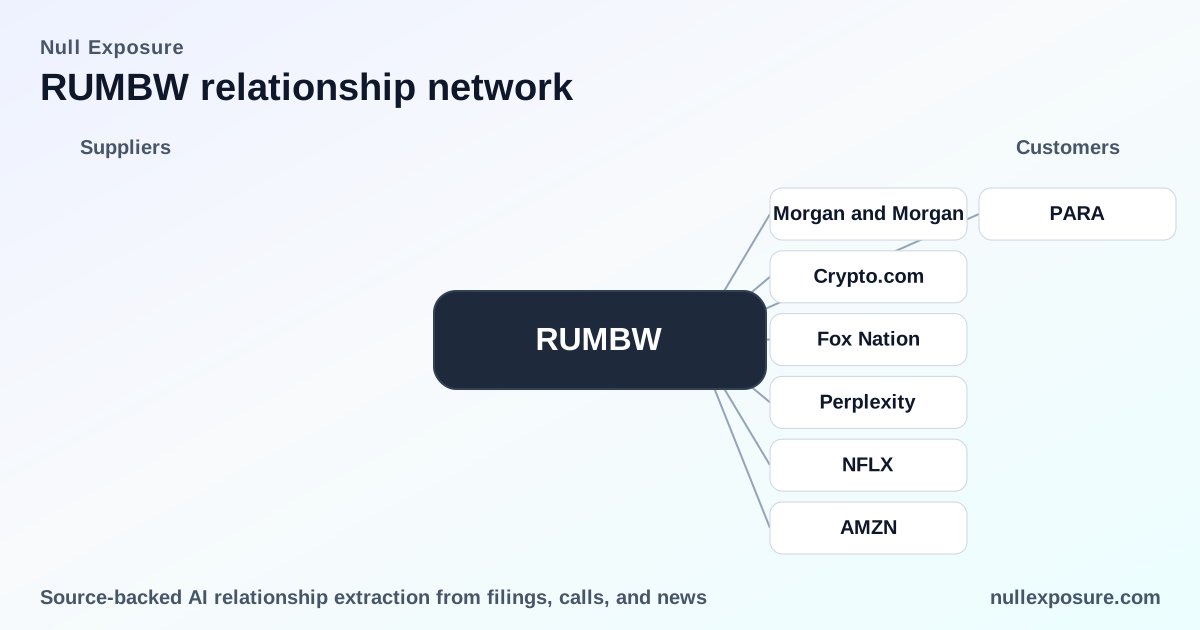
Rumble Inc. (RUMBW) — Customer Landscape and Commercial Implications
Rumble operates a video-sharing platform and a nascent cloud infrastructure business, monetizing primarily through advertising, subscriptions, and content licensing. Advertising and impressions-driven sales dominate revenue, while Rumble Cloud and consumer subscriptions provide recurring cash flows; content licensing and platform services add variable, traffic-linked revenue. Investors evaluating RUMBW should focus on advertising concentration, short-term contracting dynamics, and the strategic capture of marquee publishing partners that drive scale and audience monetization.
For a deeper look at counterparty-level exposure and how Rumble’s go-to-market translates into cash flow risk, visit the Null Exposure homepage: https://nullexposure.com/
Why the customer roster matters now
Rumble’s business model is a two-sided marketplace: creators and content partners supply video inventory while advertisers and platforms monetize views. The company’s filings show advertising accounted for roughly two-thirds of revenue, and one large customer alone represented 16% of 2024 revenue (down from 46% in 2023), indicating both material concentration and an improving revenue mix. Rumble’s gross-profit and operating margins remain deeply negative, underscoring the need for rapid revenue scale and healthy customer economics to reach profitability.
How Rumble contracts and where the risk lies
Rumble’s disclosed commercial posture explains revenue volatility as much as opportunity:
- Advertising is usage‑based and short term. Customers pay based on impressions or actions (clicks, purchases), and advertisers typically do not sign long-term commitments. This creates demand elasticity and churn risk tied to political cycles and advertiser sentiment.
- Subscriptions provide a recurring layer. Rumble Premium, Locals, badges, tipping, and Rumble Cloud contribute subscription and recurring service revenues, improving predictability versus pure advertising.
- Licensing is variable. Content licensing fees depend on third-party traffic and impressions, linking revenue to distribution partners.
- Geographic concentration is U.S.-centric. The company reported the U.S. as the dominant revenue region (roughly $89.1M of cited regional revenue), so macro or advertiser shifts domestically will disproportionately affect results.
- Platform and infrastructure ambitions increase enterprise exposure. Rumble Cloud is positioned as an IaaS product serving SMBs and enterprises, introducing longer-term enterprise relationships alongside the traditional ad-buyer base.
These characteristics imply shorter contracting horizons with advertisers, higher revenue concentration risk, and a gradual shift toward more stable subscription and cloud revenue as maturity increases.
Relationship-by-relationship review (all results covered)
Crypto.com
Rumble management listed Crypto.com among brands captured since the 2024 election cycle, signaling Rumble’s success landing fintech/crypto advertisers that value the platform’s audience reach. This mention comes from the company’s 2025 Q4 earnings call (March 2026).
Source: Rumble 2025 Q4 earnings call (transcript, March 7, 2026).
Fox Nation
Fox Nation was cited as a recently added partner, reflecting Rumble’s traction with politically aligned publisher brands that can drive engaged viewership and subscription cross-sells. Management noted this during the 2025 Q4 earnings call.
Source: Rumble 2025 Q4 earnings call (transcript, March 7, 2026).
Perplexity
Perplexity was referenced among the brands Rumble captured post–2024 election, indicating expansion into partnerships with AI or information-platform brands that can leverage video distribution. The comment is drawn from the 2025 Q4 earnings call.
Source: Rumble 2025 Q4 earnings call (transcript, March 7, 2026).
Morgan and Morgan
Rumble called out Morgan and Morgan as a captured brand, illustrating the company’s ability to attract large, recognizable professional services advertisers that buy impressions and engagement. This was disclosed on the 2025 Q4 earnings call.
Source: Rumble 2025 Q4 earnings call (transcript, March 7, 2026).
Netflix
Rumble confirmed that Netflix is among the brands it captured since the 2024 election, a notable strategic win given Netflix’s scale and marketing budgets; this relationship should support high-value ad inventory and cross-promotion opportunities. Management made this statement in the 2025 Q4 earnings call.
Source: Rumble 2025 Q4 earnings call (transcript, March 7, 2026).
Amazon Prime
Amazon Prime was announced as a recent addition to Rumble’s roster, marking an important platform-level partnership with a major streaming advertiser and potential video distribution counterpart. The disclosure is from the 2025 Q4 earnings call.
Source: Rumble 2025 Q4 earnings call (transcript, March 7, 2026).
NFLX
The company also listed NFLX (Netflix’s ticker) in its remarks, reinforcing that Netflix-level engagement is material to its commercial momentum; this appears as a separate mention in the same 2025 Q4 earnings call record. Treat this as the same brand-level relationship documented twice in the call transcript.
Source: Rumble 2025 Q4 earnings call (transcript, March 7, 2026).
Paramount
Paramount was identified among recently added brands, representing an incremental partnership with a major studio and content owner that can both purchase advertising and participate in distribution or licensing arrangements. Management stated this on the 2025 Q4 earnings call.
Source: Rumble 2025 Q4 earnings call (transcript, March 7, 2026).
What these relationships mean commercially
- Scale and brand capture matter. Signing marquee names such as Netflix, Amazon Prime, and Paramount elevates Rumble’s inventory quality and advertiser demand, which drives higher CPMs and better monetization per impression.
- Short-term ad contracts keep revenue variable. Despite these wins, advertiser agreements are primarily impression- and action-based, so revenues are sensitive to campaign timing and advertiser budgets rather than locked multi-year contracts.
- Diversification is underway but concentration is still material. The company disclosed that one customer contributed about $14.9M (16% of revenue) in 2024, down from a 46% share in 2023, indicating active concentration reduction but remaining material exposure.
- Cloud and subscription products alter risk-return. Rumble Cloud’s subscription and consumption-based fees introduce higher-margin, recurring revenue potential, but enterprise sales require different go-to-market capabilities and longer onboarding.
Investment implications and risks
- Positive: Capturing prominent streaming and publisher partners is a clear revenue-quality improvement and supports higher ad yield. The shift toward subscription and cloud revenue reduces single-source concentration over time.
- Negative: The core ad business is usage-based and short-term, leaving revenue exposed to macro ad spend cycles and political-event-driven viewership swings. Profitability is distant given negative gross profit and operating margin metrics reported through the latest periods.
Key takeaways:
- Advertising still drives ~66% of revenue; one customer remained material at 16% in 2024.
- Contracts are primarily usage-based and short-term; Rumble Cloud and subscription products add recurring revenue but are early-stage.
- Recent wins (Netflix, Amazon Prime, Paramount, Fox Nation, Crypto.com, Perplexity, Morgan and Morgan) improve inventory quality and advertiser demand.
For institutional tracking of counterparty risk, operational posture, and evolving customer concentration, Null Exposure provides structured relationship intelligence and monitoring: https://nullexposure.com/
Disclaimer: This commentary synthesizes company disclosures and public earnings remarks to assess counterparty exposure and commercial dynamics; investment decisions should incorporate broader financial analysis and risk tolerance.